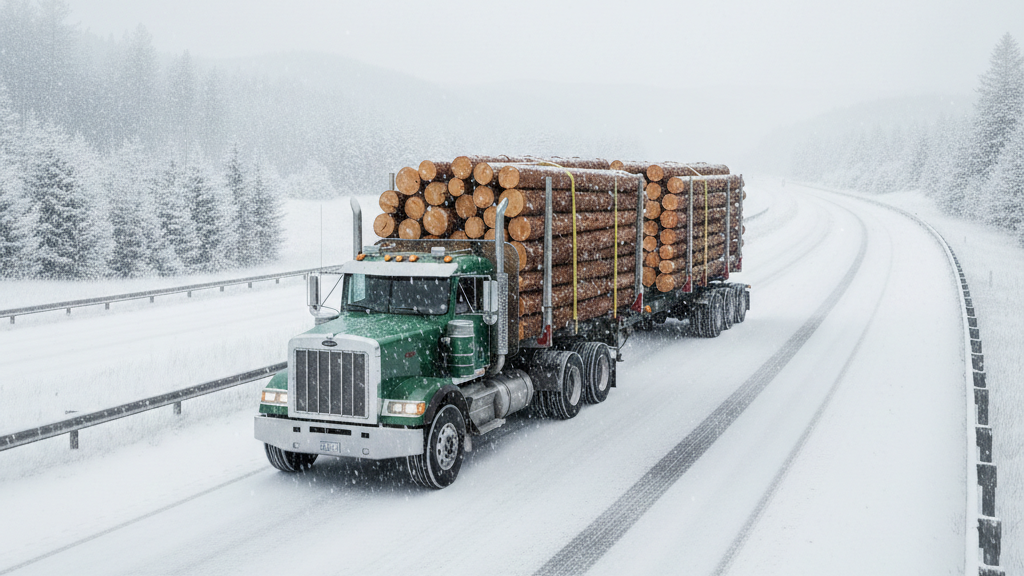
In the logging industry, your truck isn’t just a vehicle—it’s a mobile office, a heavy-duty tool, and the lifeblood of your business. However, transporting timber is statistically one of the most dangerous jobs in the country. From navigating steep, unpaved forest roads to managing shifting, high-center-of-gravity loads, the risks are unique.
Standard commercial truck insurance often falls short. To truly protect your assets, you need a Custom Log Truck Insurance package that accounts for the “off-road to highway” transition.
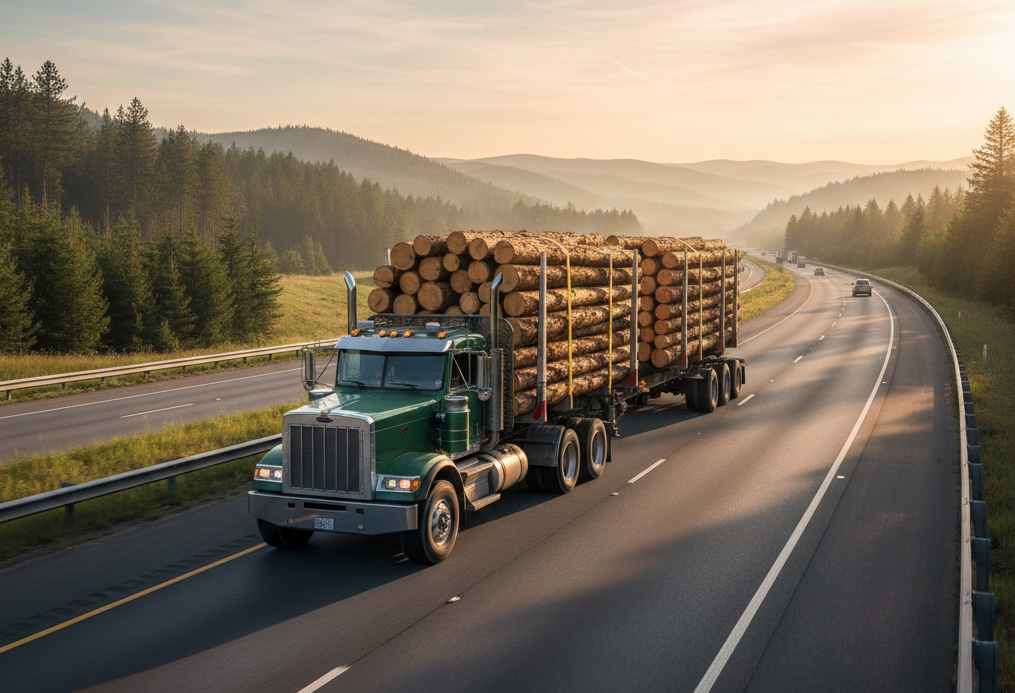
1. Core Coverage: The Essential Foundation
A “one-size-fits-all” policy often contains exclusions for logging activities. A custom policy should include:
- Primary Liability: Federal law requires a minimum of $750,000 for trucks over 10,000 lbs GVW, but most logging contracts require at least $1,000,000. This covers bodily injury and property damage to others if you are at fault.
- Physical Damage (Comprehensive & Collision): Logging is hard on equipment. This covers your truck and trailer against overturns on logging roads, falling debris, fire, theft, and vandalism.
- Pro Tip: Ensure your policy uses Stated Amount or Agreed Value rather than Actual Cash Value (ACV) to ensure you can actually replace your rig in a volatile market.
- Motor Truck Cargo: Log loads are heavy and difficult to recover after an accident. You need coverage that specifically includes “Debris Removal” to pay for the expensive cleanup of spilled timber.
2. Specialized Add-Ons for the Logging Industry
The difference between a “standard” policy and a “custom” one lies in the endorsements:
- Pollution & Environmental Liability: If a hydraulic line snaps or a fuel tank ruptures near a stream or protected forest land, the cleanup costs can reach six figures. This coverage is often required by state timber agencies.
- Inland Marine (Equipment Coverage): If you operate loaders, skidders, or chippers, they need to be covered under an Inland Marine policy, as they aren’t covered by standard auto insurance once they leave the trailer.
- Non-Owned Trailer Coverage: If you are hauling trailers owned by a mill or another contractor, this protects you if that trailer is damaged while in your possession.
- Combined Deductibles: Look for a policy where one deductible applies to both the truck and the cargo in a single incident. This saves you thousands during a major claim.
3. Navigating the “Off-Road” Trap
Many insurance carriers exclude coverage for “unmaintained roads.” In logging, the “road” is often a dirt track hacked into a mountainside.
- The Custom Difference: Your policy must explicitly state that coverage extends to private logging roads and loading sites. Without this, a rollover at the landing site might be denied.
4. Why Workers’ Comp is Non-Negotiable
As noted by industry experts, logging ranks in the top five most hazardous professions.
- The Risk: Even if you are an owner-operator, many mills will not let you onto the property without proof of Workers’ Compensation.
- The Solution: A custom plan can include “Ghost Policies” for sole proprietors or specialized high-risk pools that provide the necessary certificates while keeping premiums manageable through safety credits.
5. Factors That Impact Your Premium
Insurance companies look at “The Four Pillars” when pricing log truck insurance:
- CDL Experience: Most specialized carriers require drivers to have at least 2–3 years of experience, preferably with “heavy haul” or “oversize” endorsements.
- The Radius of Operation: Are you hauling from the woods to a local mill (50 miles), or are you crossing state lines? Long-haul logging significantly increases premiums.
- Safety Tech: Installing ELDs (Electronic Logging Devices), forward-facing cameras, and stability control systems can earn you “Safety Credits” that lower annual costs.
- The Loss Run: Your 3-year claim history is the biggest factor. A clean “Loss Run” report is your best tool for negotiating lower rates.
6. The Checklist: Questions to Ask Your Agent
Before signing a policy, ask these four critical questions:
- “Does this policy exclude ‘Off-Road’ or ‘Unpaved Road’ incidents?”
- “Are my loading and unloading operations covered under General Liability or Auto Liability?” (The gap between these two is where many claims die).
- “Is there a ‘Lumber and Logging’ exclusion hidden in the fine print?”
- “Do you provide same-day COIs (Certificates of Insurance) so I don’t miss a load?”
Final Thought
Log truck insurance shouldn’t be a commodity you buy off a shelf. It should be a shield designed specifically for the weight you carry and the terrain you tackle. By working with a specialist who understands transportation risk management, you aren’t just buying a piece of paper—you’re securing your ability to keep hauling for years to come.
Also – if you’re interested in Log Cabin Insurance – be sure to check out this article!
Logging Truck Insurance FAQ
1. What is the difference between standard commercial truck insurance and log truck insurance? Log truck insurance includes specific endorsements for off-road operations, loading/unloading risks, and high-center-of-gravity cargo. Standard policies often exclude “unmaintained roads,” which are common in logging.
2. How much liability coverage do I need for a log truck? While the federal minimum is $750,000, most mills and timber contracts require a minimum of $1,000,000 in Primary Liability. Some high-value contracts may require an Umbrella policy of $5,000,000 or more.
3. Does log truck insurance cover me while I’m on private forest roads? Not always. You must ensure your policy does not have a “Designated Road” or “Public Road” exclusion. Custom logging policies are designed to cover the transition from the landing site to the highway.
4. What is “Stated Amount” vs. “Actual Cash Value” for log trucks? Actual Cash Value (ACV) pays what the truck is worth today (depreciated). Stated Amount allows you to value the truck based on its specialized equipment and current market replacement cost, which is vital for custom rigs.
5. Is my trailer covered under the same policy as my truck? Usually, yes, under Physical Damage. However, if you pull trailers owned by a mill, you need Non-Owned Trailer coverage to protect you while that equipment is in your possession.
Cargo & Specialized Risk FAQs
6. Does Motor Truck Cargo insurance cover spilled logs? Yes, but you must check for a Debris Removal clause. Cleaning up a spilled load of timber from a roadway or waterway can be more expensive than the value of the timber itself.
7. Is my loading crane/grapple covered? If the equipment is permanently attached to the truck, it is covered under Physical Damage. If it is a separate piece of equipment (like a knuckleboom loader), it requires a separate Inland Marine policy.
8. What happens if my truck causes a fuel spill in the woods? Standard liability often excludes environmental cleanup. You need a Pollution Endorsement (CA 99 48) to cover the costs of soil or water remediation if fuel or hydraulic fluid leaks during an accident.
9. Am I covered for “Overturn” accidents? Yes, but only if you have Collision coverage. Because log trucks have a high center of gravity, overturns are a frequent claim. Ensure your policy doesn’t have restrictive “stability” clauses.
10. What is General Liability, and do I need it if I have Auto Liability? Auto Liability covers accidents while the truck is in motion. General Liability covers “slip and fall” incidents at your shop or damage caused during the loading/unloading process when the truck is parked.
Cost & Premium FAQs
11. How much does log truck insurance cost annually? Premiums vary wildly based on location and experience, but typically range from $8,000 to $15,000 per truck per year. Factors like your “Radius of Operation” and CDL history heavily influence this.
12. Why are my Workers’ Comp rates so high? Logging is statistically one of the most dangerous jobs. Rates are high because the frequency and severity of injuries are higher than in standard freight or long-haul trucking.
13. Can I get a discount for installing dash cams? Many specialized carriers offer “Safety Credits” or premium discounts (often 5–10%) for trucks equipped with forward-facing cameras and telematics (ELDs).
14. Does my driving record from 10 years ago affect my rate? Most carriers look back 3 to 5 years. Major violations (DUI, reckless driving) will have a permanent impact, but minor infractions usually drop off after 36 months.
15. What is a “Loss Run” report? A Loss Run is an official document from your previous insurance carriers showing your claim history. A clean 3-year Loss Run is your strongest tool for negotiating lower premiums.
Operations & Compliance FAQs
16. What is “Bobtail Insurance” for loggers? Bobtail insurance provides liability coverage when you are driving the truck without a trailer (e.g., driving home after dropping a load at the mill).
17. Do I need insurance for my logging equipment (skidders, feller bunchers)? Yes. These are not covered under an auto policy. You need Mobile Equipment or Inland Marine coverage to protect these assets against fire, theft, or damage in the woods.
18. Can I get insurance for a new logging business (New Venture)? It is more difficult, as many carriers require 2 years of business experience. However, some specialized brokers have “New Venture” programs if the owner has a long history as a driver for another company.
19. What is a “Certificate of Insurance” (COI), and how fast can I get one? A COI is proof of insurance you give to mills so they let you haul. In a custom program, you should look for an agency that offers same-day or automated COIs so you never miss a load.
20. Does log truck insurance cover “Down Time” or “Loss of Use”? Standard policies do not. You must add a Business Interruption or Rental Reimbursement endorsement if you want the insurance to pay for lost income while your truck is in the shop after a covered claim.