
When a commercial building loses its tenants or is waiting for a buyer, it enters a high-risk “gray zone” that most standard property insurance policies are not designed to cover. Understanding vacant commercial building insurance is the difference between a protected asset and a total financial loss.
Let’s break down what this specialized insurance entails, why standard policies fall short, and how much you should expect to pay to keep your property secure.
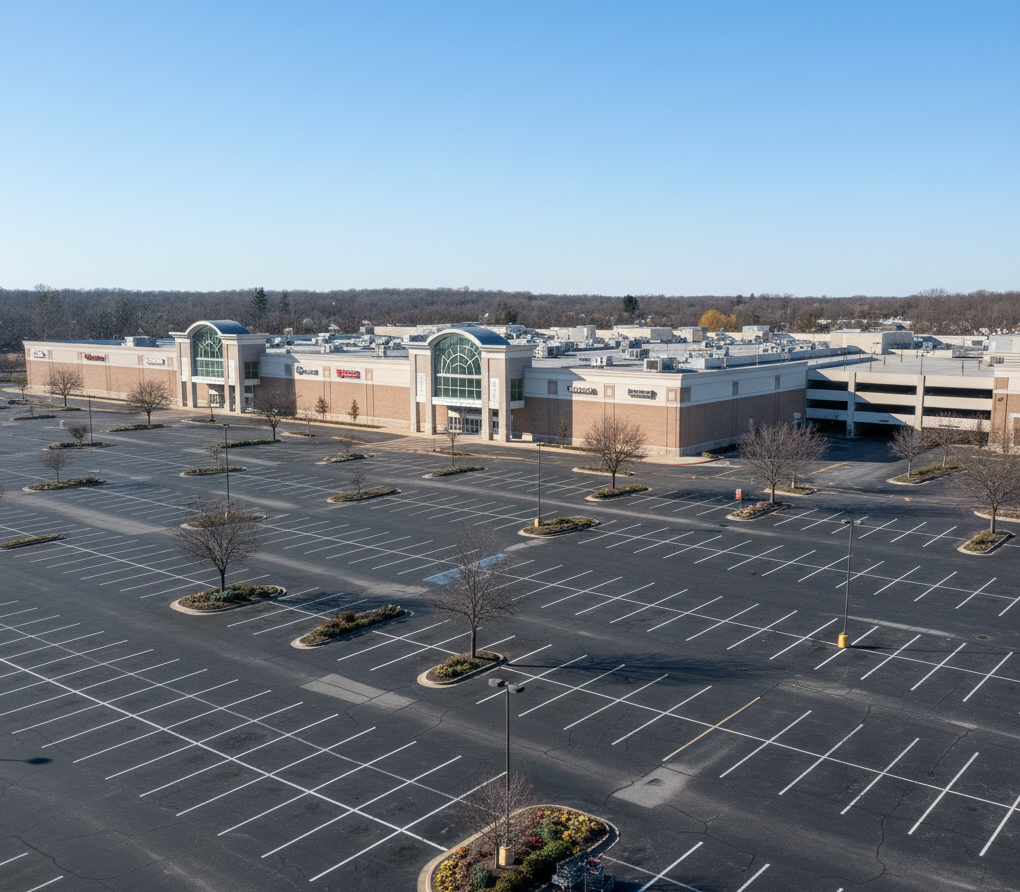
1. What is Vacant Commercial Building Insurance?
Vacant commercial building insurance is a specialized policy designed to protect properties that are either entirely empty or have significant portions of unused square footage.
Standard commercial property insurance is built on the assumption that a building is being used for its intended purpose—housing a business, employees, and customers. When a building becomes vacant, the risk profile changes drastically. There is no one on-site to notice a small leak before it becomes a flood, or to deter vandals from breaking in. Because of these heightened risks, standard insurers often limit or exclude coverage once a building has been vacant for a certain period (typically 60 days).
A dedicated vacant property policy “steps in” where your standard policy leaves off, ensuring that perils like fire, theft, and vandalism are still covered while the property sits idle.
2. The “31% Rule”: When is a Building Considered Vacant?
One of the most misunderstood concepts in commercial real estate is what actually constitutes “vacancy” in the eyes of an insurance carrier.
Most commercial policies follow the 31% Rule. This means that a building is considered vacant unless at least 31% of the total square footage is occupied and used for its intended business operations.
- Example: If you own a 10,000-square-foot warehouse and only one small office of 1,000 square feet is being used, your building is 90% vacant. For insurance purposes, that building is classified as vacant.
- Renovation Exception: Usually, buildings undergoing active, documented renovations are not considered vacant, though you must notify your agent of the construction.
However, we also have carriers that consider any amount of occupancy, even just one unit, as an occupied structure. This company by company discrepancy is one of the many reasons you should use an independent insurance agent for all of your insurance needs. In addition, the independent insurance agent works for you – not the insurance carriers. In the event you need a policy change or carrier change, you do not need to restart the relationship with your insurance provider; you can simply request your independent agent to shop around your coverages.
3. Vacant vs. Unoccupied: Is There a Difference?
Yes, and the distinction is critical for your coverage. The table below highlights the key differences:
| Term | Definition | Insurance Impact |
|---|---|---|
| Unoccupied | Contains furniture/equipment, but people are temporarily absent. | Usually covered by standard policies for longer periods. |
| Vacant | “Substantially empty” of personal property and people. | Standard coverage limited/removed after 60 days. |
People Also Ask:
Who insures vacant commercial buildings?
While many “standard” carriers shy away from vacant properties, specialty providers and surplus lines insurers focus on this niche. Notable names include US Assure (Zurich), Berkshire Hathaway Guard, and Seneca Insurance. Most owners work with an independent broker to access these markets.
How much is vacant building insurance?
On average, expect to pay between $1,000 and $3,000 per year for every $1 million in property value. This is typically 1.5 to 3 times more than an occupied building policy due to the increased risk of undetected damage.
What is a vacant building in insurance?
In insurance terms, a building is vacant if it does not contain enough business personal property to conduct customary operations. For most policies, if more than 69% of the square footage is unused, it is legally vacant.
How long would a commercial property policy cover a vacant building?
Most standard policies provide full coverage for only 60 consecutive days. After that, coverage for vandalism, theft, and glass breakage is usually cancelled, and payouts for other perils (like fire) may be reduced by 15%.
4. Tips to Lower Your Premiums
Because vacant insurance is expensive, smart owners take steps to mitigate risk:
- Install a Monitored Alarm: Fire and burglar alarms can lower premiums by 10–20%.
- Maintain the Exterior: Keeping the grass cut and windows clean signals that the building is not “abandoned.”
- Regular Inspections: Some policies require you to inspect the building weekly and keep a log to maintain coverage.
- Utility Management: Keep the heat at a minimum level (e.g., 55°F) during winter to prevent pipe bursts.
“A vacant commercial building is an asset in transition, but without the right insurance, it’s a liability waiting to happen.”
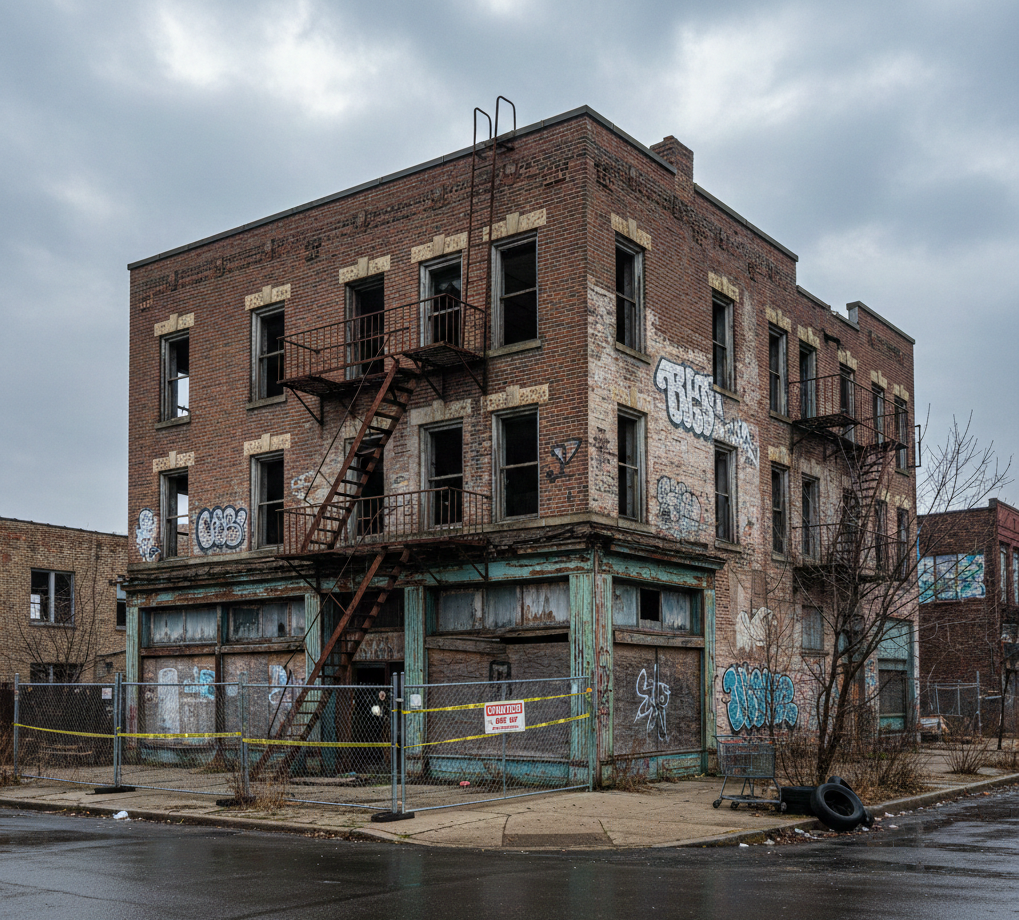
Frequently Asked Questions About Vacant Commercial Building Insurance
1. Can I just keep my standard policy if I visit the building every day?
No. Most insurance carriers define vacancy based on business activity and contents, not just “presence.” If you aren’t conducting normal business operations or if the building lacks the furniture/equipment to do so, visiting daily won’t prevent the vacancy clause from triggering after 60 days.
2. Does vacant commercial insurance cover squatters?
Standard vacant policies usually exclude “occupancy by unauthorized persons.” However, you can often add an endorsement for “Vandalism and Malicious Mischief” which covers the damage squatters might cause, even if the act of them living there isn’t covered as a theft of services.
3. Is theft of copper piping covered?
Copper theft is a major risk for vacant buildings. This is often excluded in basic vacant policies unless you specifically purchase a “Theft” endorsement. Insurers may also require the building to be fully secured (boarded or alarmed) for this coverage to apply.
4. Can I buy a policy for just 3 months?
Yes. Many specialty insurers offer short-term policies in 3, 6, or 9-month increments. This is ideal if you are actively listing the property for sale or waiting for a new tenant lease to begin.
5. What is a “Vacancy Permit” endorsement?
If you have an existing policy and the vacancy is temporary, your current insurer might add a “Vacancy Permit.” This endorsement suspends the vacancy exclusion for a set period, though it usually costs an additional premium and may still limit coverage for vandalism.
6. Does the insurance cover “General Liability” for trespassers?
Yes, most vacant commercial policies include Premises Liability. This protects you if someone (even a trespasser, in some jurisdictions) is injured on-site and sues the property owner for negligence, such as falling through a weak floorboard.
7. Why is vacant insurance so much more expensive?
Statistically, vacant buildings are significantly more likely to suffer a total loss. Without occupants to report a small fire or a leaking pipe, minor incidents escalate into catastrophic claims. You are paying for that increased statistical probability.
8. Do I need vacant insurance if the building is for sale?
Yes. The fact that a building is “on the market” does not change its vacancy status. In fact, real estate signs can sometimes alert vandals that a building is empty, increasing the risk profile in the eyes of the insurer.
9. What happens if I don’t tell my agent the building is vacant?
This is considered material misrepresentation. If you file a claim (even for something unrelated, like wind damage) and the adjuster discovers the building was vacant beyond the 60-day limit, the carrier can legally deny the entire claim and void the policy.
10. Does vacant insurance cover mold?
Most vacant policies have a “Mold Exclusion” or very low limits ($5,000–$10,000). Because vacant buildings often lack climate control, they are breeding grounds for mold, which insurers view as a maintenance issue rather than a sudden accident.
11. Are “Surplus Lines” insurers safe?
Yes. Surplus lines (non-admitted) carriers like Lloyd’s of London are often the only companies willing to take on high-risk vacant properties. While they aren’t backed by state guarantee funds in the same way, they are generally very financially stable.
12. Do I need to keep the utilities on?
Most policies require you to maintain heat (usually above 55°F) or completely shut off and drain the water system to prevent pipe bursts. Failure to do one of these often voids water damage coverage.
13. Can I insure a vacant building that is in poor condition?
It’s difficult. Most insurers require the building to be “gutted and secured” or in “marketable condition.” If the building has existing structural damage or open roof holes, you may need a “Builder’s Risk” policy instead.
14. What is “Actual Cash Value” (ACV) vs “Replacement Cost”?
Many vacant policies default to ACV, which pays the value of the building minus depreciation. Since vacant buildings can depreciate quickly, this may not be enough to rebuild. Always check if “Replacement Cost” is available.
15. Is a parking lot considered part of the vacant building insurance?
Yes, the liability portion usually covers the entire parcel, including the parking lot. This is important for “slip and fall” claims if you aren’t regularly clearing snow or fixing potholes.
16. What is the “Protective Device” clause?
This is a condition in your policy stating that if you tell the insurer you have a burglar alarm or sprinkler system, you must keep them operational. If they are disabled during a loss, your claim could be denied.
17. Does vacant insurance cover window breakage?
Glass breakage is often excluded in vacant policies unless specifically added back. This is because windows are the most common target for vandals.
18. Can a “vacant” building be partially occupied?
Yes. If it is less than 31% occupied, it is still “vacant” by insurance standards. You need a vacant policy that acknowledges the partial occupancy to ensure the 31% rule doesn’t penalize you.
19. How long does it take to get a quote?
Since these policies often go through specialty underwriters, it can take 24 to 72 hours. It is rarely an “instant” online quote because an underwriter needs to review the property’s security and condition.
20. Can I get a refund if I lease the building early?
Most vacant policies are “fully earned” or have a “minimum earned premium.” This means if you buy a 6-month policy and find a tenant in month 2, you might not get a refund for the remaining 4 months. Always ask about the “cancellation provisions.”
Related Reading & Resources
Protecting your assets in Ohio goes beyond just vacant buildings. Explore our other guides to ensure your property and business are fully covered:
Commercial & Specialized Property
- Insuring Vacant Land: Learn how to protect undeveloped land from liability claims and environmental risks.
- Church Insurance in Ohio: A specialized guide for protecting religious organizations and their unique property needs.
- Ohio HVAC Insurance: Critical coverage details for contractors working on commercial properties.
Ohio Personal Lines & Insights
- Boat Insurance Requirements: Everything you need to know about legally operating a watercraft on Ohio lakes.
- School Districts & Home Value: How local Ohio school districts impact your homeowners’ insurance premiums.
Need a Custom Quote for Your Vacant Building?
Don’t leave your property at risk. Our independent agents specialize in finding the right coverage for vacant commercial assets throughout Ohio.
Request a Vacant Property Quote