
The sawmill industry is a high-stakes environment where raw natural resources meet heavy industrial processing. While the smell of fresh-cut pine and the hum of a well-oiled bandsaw are signs of a productive day, they also represent significant liabilities. From combustible dust hazards to the high cost of specialized machinery, finding the right insurance for sawmills requires more than a “one size fits all” commercial policy.
Whether you are running a boutique portable mill operation or a high-output industrial facility, understanding the nuances of your coverage can mean the difference between a minor setback and a permanent closure.
Why Sawmills are Considered High-Risk Assets
Underwriters view sawmills through a lens of “total loss potential.” This is because a fire in a mill, fueled by dry wood and sawdust, can consume the entire structure before the local fire department can even arrive. Beyond fire, the industry faces three primary risk pillars:
- The Dust Hazard: Fine particulate matter is more than just a respiratory issue; it is a fuel source. Without proper “housekeeping” and dust collection, a single electrical spark can lead to a catastrophic explosion.
- Mechanical Vulnerability: Sawmills rely on highly specialized, expensive equipment like headrigs, edgers, and dry kilns. If a primary motor burns out or a blade snaps, production stops entirely.
- Logistics and Transit: Your product is at risk from the moment it’s a standing timber contract until it’s delivered as finished lumber. This “gap” in coverage is where many mill owners find themselves underinsured.
Core Coverages Every Mill Should Carry
| Coverage Module | Strategic Importance |
|---|---|
| Commercial Property | Covers the physical structure, kilns, and sheds. Ensure you have “Replacement Cost” value rather than “Actual Cash Value.” |
| General Liability | Protects against lawsuits if a visitor is injured or if your operations cause damage to neighboring properties (e.g., a fire spreading). |
| Equipment Breakdown | Specific to mechanical or electrical failure of your saws, conveyors, and sorting systems. |
| Business Interruption | Replaces lost income and covers payroll if your mill is forced to shut down due to a covered peril like fire or wind. |
| Workers’ Compensation | Mandatory coverage that handles medical costs and disability for employees injured on the job—a high frequency in wood manufacturing. |
| Inland Marine | A specialized “floater” policy that protects logs and lumber while they are in transit on trucks or stored at temporary sites. |
Deep Dive: Business Interruption and Extra Expense
In the world of insurance for sawmills, the building isn’t your most valuable asset—your cash flow is. If a fire destroys your primary saw, it might take six months to source a replacement and calibrate it.
Extra Expense coverage is a vital subset of Business Interruption. It pays for the costs of keeping your business running while you rebuild. This might include renting a temporary portable mill or outsourcing your log processing to a competitor just to keep your contracts active and your customers from moving to another supplier.
Reducing Your Insurance Premiums: The Safety Audit
Insurers Reward proactive risk management. If you want to see a double-digit decrease in your annual premiums, focus on these three areas:
- Housekeeping Protocols: Implement a “Blow Down” schedule where dust is cleared from rafters and motors daily. Documenting this for your agent is gold.
- Hot Work Permits: If you perform welding or grinding for repairs, use a formal permit system. Most sawmill fires start during maintenance, not production.
- Sprinkler and Suppression Systems: While expensive to install, specialized spark detection systems in your ductwork can pay for themselves in insurance savings within 3–5 years.
The Importance of “Loggers Broad Form”
If your sawmill also handles harvesting or hauling, you need Loggers Broad Form. This covers “Property Damage Liability” specifically for timber harvesting operations, including fire suppression expenses and damage to timberlands owned by others. Standard GL policies often exclude these “timber-specific” liabilities.
Specialized Insurance for Portable Sawmills
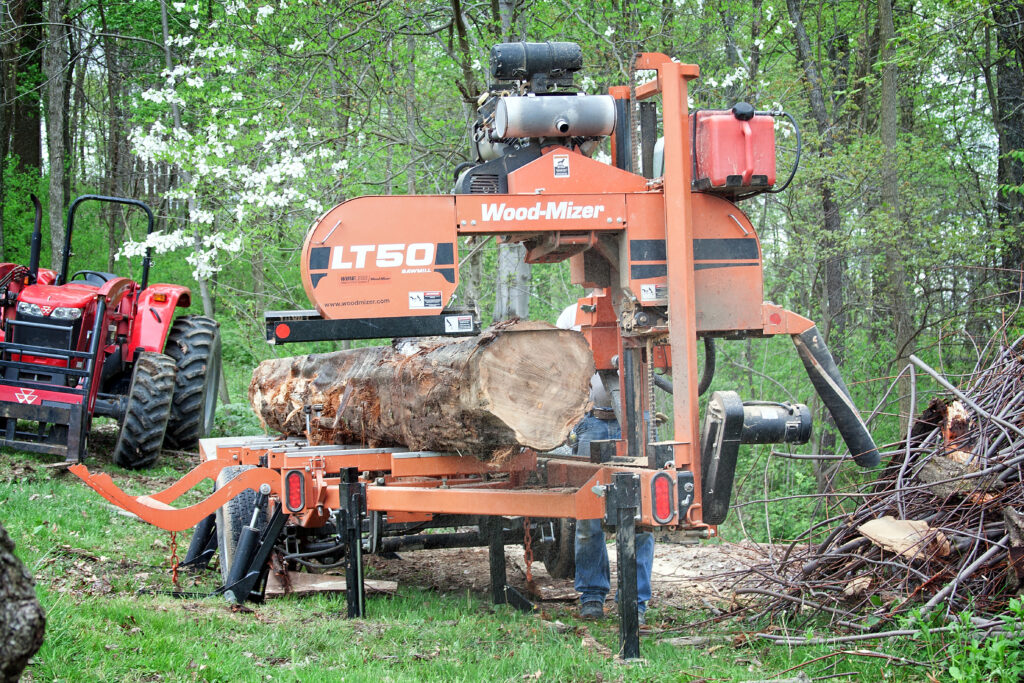
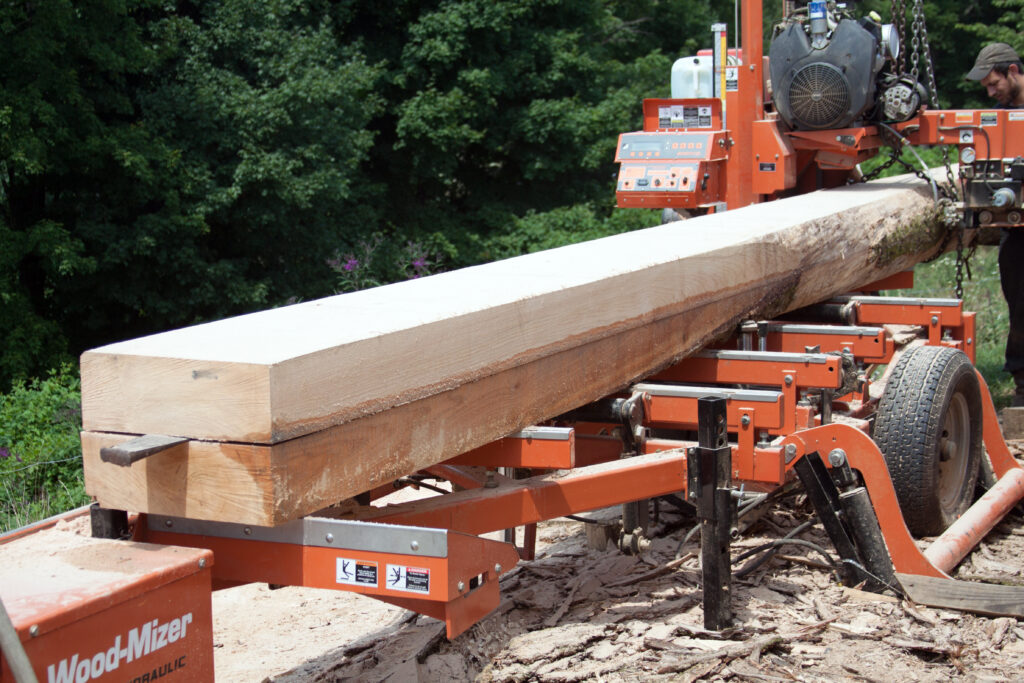
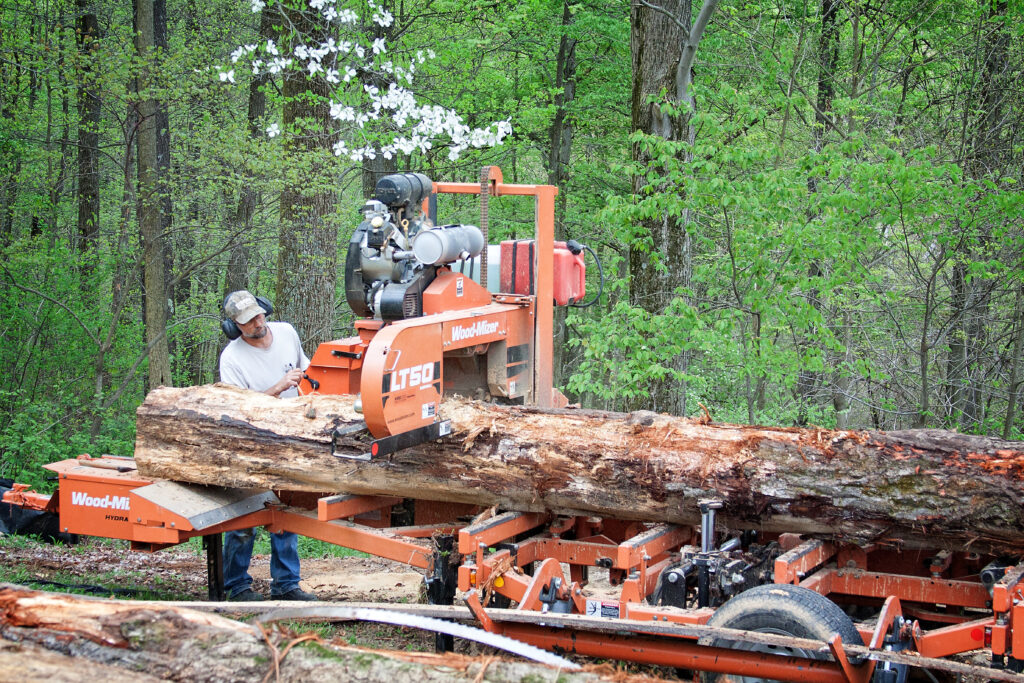
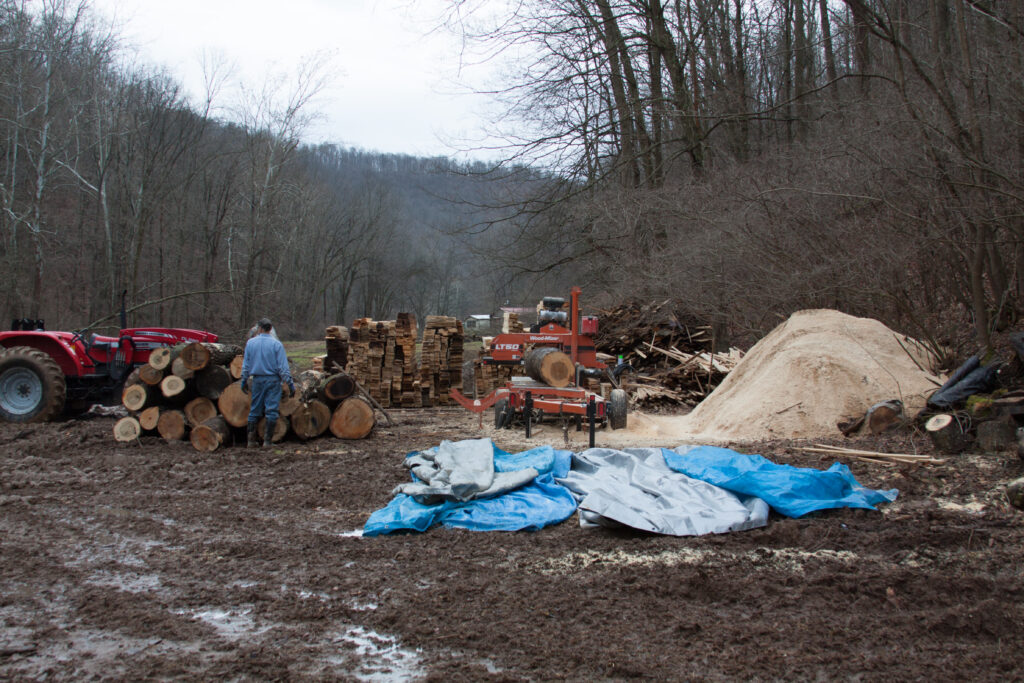
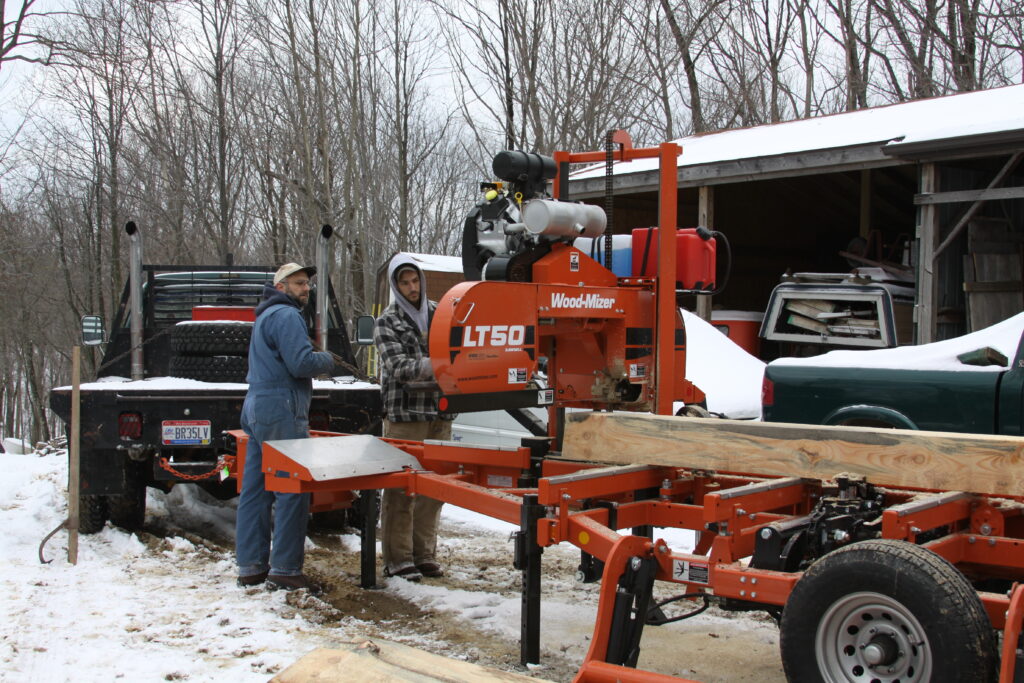
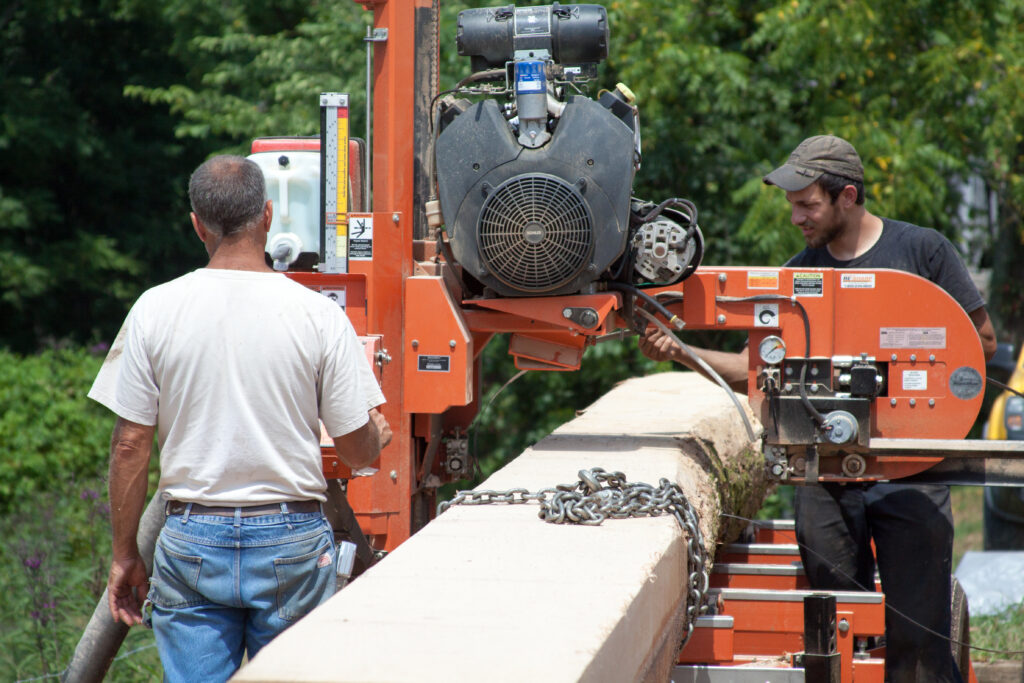
The rise of high-quality, mobile bandsaw mills (like Wood-Mizer or Norwood) has created a booming niche for custom on-site milling. However, insurance for portable sawmills requires a different strategy than a stationary facility. When your mill is on wheels, your risks are constantly moving.
If you operate a mobile milling business, there are three specific coverage gaps you must address:
- Inland Marine (Equipment Floater): A standard property policy usually only covers equipment while it is at a fixed “insured location.” Since your mill travels to various woodlots or job sites, you need an Inland Marine policy to protect the mill from theft, collision, or damage while in transit or at a customer’s property.
- Off-Premises Liability: Your General Liability must be configured to follow you. If a spectator or the property owner is injured by a thrown slab or a snapping blade while you are milling on their land, you need to ensure your “Mobile Operations” are explicitly covered.
- Hook Liability: If your business involves using a winch or crane to load logs onto the mill, Hook Liability protects you if a log is dropped, damaging the customer’s equipment or property during the loading process.
Note for Hobbyists: Many small-scale sawyers assume their homeowners’ insurance covers their mill. However, the moment you sell a single board or charge a “per board-foot” fee, your homeowners’ policy will likely deny any claim related to the mill, as it is now considered a “business pursuit.”
Common Pitfall: Ensure your towing vehicle’s commercial auto policy is rated to pull the weight of your mill. If an accident occurs and you are over your rated towing capacity, your auto insurer may attempt to deny the claim.
Conclusion: Partner with a Specialist
The marketplace for insurance for sawmills is hardening, meaning there are fewer carriers willing to take on the risk. Working with an agent who understands the “Wood Products” niche is essential. They can help you navigate “Actual Cash Value” vs. “Replacement Cost” and ensure your kiln-dried inventory is valued correctly at the time of loss.
Key Takeaway: Don’t just shop on price. A cheap policy that excludes “Combustible Dust Explosions” or “Mechanical Breakdown” isn’t insurance—it’s a gamble.
Frequently Asked Questions About Sawmill Insurance
1. Why is sawmill insurance more expensive than other manufacturing insurance?
Sawmills are considered high-risk due to the combustible dust hazard and the high frequency of severe injuries from heavy machinery. Underwriters view them as “high-severity” risks, where a single fire or accident can lead to a total loss of the property.
2. What is ‘Inland Marine’ insurance and do I need it?
Yes. Inland Marine covers your equipment, logs, and finished lumber while they are in transit or stored away from your main facility. Standard property insurance typically only covers items located at the specific address listed on your policy.
3. Does standard General Liability cover fire suppression costs?
Often, no. Many standard General Liability policies exclude the costs associated with fire department response or wildfire suppression. You usually need a “Loggers Broad Form” or a specific endorsement to cover these high-cost expenses.
4. What is the difference between Actual Cash Value and Replacement Cost?
Actual Cash Value (ACV) pays what the equipment is worth today, factoring in depreciation. Replacement Cost pays to buy a brand-new equivalent. For sawmills with expensive, aging machinery, Replacement Cost is highly recommended to ensure you can actually restart operations after a loss.
5. Can I insure my portable sawmill under my homeowners’ policy?
Generally, no. As soon as you use the mill for business purposes—such as selling wood or charging for service—homeowners’ policies will exclude coverage. You need a dedicated commercial equipment floater to stay protected.
6. Do I need special insurance to mill on a customer’s property?
Yes, you need “Off-Premises Liability.” This ensures that if your milling activities damage the customer’s home or injure a bystander on their land, your insurance will step in to cover the legal and medical costs.
7. Does my commercial auto policy cover my portable mill while towing?
Your auto policy typically covers the liability if the mill hits another vehicle while being towed, but it usually does not cover the damage to the mill itself. You need an Inland Marine policy to cover the physical asset during transport.
8. How can I lower my sawmill insurance premiums?
The best ways are installing spark detection systems, maintaining a strict daily “blow-down” cleaning schedule, implementing formal safety training, and keeping log decks stored at least 50-100 feet away from main buildings.
9. What is ‘Combustible Dust’ and why do insurers care?
Sawdust is highly explosive when suspended in the air. Insurers look for advanced dust collection systems and detailed housekeeping logs to ensure you aren’t running an operation at high risk for a dust explosion.
10. Do I need a professional appraisal for my sawmill equipment?
It is highly recommended. Many sawmill owners are underinsured because they value their equipment based on the original purchase price rather than current market replacement costs, which have risen significantly.
11. Is Workers’ Compensation mandatory for sawmill owners?
In almost every state, if you have employees (even part-time), Workers’ Comp is legally required. Given the high risk of limb loss or crushing injuries in mills, this is your most important shield against employee lawsuits.
12. What exactly is ‘Loggers Broad Form’?
This is a specialized liability policy that adds coverage for timber trespass (cutting the wrong trees), fire suppression costs, and damage to timberlands—all of which are commonly excluded from standard commercial liability forms.
13. Does my insurance cover subcontractors?
Usually, no. You should require all subcontractors, such as log haulers, to provide a “Certificate of Insurance” naming you as an “Additional Insured” to ensure their accidents don’t trigger your own policy limits.
14. What happens if my sawmill causes a wildfire?
Without specific “Fire Liability” or “Broad Form” coverage, you could be held personally liable for millions of dollars in state fire suppression costs and damage to neighboring properties and timberlands.
15. What is Equipment Breakdown insurance vs. Property insurance?
Property insurance covers external damage like a tree falling on the mill or a fire. Equipment Breakdown covers internal failure, such as a motor burning out, a transformer blowing, or a hydraulic system seizing during normal use.
16. Does sawmill insurance cover standing timber?
Standard sawmill policies do not. Standing timber requires a specialized “Timber Insurance” policy that protects against fire, wind, and lightning while the trees are still in the ground prior to harvesting.
17. What is Business Interruption ‘Extra Expense’ coverage?
This pays for the “extra” costs of staying in business while your mill is being repaired, such as renting a temporary mill or paying a competitor to custom-saw your logs so you don’t lose your long-term contracts.
18. How do I prove the value of lost inventory after a fire?
You must keep digital records of your scale tickets and inventory levels stored off-site. If your only records are paper files kept in the mill office, they will likely be lost in the fire, making a full claim payout very difficult.
19. Can I get insurance if I’m a startup sawmill?
Yes, but it is more challenging. Many carriers require 1–3 years of experience. A specialist broker can often find “surplus lines” coverage for new operations, though premiums will likely be higher until you establish a safety track record.
20. What is ‘Class Code 2710’ and why does it matter?
This is the NCCI classification code for “Sawmills.” It is used to determine your Workers’ Comp rates. Ensuring your employees are correctly classified—and not mistakenly placed in a more expensive code—can save you thousands in annual premiums.
Why Ingram Insurance is the Gold Standard for Sawmill Coverage
Finding a local agent is easy, but finding an agency that understands the difference between a twin-band headrig and a vertical resaw is another story. At Ingram Insurance, we don’t just sell policies; we understand the wood products industry from the log yard to the loading dock.
While other agencies shy away from the high-risk nature of timber processing, Ingram Insurance has spent years building exclusive relationships with specialized underwriters. This allows us to provide insurance for sawmills that is both comprehensive and competitively priced.
The Ingram Advantage
- Industry-Specific Expertise: We know the “Class Codes” and safety standards that matter most to sawmill owners. We don’t need a glossary to understand your business.
- Customized Risk Management: Our team doesn’t just hand you a bill. We work with you to implement fire suppression and safety protocols that actually drive your premiums down over time.
- Rapid Claims Support: When a machine goes down or a disaster strikes, you need an advocate who understands the urgency of uptime. Ingram Insurance is built on a “service-first” philosophy to get you back to cutting as fast as possible.
- Coverage for Every Scale: From nationwide industrial operations to independent portable sawyers, we have the markets to cover you where you stand (or where you tow).
Don’t leave the future of your mill to a generalist. Partner with the agency that knows the sawdust business inside and out.
Experience the Ingram Insurance difference. Protecting the timber industry, one mill at a time.