Plumbing Liability Insurance
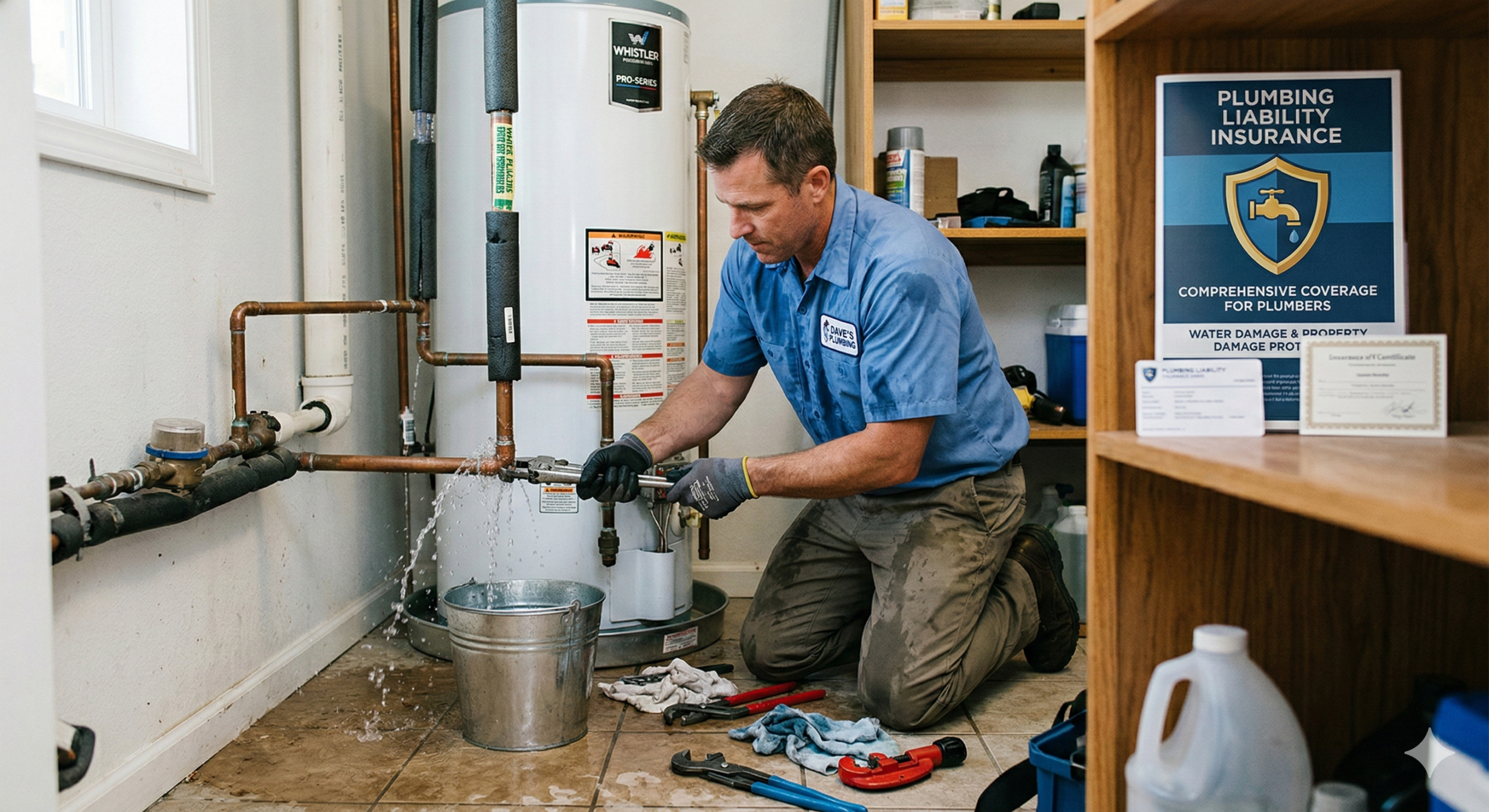
Plumbing LIability Insurance: As a plumber, you aren’t just selling a service; you’re selling the peace of mind that a home or business won’t be underwater by morning. But what happens when a joint fails three months after you’ve left the job site?
Many local contractors carry a standard policy and assume they are fully covered. However, the difference between a “standard” policy and a “specialized” one often comes down to how they handle completed operations and water damage.
Why General Liability Isn’t Enough: Solving the “Water Damage” Gap
Most plumbing insurance claims don’t happen while you are on the clock. They happen weeks or months later. If a pipe bursts due to a perceived installation error, a basic General Liability policy might have “gaps” that leave you footing the bill for the resulting property damage.
When looking for plumbing liability insurance, you need to ensure your policy includes robust Products and Completed Operations coverage. This ensures that your reputation (and your bank account) is protected long after the invoice is paid.
Understanding Plumbing Business Insurance Costs
We often get asked, “How much does plumbing insurance cost?” While every business is different, the cost is typically influenced by several key factors:
- Your Payroll: More technicians mean higher exposure.
- The Scope of Work: Are you doing new residential construction or high-pressure commercial industrial work?
- Your Claims History: A clean record always leads to better rates with regional Ohio carriers.
Instead of just looking for the cheapest premium, savvy Dayton plumbers look for the best value—a policy that won’t leave them hanging when a $50,000 water damage claim hits their desk.
Building Your Protection Strategy
Securing your business requires more than just a certificate of insurance to get onto a job site. It requires a partner who understands the specific risks of the Miami Valley plumbing industry.
For a full breakdown of how to protect your vans, your specialized diagnostic gear, and your employees, check out our comprehensive guide on Insurance for Plumbers: Protecting Tools, Trucks, and Your Reputation.
Ready to see how your current coverage stacks up?
Contact Ingram Insurance Group today for a policy review tailored to your plumbing business.
Frequently Asked Questions: Plumbing Insurance
1. Is general liability insurance required for plumbers in Ohio?
Yes. To hold a plumbing contractor license in Ohio, you must maintain a minimum of $500,000 in contractor liability insurance. Many commercial contracts and local municipalities may require higher limits, often $1 million.
2. What does “Completed Operations” mean for my plumbing business?
It protects you from claims that arise after a job is finished. For example, if a pipe you installed leaks and causes water damage three months later, this coverage handles the claim.
3. Does my policy cover damage to the property I am actually working on?
Standard liability often excludes the “care, custody, and control” of the item being worked on. You need a specialized policy or an endorsement to ensure that accidental damage to the client’s existing plumbing or fixtures is covered.
4. What is the difference between a BOP and standalone General Liability?
A Business Owner’s Policy (BOP) bundles General Liability with Property Insurance (covering your office or warehouse) at a discounted rate. It is often the most cost-effective choice for small to mid-sized plumbing shops.
5. Do I need Professional Liability (Errors & Omissions) as a plumber?
Yes. While General Liability covers physical damage, E&O covers financial loss caused by your advice or faulty design—such as recommending the wrong pipe material for a specific industrial application.
6. Is my gear covered if it’s stolen from my van overnight?
Standard commercial auto or general liability policies usually do not cover tools. You need Inland Marine (Tools & Equipment) coverage to protect your gear while it’s in transit, on a job site, or stored in your vehicle.
7. Should I “schedule” my high-value equipment?
Yes. Items like expensive drain cameras, jetters, or threading machines should be “scheduled” (listed individually with serial numbers) to ensure you receive their full replacement value in a loss.
8. Does tool insurance cover “wear and tear”?
No. Insurance is designed for sudden and accidental losses like theft, fire, or transit accidents, not for tools that simply stop working due to age or heavy use.
9. Can I just use my personal auto insurance for my work truck?
No. Personal policies usually exclude business use. If you have an accident while driving to a job site or hauling heavy equipment, your claim could be denied and your policy canceled.
10. What is “Hired and Non-Owned Auto” coverage?
This protects your business if you or an employee drive a personal vehicle for business errands (like a quick trip to a supply house) and cause an accident.
11. How can I lower my plumbing fleet insurance premiums?
Implementing a safety program, running annual MVR (Motor Vehicle Record) checks on drivers, and using telematics (GPS tracking) are the most effective ways to lower costs over time.
12. How much does plumbing insurance cost in Dayton, Ohio?
For a solo operator, basic liability can start around $800–$1,200 per year. Costs scale based on your revenue, number of employees, and the types of services you offer.
13. Does my claims history affect my rates?
Significantly. A clean three-year record can lead to substantial discounts, while frequent small “nuisance” claims can make you ineligible for the best regional carriers.
14. What should I do immediately after a job site accident?
Document everything. Take photos of the damage, secure the area to prevent further loss, and call your agent at Ingram Insurance immediately to start the claims process.
15. Is Workers’ Comp mandatory if I only have one apprentice?
Yes. In Ohio, if you have one or more employees, you are required by law to have Workers’ Compensation insurance through the BWC.
16. Am I liable for the work of my subcontractors?
Yes. If your sub causes damage and is underinsured, the claim often flows up to you. Always collect a Certificate of Insurance (COI) from every sub before they step onto your job site.
17. What is an “Additional Insured” endorsement?
This is a frequent request from general contractors. It adds them to your policy for the duration of a project so your insurance protects them from your mistakes.
18. Does standard plumbing insurance cover mold or pollution?
Usually not. Most policies have a “Pollution Exclusion.” If a leak leads to a major mold claim, you may need a specific Pollution Liability endorsement to be covered.
19. Are gas line installations covered under standard liability?
It depends on the carrier. Some policies exclude gas work or underground boring. Always verify that your specific “Scope of Work” is listed in your policy description.
20. Why should I use a local independent agent like Ingram Insurance?
National companies use algorithms that don’t understand the Dayton market. We know the local risks and which regional Ohio carriers offer the best rates for your specific trade.