How ZIP Codes Have Astounding Influence Home Insurance Rates in Montgomery County, Ohio
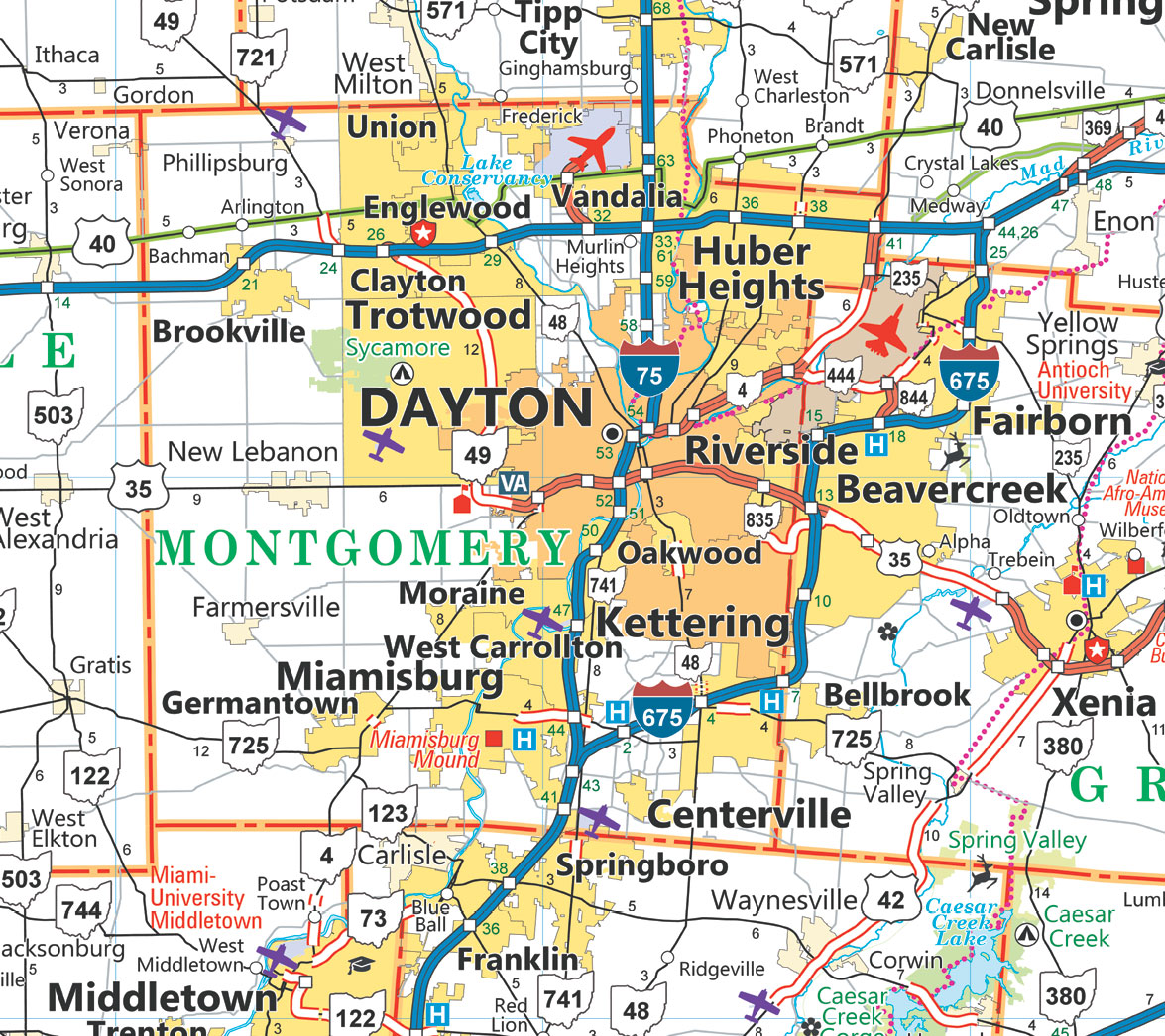
With home insurance rates In Montgomery County, Ohio, no two ZIP codes are treated exactly the same by insurance companies. While state law, coverage forms, and base rating plans are consistent, actuaries still look closely at localized patterns inside each ZIP code: fire response, theft and vandalism, claim frequency, roof age, and even the distance between clusters of homes and the nearest hydrants. For homeowners in Dayton, Kettering, Centerville, Vandalia, Huber Heights, and the smaller communities on the county’s edge, understanding these differences can explain why one side of a township consistently enjoys more favorable premiums than another. This article takes an academic look at how insurers analyze risk across Montgomery County ZIP codes—and which areas are most likely to see preferred pricing.
Why Insurers Care About ZIP Codes (And What They Don’t Use)
Insurance companies do not rate homes by gut feeling. They rely on large historical datasets and statistical models that measure how often losses occur and how severe they tend to be. ZIP codes are one of the most practical geographic units for this analysis. They are small enough to capture local variation, but large enough to generate meaningful claim data.
For Montgomery County homeowners, that means your ZIP code can influence your base rate even before any individual factors—like your credit-based insurance score, prior claims, or home characteristics—are applied. Actuaries study:
- how frequently claims are filed in that ZIP code,
- the average size of those claims,
- patterns in theft, fire, and water damage, and
- the age and construction style of the housing stock.
At the same time, certain variables are not allowed to be used. Insurers cannot directly rate on protected characteristics such as race or income, and they do not “redline” individual neighborhoods. Instead, they look at measurable risk indicators: crime statistics, fire protection class, housing density, age of structures, and past loss experience.
Core Actuarial Factors That Vary Across Montgomery County ZIP Codes
Fire Protection and Hydrant Access
One of the strongest geographic predictors of loss severity is how quickly the fire department can reach a home and whether adequate water supply is available on scene. Actuaries rely on protection-class data, which takes into account nearby stations, hydrant networks, and firefighter staffing. Dense, well-hydranted areas—like much of Kettering, Centerville, and suburban Washington Township—tend to score more favorably than homes on the county’s rural fringe where stations are farther apart and hydrants are limited.
Crime and Theft Patterns
Property crime, burglary, and vandalism also vary meaningfully by ZIP code. Insurers continuously monitor loss ratios for theft and malicious mischief. Neighborhoods with lower burglary rates and fewer auto break-ins typically enjoy more stable and sometimes lower base rates, all else equal. In Montgomery County, the core Dayton ZIP codes closer to downtown and several legacy corridors along major arterials show higher theft claim activity than many of the south suburban and exurban ZIPs.
Housing Age, Construction Style, and Roof Condition
ZIP codes dominated by pre-1940 or mid-century homes look very different on an actuarial map than areas built out after 1990. Older homes bring:
- older roofs,
- original or partially updated wiring,
- galvanized or cast iron plumbing,
- unfinished basements or stone foundations, and
- more complex architectural details that are costly to repair.
These characteristics don’t automatically make a home uninsurable, but they do influence the average cost of claims in a given ZIP code. Newer subdivisions in southern and eastern Montgomery County often experience fewer non-weather losses and lower rebuilding costs per square foot than historic housing stock in older urban ZIPs. Actuaries recognize this pattern and adjust base rates accordingly.
Weather, Trees, and Micro-Climate Effects
Wind and hail affect the entire Miami Valley, but local geography can still influence loss patterns. ZIP codes with dense tree canopy, large lots, and older roofs—common in many of Dayton’s early 20th-century neighborhoods and in parts of Oakwood and Kettering—can show higher frequencies of wind-related roof claims and fallen-tree losses. Actuaries separate pure storm severity (which is regional) from how vulnerable the homes in a particular ZIP code are to that storm activity.
Liability and Medical Claim Environment
Homeowner liability and medical payments claims are generally less ZIP-specific than property claims, but actuaries still examine patterns—such as dog-bite frequency, slip-and-fall incidents on rental properties, and premises-related injury trends. Areas with higher concentrations of rental housing or multifamily properties can show different liability claim distributions than predominantly owner-occupied suburban ZIPs.
Home Insurance Rates in Montgomery County: Comparing ZIP Code Clusters
Instead of ranking specific ZIP codes—something only an insurer with proprietary loss data can do—it is more useful to group Montgomery County ZIPs into logical clusters and discuss how actuaries tend to view their risk. The comments below focus on homeowners insurance, though similar dynamics exist on the auto side.
1. Core Urban Dayton ZIP Codes
The central city ZIPs that include downtown Dayton and the surrounding grid—such as those covering Dayton View, Old North Dayton, Twin Towers, Wolf Creek, University Row, and parts of West and Northwest Dayton—share several actuarial characteristics:
- older housing stock with a high share of pre-1940 construction,
- higher rates of theft and vandalism claims,
- more frequent water damage tied to aged plumbing and sewers, and
- denser housing patterns and more rental units.
From a rating perspective, these ZIP codes often experience higher base premiums and closer underwriting scrutiny. Insurers may require updates to wiring or roofs, may limit certain coverage forms, or may be selective about the carriers willing to write older homes with deferred maintenance. That does not mean high-quality, well-maintained historic properties cannot obtain favorable coverage—it simply means they are swimming against the statistical averages of the broader ZIP.
2. Historic but Stable Neighborhoods Near Downtown
Neighborhoods like Grafton Hill, the Oregon District, South Park, and some of the more established sections of Dayton View and Mt. Vernon sit at an interesting intersection: their ZIP codes still reflect older housing and mixed loss experience, yet many individual streets have seen reinvestment, careful renovation, and strong community cohesion. For actuaries, this translates into ZIP codes that may not receive the absolute lowest base rates in the county, but which often produce more stable long-term loss patterns than raw citywide statistics might suggest.
For homeowners in these areas, documentation matters. Photos of updated roofs, modern wiring, new plumbing, and high-quality renovations can sometimes help independent agents place coverage with more competitive carriers who look beyond the blunt ZIP-level averages.
3. South Suburban Cluster: Kettering, Centerville, and Washington Township
From a purely actuarial standpoint, many of the most favorable Montgomery County home insurance rates tend to appear in the south suburban ZIP codes that cover Kettering, Centerville, and Washington Township. These areas typically exhibit:
- lower theft and burglary frequencies,
- strong fire protection and hydrant networks,
- housing stock that, while not brand-new in all cases, often features updated roofs and systems,
- higher rates of owner occupancy, and
- fewer severe water-loss clusters compared to some older urban grids.
Actuaries view these ZIP codes as relatively predictable: claim frequencies are moderate, severity is manageable, and infrastructure is comparatively modern. As a result, homeowners in these areas are often positioned to qualify for preferred tiers, assuming their individual risk profiles—credit-based scores, claims history, and property condition—are strong.
4. North and Northwest Suburban Band: Vandalia, Englewood, Clayton, Union, Huber Heights
Moving north and northwest, the ZIP codes that include Vandalia, Englewood, Clayton, Union, and Huber Heights present a mixed but generally favorable actuarial picture. Many of these communities grew substantially in the 1960s through 1990s, leaving a blend of mid-century and newer construction. Loss patterns in these areas often show:
- moderate theft and vandalism rates,
- solid fire coverage with municipal departments,
- varying roof ages depending on the subdivision, and
- occasional storm clusters tied to wind and hail events along the I-70 corridor.
From a pricing standpoint, these ZIP codes frequently fall into the middle of the county distribution: not always as low as the most preferred southern suburbs, but often more favorable than the highest-loss urban grids. Individual home condition, updates, and distance from fire stations can make a meaningful difference in final premiums here.
5. Rural Edge and Small-Town ZIP Codes
Finally, the ZIP codes that touch the rural or semi-rural edges of Montgomery County—areas near Germantown, Farmersville, New Lebanon, Brookville, and the western and southern fringes—have their own actuarial profile. On paper, crime rates are generally lower and owner-occupancy is high. However, two countervailing factors influence premiums:
- greater distances to fire stations, and
- limited hydrant access, with more reliance on tanker operations.
For actuaries, that means that while these ZIP codes may experience fewer theft claims, the average fire loss can be more severe when it occurs. The result is a nuanced rating picture: some rural homes enjoy very competitive premiums, especially if they are close to a station or located within village limits; others see higher base rates because their protection class is less favorable despite the peaceful surroundings.
ZIP Code Factors vs Individual Pricing
It is critical to remember that ZIP code is only one layer in the rating stack. Within the same Montgomery County ZIP code, two neighbors can see very different premiums based on:
- roof age and condition,
- updates to wiring, plumbing, and HVAC,
- prior claims (including small water losses),
- credit-based insurance scores,
- coverage selections and deductibles, and
- whether they bundle home and auto.
Actuaries use ZIP-level data to set a baseline, but underwriting and pricing still come down to the specific property. A carefully updated century-old home in a mixed ZIP can sometimes be less expensive to insure than a neglected 1980s property in a preferred ZIP—it all depends on the underlying loss drivers.
Actuarial Profiles of Key Montgomery County ZIP Codes
While insurers guard their proprietary loss data, we can still understand the actuarial picture by looking at public risk indicators, historical claim patterns, fire protection class, crime levels, and the age or condition of the local housing stock. The ZIP codes below illustrate how different areas of Montgomery County generate distinct insurance outcomes. Each profile links to a more detailed neighborhood-level report.
45419 – Oakwood
Actuarially, 45419 is one of the most favorable ZIP codes in the county. Oakwood’s fully staffed fire department, dense hydrant grid, and extremely fast response times consistently reduce severity for fire-related claims. While the homes are older—many built between 1900 and 1940—the level of maintenance is exceptionally high. Theft claim frequency is low, liability claims are rare, and roofs are typically replaced on schedule. These factors support stable, preferred base rates despite higher replacement costs.
45429 – Kettering
45429 represents Kettering’s mature suburban core. Housing stock is mid-century but well-maintained, crime levels remain relatively low, and fire protection is strong. Actuaries consider this ZIP code predictable—claim frequency is moderate and severity is manageable. Water-related losses occur but not at unusual levels. Many carriers classify this ZIP as a preferred suburban rating territory.
45458 – Centerville
Centerville’s 45458 ZIP code is one of the most competitive insurance territories in the region. Newer subdivisions, strong schools, stable household income, low theft rates, and excellent fire/EMS infrastructure produce low overall claim severity. Many homes were built in the last 25–40 years, meaning updated roofs and modern electrical/plumbing systems. This ZIP often receives some of Montgomery County’s most favorable base rates.
45322 – Englewood
Englewood blends mid-century housing with newer developments. Theft claims are modest, fire response is strong, and the community benefits from modern infrastructure and high owner-occupancy. Storm losses do occur due to wind exposure along I-70, but overall actuarial performance is stable. This ZIP generally earns mid-range to preferred pricing depending on the carrier.
45327 – Germantown
Germantown combines small-town stability with varying fire protection conditions in surrounding rural areas. Properties within village limits often perform well due to hydrant access, updated systems, and low theft frequency. However, rural homes farther from stations may see increased fire severity, which can raise base premiums. Actuarially, this ZIP sits in the middle of the county distribution.
45405 – Northwest Dayton
45405 includes older housing stock, many pre-1940 structures, and higher-than-average theft and water-damage claim frequency. Actuaries often categorize this ZIP as having elevated risk due to aging roofs, older plumbing, and historical fire losses. Carriers may require updates or documentation before offering preferred pricing. Despite this, well-updated historic homes can still secure competitive rates through independent agencies.
45406 – Dayton / Mt. Vernon
This ZIP includes both some of the most architecturally significant historic homes near Salem Avenue and pockets with elevated property-crime frequency. Actuaries treat it as a high-variance territory: well-maintained Mt. Vernon streets with strong ownership trends perform much better than the broader ZIP-level averages. Older roofs, plaster walls, and heavy tree canopy raise wind and water severity, but the best-maintained streets often outperform expectations.
45417 – West Dayton
45417 has historically higher property-crime frequencies, more vacant properties, and a high proportion of older homes with aging systems. These factors increase both claim frequency and severity. Fire severity is also elevated in areas lacking ideal hydrant coverage. As a result, this ZIP usually falls into a higher base rating tier for many carriers. Roof updates, wiring improvements, and water-loss prevention measures are especially important here.
45424 – Huber Heights
Huber Heights offers a wide actuarial distribution, with many mid-century homes built in large tracts. Theft patterns are moderate, fire protection is strong, and storm claims cluster variably across neighborhoods. Certain subdivisions with newer construction perform very well actuarially; older sections with original plumbing or roofs show more frequent water losses. Carriers often classify this ZIP as mid-risk but highly insurable with proper updates.
45449 – West Carrollton
45449 shows moderate risk profiles with lower theft frequencies than urban Dayton ZIPs and strong fire service coverage. Mid-century housing dominates, and roofs vary widely in age. Water damage claims cluster in certain older subdivisions with dated plumbing. Overall, this ZIP often receives competitive but not the absolute lowest base rates.
Is Your ZIP Code Not Listed?
If your Montgomery County ZIP code wasn’t included in the profiles above, you can still explore detailed insurance insights for your area. Visit our full ZIP code directory at ohio.insuredbyingram.com/montgomery-county/ to look up your ZIP code and learn about its unique actuarial trends, risk factors, housing characteristics, and how insurers typically view your neighborhood.
Every ZIP code has its own insurance story—claim patterns, fire protection details, age of housing stock, and other local factors that influence premiums. Our directory breaks down these differences and helps you understand what carriers look for when pricing your home.
How Homeowners Can Position Themselves for the Best Rates
Montgomery County homeowners cannot change their ZIP codes without moving, but they can influence the other parts of the actuarial equation. Keeping roofs modern, addressing old electrical systems, maintaining plumbing, adding water-backup protection, trimming trees, and documenting updates all signal lower risk to carriers. In higher-theft ZIP codes, security systems, deadbolts, cameras, and well-lit exteriors can reduce both claims and perceived risk.
For residents considering a move within the county—perhaps from a core urban ZIP to a southern suburb, or from an exurban township into a historic Dayton neighborhood—it can be helpful to review how different ZIP codes typically rate before purchasing. An experienced independent agent familiar with Montgomery County’s micro-markets can illustrate these differences without oversimplifying or stereotyping any neighborhood.
If you live anywhere in Montgomery County and want to understand how your ZIP code, home updates, and coverage choices interact to determine your premium, we’re happy to walk through it with you line by line.
Call Ingram Insurance at (937) 741-5100 or email contact@insuredbyingram.com to schedule a detailed policy review.
Look Up Your Montgomery County ZIP Code
Curious how your specific ZIP code performs from an insurance and actuarial standpoint? Use the tool below to jump directly to a detailed overview for your area.
We’re continually adding more ZIP-specific insurance profiles. If your page isn’t available yet, you’ll still see guidance for Montgomery County and nearby areas.