The Complexities of Insuring Homes on Large Plots of Land: A Comprehensive Guide (7) for Rural Property Owners
The Complexities of Insuring Homes on Large Plots of Land:
Homes situated on large plots of land occupy a unique and often misunderstood place in the insurance landscape. Whether the property consists of rolling hillsides, wooded acreage, farmland, or a mixture of open fields and outbuildings, the insurance needs of rural homes differ substantially from those of standard suburban dwellings. While the structure itself may resemble a typical residence, the land, usage patterns, environmental exposures, and liability considerations create a more complex risk profile that demands specialized coverage.
Understanding these complexities is essential for homeowners who want to protect their investment, preserve their land, and maintain financial stability in the face of unexpected events. This article explores the distinct challenges associated with insuring homes on large parcels of land and outlines the reasons traditional homeowners policies are often insufficient for rural living.
1. The Land Itself Creates Liability Exposure Beyond the Home
With suburban properties, liability exposure typically revolves around the home, the yard, and the driveway. On sprawling acreage, however, the land becomes an active component of risk.
Large plots of land often include:
- Steep slopes
- Unpaved paths
- Water features such as ponds or streams
- Old structures, posts, wells, or remnants of past land use
- Wood piles, equipment storage areas, or stacked materials
- Wildlife interaction zones
These features increase the likelihood of injuries to guests, workers, passersby, or even trespassers. Landowners may be held responsible for accidents that occur far from the home itself—along trails, fence lines, or remote corners of the property.
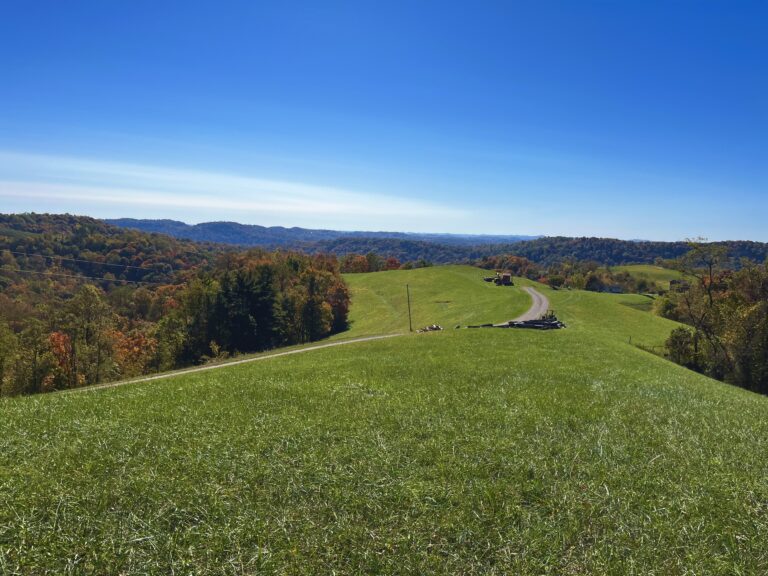
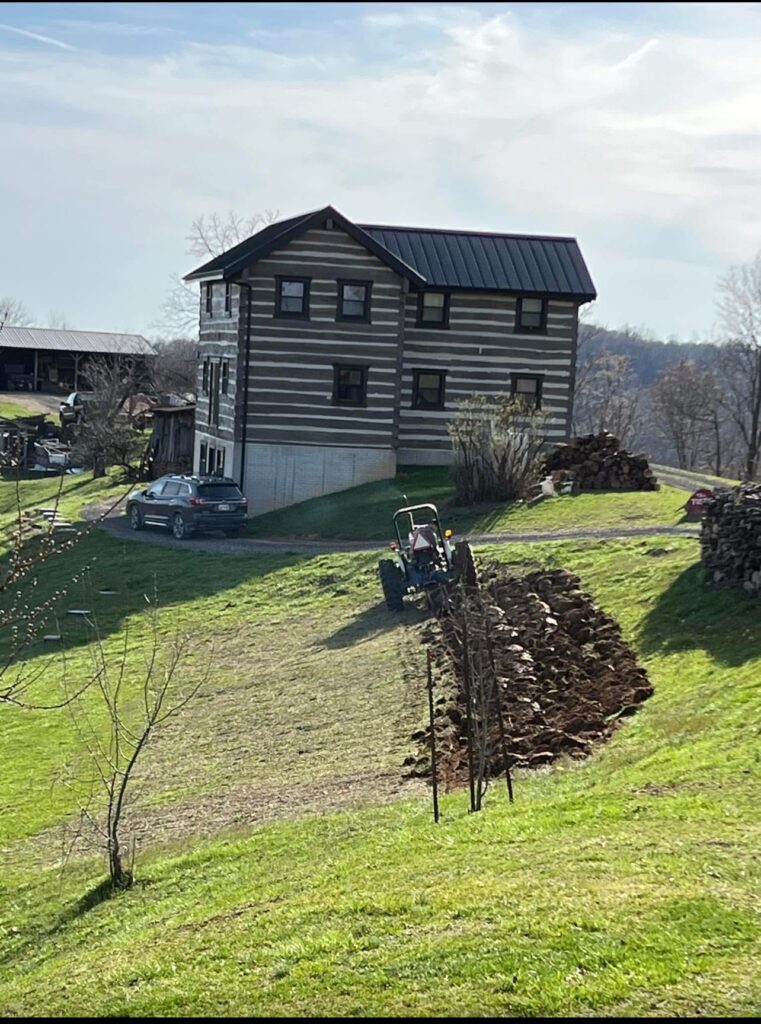
Images like the tractor working on sloped ground illustrate how normal land management activities carry inherent dangers. If a contractor, neighbor, or visitor is injured, liability claims can quickly escalate.
Standard homeowners policies often assume small lots with minimal natural hazards. Insurers may require endorsements or expanded liability limits to adequately cover the risks associated with large acreage.
2. Outbuildings, Barns, Workshops, and Sheds Need Separate Consideration
Most rural properties include secondary structures that would be uncommon—or entirely absent—on a typical suburban lot. These additional buildings are often integral to the functioning of the property, yet they are frequently overlooked when homeowners consider insurance needs. Barns, detached garages, equipment sheds, workshops, livestock shelters, greenhouses, storage buildings, and even small cabins or studios may be scattered across a rural parcel. While these structures contribute to the property’s value and utility, they introduce insurance considerations that extend far beyond the scope of a standard homeowners policy.
Each structure presents different questions for underwriting, and insurers examine these buildings individually because their risks vary widely:
- Is it used for personal or commercial purposes?
A workshop used solely for hobby woodworking carries a very different risk profile than the same building used to fabricate products for sale. The presence of even minor commercial activity can shift the classification of the structure and may trigger the need for commercial general liability (CGL) or farm liability coverage. Rural homeowners sometimes unknowingly operate a “business premises” simply by selling hay, boarding animals, or repairing equipment for neighbors. - Does it store heavy equipment, chemicals, or flammables?
Structures used to house tractors, ATV fleets, welding equipment, fuel tanks, herbicides, or pesticides carry an elevated risk of fire, explosion, or environmental contamination. Insurers must understand what is stored within a building to properly assess its insurability. A shed full of diesel fuel, propane tanks, and accelerants cannot be treated the same as a standard detached garage. - Does it house animals or feed supplies?
Buildings used for livestock—whether horses, chickens, goats, cattle, or other animals—introduce risks tied to animal injuries, zoonotic diseases, sanitation standards, and increased fire load from hay and bedding. Feed storage creates combustible environments, and barns often contain electrical modifications, heaters, or fans that increase ignition risk. Insurers may classify these structures as farm outbuildings, not residential “other structures.” - Is it heated, electrified, or seasonally occupied?
Outbuildings with independent electrical systems, wood stoves, space heaters, or climate control present risks similar to small dwellings. Seasonally occupied cabins or studios may require separate dwelling policies or landlord-type coverage if they are ever rented or used for short-term lodging. Even a simple workshop equipped with power tools may require an endorsement to ensure coverage extends to its contents and function.
A rural property owner may assume that all structures on the property fall automatically under the “other structures” portion of their home insurance policy. However, this assumption is rarely accurate. Insurers frequently apply highly specific definitions to determine whether a building qualifies as a covered structure, a business-use building, a farm outbuilding, or a separate insurable risk altogether. Coverage limits under the standard “other structures” clause—commonly 10% of the dwelling limit—are often insufficient for high-value outbuildings such as modern barns or steel equipment buildings, which may cost hundreds of thousands of dollars to replace.
Failing to disclose these structures—or failing to classify them properly—can result in underinsurance, unexpected exclusions, or outright claim denial. A barn destroyed by fire, for example, may not be covered if the insurer determines that it was used for commercial or agricultural purposes not declared on the policy. Likewise, a workshop that burns down while used for paid mechanical work may be excluded as a business premises.
Insuring homes on large plots of land therefore requires a comprehensive inventory of every structure on the property, an understanding of each building’s purpose, and careful coordination with the insurer to ensure that coverage extends appropriately to risks the standard policy does not automatically consider. As rural lifestyles increasingly blend personal use, hobby farming, small-scale business activities, and recreational structures, insurers demand greater disclosure and clarity to prevent gaps in protection.
3. Environmental and Weather Risks Are Magnified on Larger Plots
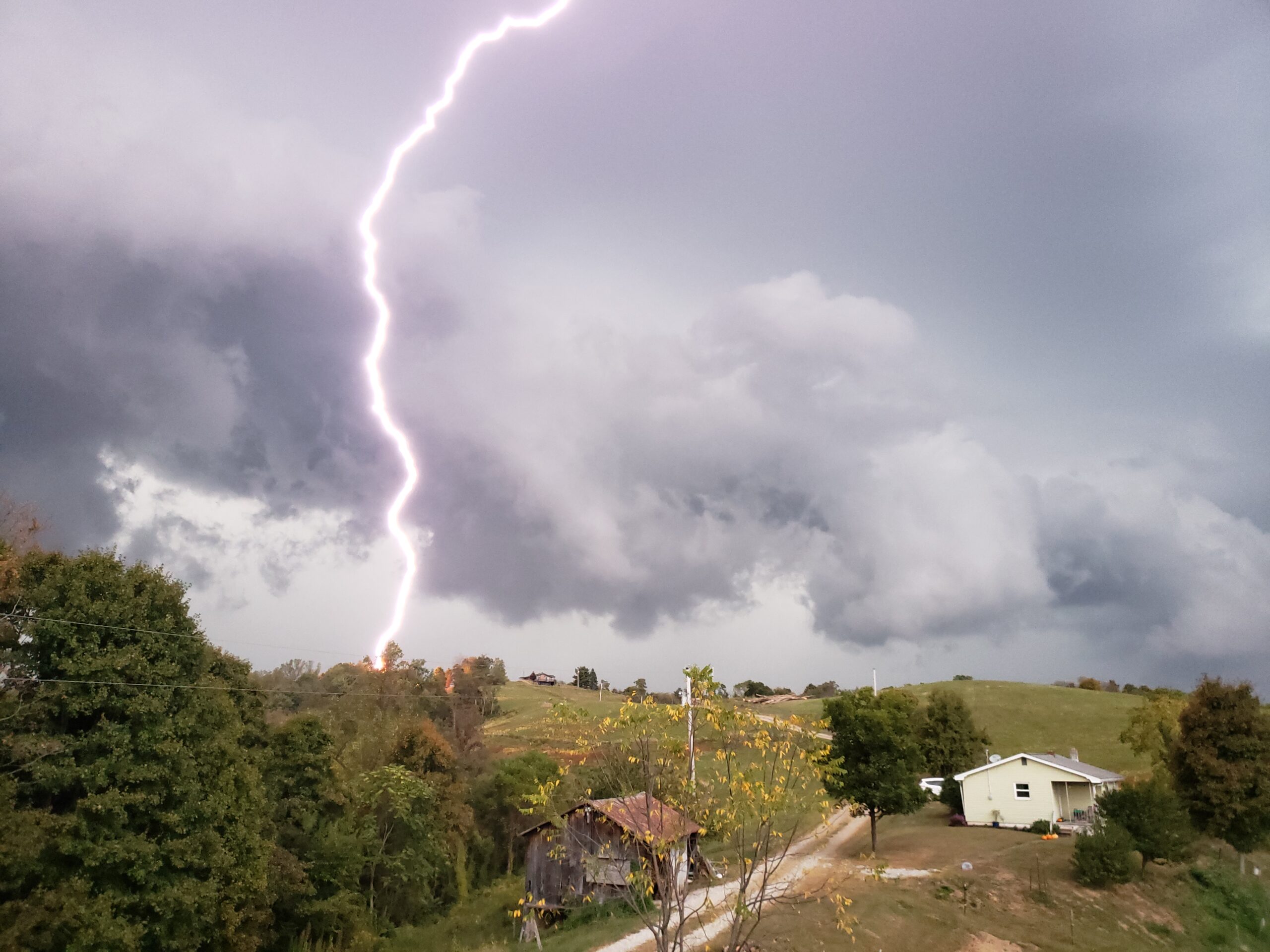
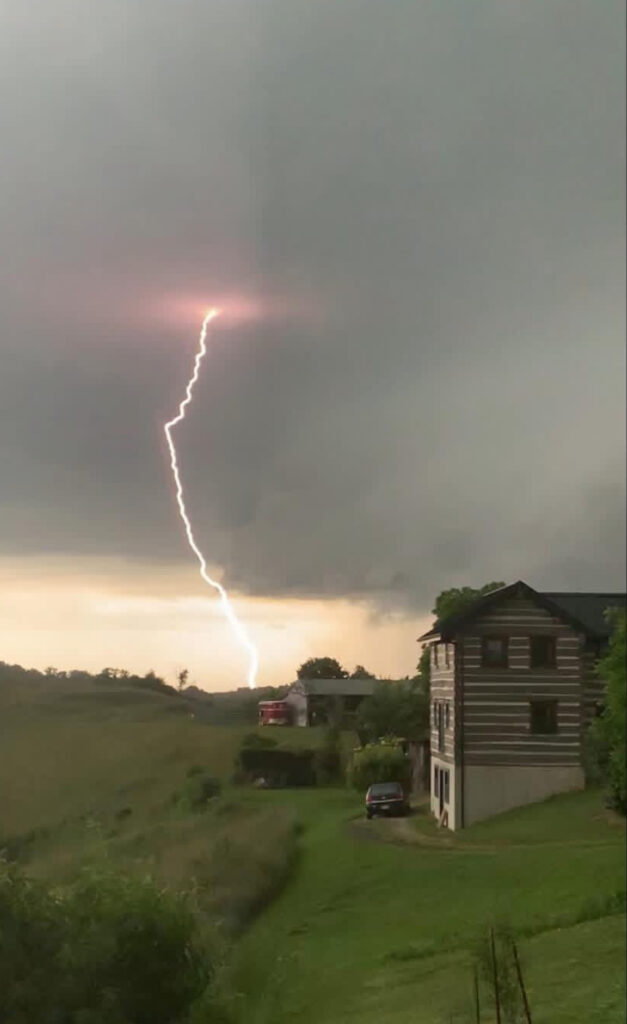
Living on acreage means living closer to nature, and nature carries risks that suburban homes rarely face. The lightning strike captured in your third image is a clear example: rural structures are often more exposed to direct lightning due to elevation, sparse surrounding development, and metal roofing.
Large rural properties also face heightened exposure to:
- Wildfires
- Windstorms and tornadoes
- Flooding from terrain runoff
- Soil erosion
- Falling trees or limbs
- Ice damage on long driveways and private roads
Insurers evaluate not only the home but also the land’s terrain, distances to fire hydrants, emergency access, and the property’s susceptibility to natural events. A home on acreage may require higher deductibles, special fire protections, or additional riders depending on location.
4. Land Use Affects Insurance Eligibility and Classification
Perhaps the most overlooked insurance complexity for homes on large plots of land is the classification of how the land is used. The difference between a residence on acreage and a small hobby farm—or even light agricultural use—carries major underwriting implications.
Insurance carriers ask questions such as:
- Is the land used for farming, grazing, timber, or crop production?
- Are ATVs, tractors, or heavy machinery used regularly on the property?
- Are animals kept on-site, either personally or commercially?
- Is the land leased for hunting or agricultural use?
- Are parts of the terrain modified, excavated, or under development?
A property that appears residential may be treated as agricultural, recreational, or mixed-use for insurance purposes. This affects:
- Policy eligibility
- Premiums
- Exclusions
- Liability structures
- Required endorsements
A simple homeowners policy may not adequately insure property that involves tractors, livestock fencing, fruit trees, or even informal lease arrangements.
5. Long Driveways, Private Roads, and Access Issues Increase Risk and Cost
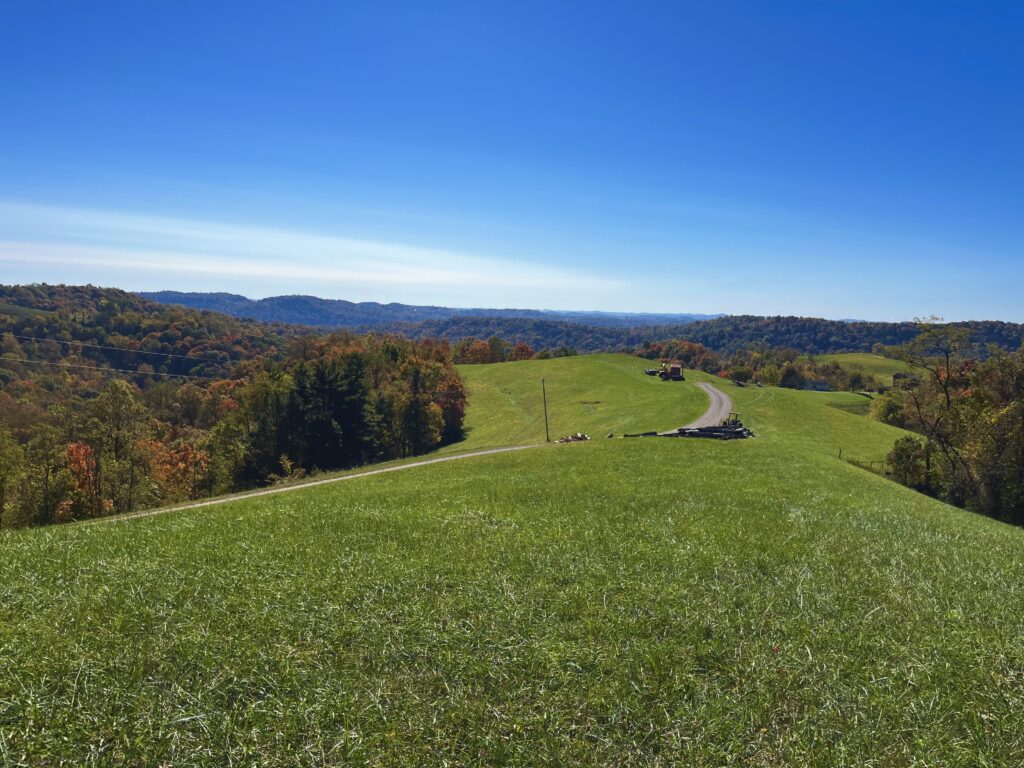
Rural homes often sit far from public roads, connected by gravel driveways, narrow private lanes, or steep winding access paths carved into hillsides or wooded terrain. These access routes are more than simple conveniences—they are critical components of the property’s overall risk profile. Insurers pay close attention to driveway length, grade, condition, and accessibility because each factor directly influences emergency responsiveness, liability exposure, and the practical challenges of living in remote environments.
For rural homeowners, access issues shape insurance considerations in several ways:
Fire trucks and emergency vehicles may have limited access.
Large firefighting apparatus require stable roadbeds, adequate turning radiuses, and surfaces that can support heavy weight. Steep grades, loose gravel, soft soil, or narrow switchbacks can prevent fire trucks or ambulances from reaching the home quickly—or at all. From an underwriting standpoint, limited access reduces the likelihood of saving the structure in a fire, dramatically increasing expected loss severity. Homes that cannot be reached by standard equipment are typically placed into higher fire protection classes, which can raise premiums significantly.
Snow, ice, or washed-out paths can delay emergency response.
In many rural regions, snow removal is the homeowner’s responsibility, not the municipality’s. Long private driveways may remain inaccessible for hours or days during winter storms. Similarly, heavy rains can wash out gravel access points, cause culvert erosion, or make slopes too slippery for emergency vehicles. Insurers understand that delayed response heightens the risk of total loss in a fire or medical emergency, and they incorporate these realities into underwriting models and pricing. What might be a manageable risk in an urban environment becomes a critical vulnerability on rural acreage.
Liability arises when visitors or service workers injure themselves on the property’s access ways.
Driveways and private roads are legally part of the premises, and injuries occurring there may trigger homeowner liability. Delivery drivers, repair technicians, utility workers, neighbors, or guests may slip on ice, trip on uneven surfaces, lose control of their vehicles on steep inclines, or encounter erosion-related hazards. Claims related to access way injuries can be substantial because plaintiffs often argue that landowners failed to maintain a reasonably safe route. Even informal paths used by friends or family can create liability if they are inadequately maintained or lack appropriate warnings.
Damage to private roads is not covered under typical home policies.
Homeowners policies generally exclude coverage for private road surfaces, culverts, retaining walls, drainage systems, or driveways unless they directly serve the home’s structural integrity. This means the owner must bear the full cost of repairing washouts, collapsed culverts, landslide-affected roadbeds, potholes, or storm damage. On large plots of land, private road systems can extend hundreds or thousands of feet, meaning repair costs often far exceed those of suburban driveways. For some properties, maintaining access becomes a routine and substantial financial obligation.
Insurers may also apply surcharges or adjust premiums based on emergency response limitations.
Insurance carriers evaluate rural properties through specialized fire protection class scoring, which considers proximity to fire stations, the availability of municipal water supply (hydrants), and the feasibility of tanker truck operations. When access is restricted—by distance, road condition, terrain, or weather vulnerability—the insurer may rate the home as higher risk, leading to increased premiums or reduced eligibility for standard carriers. Some insurers decline homes entirely if emergency access is deemed inadequate, forcing the homeowner into surplus lines markets.
Large rural properties sometimes require higher fire protection classifications and may be subject to additional mitigation requirements. Insurers may require homeowners to:
- Widen driveways to accommodate emergency equipment
- Improve roadbeds or add gravel for stability
- Install turnouts or turnaround areas
- Maintain vegetation clearance for fire lanes
- Add address markers visible from the public road
- Provide documentation of year-round access maintenance
These improvements often serve dual roles: they reduce insurance premiums and materially improve safety for the occupants and first responders.
Ultimately, access-related exposures illustrate one of the central truths of rural home insurance: the land itself—its layout, roads, slopes, and natural constraints—is as influential in determining risk as the home that sits upon it. Providing adequate insurance coverage for rural properties requires understanding how these environmental and logistical factors intertwine to shape loss probability and loss severity. For many rural homeowners, addressing access vulnerabilities is not just an insurance concern but a fundamental aspect of responsible land stewardship.
6. Personal Liability Needs Are Significantly Higher for Large Landowners
A standard homeowners liability limit of $300,000 is often insufficient for rural properties where the land itself introduces exponentially more opportunities for injury, property damage, or legal dispute than a traditional suburban parcel. In a rural environment, the homeowner’s liability extends far beyond the boundaries of the dwelling and its immediate yard. The acreage becomes an active risk surface—dynamic, unpredictable, and interwoven with natural forces, human behavior, and land-use patterns. When something goes wrong on large plots of land, the resulting claims are often severe, complex, and expensive to defend, even when the homeowner bears no fault.
Rural landowners face a higher spectrum of liability exposures, including:
Injuries involving farm equipment
Large properties routinely require tractors, brush hogs, skid steers, ATVs, chainsaws, and other heavy equipment for maintenance. Even when used safely, these machines present significant hazards to anyone on the property. If a visitor, contractor, family friend, or even a trespasser is injured by equipment—whether through operation, storage, or inadvertent contact—the landowner may be drawn into litigation. Courts frequently evaluate whether equipment was properly maintained, stored, or supervised, increasing the complexity of claims.
Falls on slopes, ravines, or unmaintained paths
Unlike suburban yards, rural land often contains uneven terrain, steep drop-offs, hidden ravines, sinkholes, loose gravel, and slippery footpaths. A simple misstep can lead to major injuries, and plaintiffs may argue that the landowner failed to warn of hazards or maintain safe access conditions. Even natural terrain can trigger liability if it is reasonably foreseeable that someone might encounter it.
Injuries to contractors, hunters, or informal visitors
Rural property owners frequently host individuals who engage in higher-risk activities: tree removal specialists, land surveyors, HVAC or utility workers, guests using ATVs, or hunters with permission to access part of the land. Each category carries different legal standards surrounding duty of care. If a contractor or permitted visitor is injured, the landowner can face significant liability unless proper indemnification and insurance verification practices are in place.
Damage caused by fallen trees
On large properties with mature trees, the risk of falling limbs or uprooted trees increases exponentially. Trees may fall onto neighboring property, private roads, utility lines, or visiting vehicles. Liability often hinges on whether the landowner “knew or should have known” about the tree’s condition—an ambiguous standard that can generate costly disputes and potential negligence claims.
Livestock escaping onto roads
In rural regions where fencing is used to contain animals, an escaped horse, cow, or goat can cause vehicle collisions or injuries to pedestrians. Many states apply strict liability or negligence-based standards depending on fencing laws. Claims involving livestock and motor vehicles regularly exceed $300,000 due to medical injuries and property damage, making small liability limits inadequate.
Land-use disputes with neighbors
Boundary disagreements, water runoff claims, easement conflicts, and disputes involving shared access roads or fences are more common on rural properties. Even when the homeowner is legally correct, resolving these matters can require attorneys, surveyors, and expert witnesses. While not all disputes fall neatly under liability coverage, umbrella policies often provide critical legal defense funding.
Because these exposures are significant and often unpredictable, owners of large acreage frequently require elevated liability protection:
Higher liability limits
Increasing standard homeowners liability limits to $500,000 or $1 million provides a foundational buffer. For many rural properties, this is the minimum prudent coverage level.
Umbrella liability policies ($1–5 million+)
Umbrella policies extend liability protection beyond the homeowners policy and often broaden the scope of covered incidents. For properties with animals, equipment, steep terrain, recreational use, or substantial visitor traffic, umbrella coverage is one of the most cost-effective ways to manage catastrophic risk.
Special endorsements to cover land-based exposures
Depending on land use, insurers may recommend endorsements for:
- Farm and ranch liability
- Vacant land liability
- Hunting liability
- ATV or tractor liability
- Water feature liability
- Outbuilding or equipment coverage
These endorsements fill the gaps where a standard homeowners policy was never designed to apply.
Even when a claim is baseless, legal defense costs can be substantial. Rural claims frequently involve complex questions of negligence, land use, property boundaries, or equipment safety. Defense expenses alone can exceed the cost of settling the claim. For this reason, extended liability coverage is not merely advisable—it is an essential component of a responsible rural insurance strategy. Rural property owners should approach liability insurance not as a static requirement but as a dynamic tool that must adapt to the realities of large land ownership.
7. Market Value vs. Replacement Cost Becomes More Complex
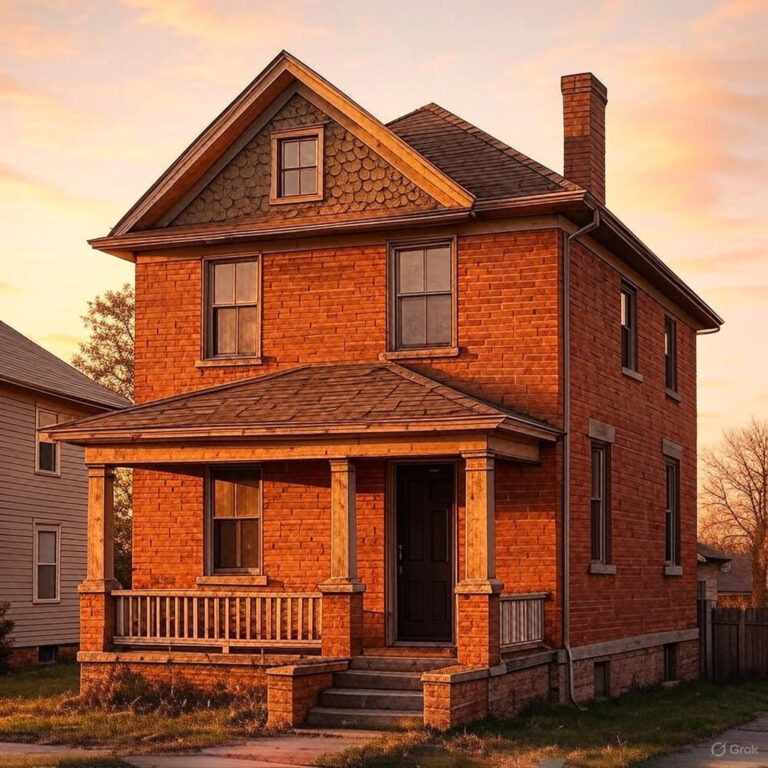
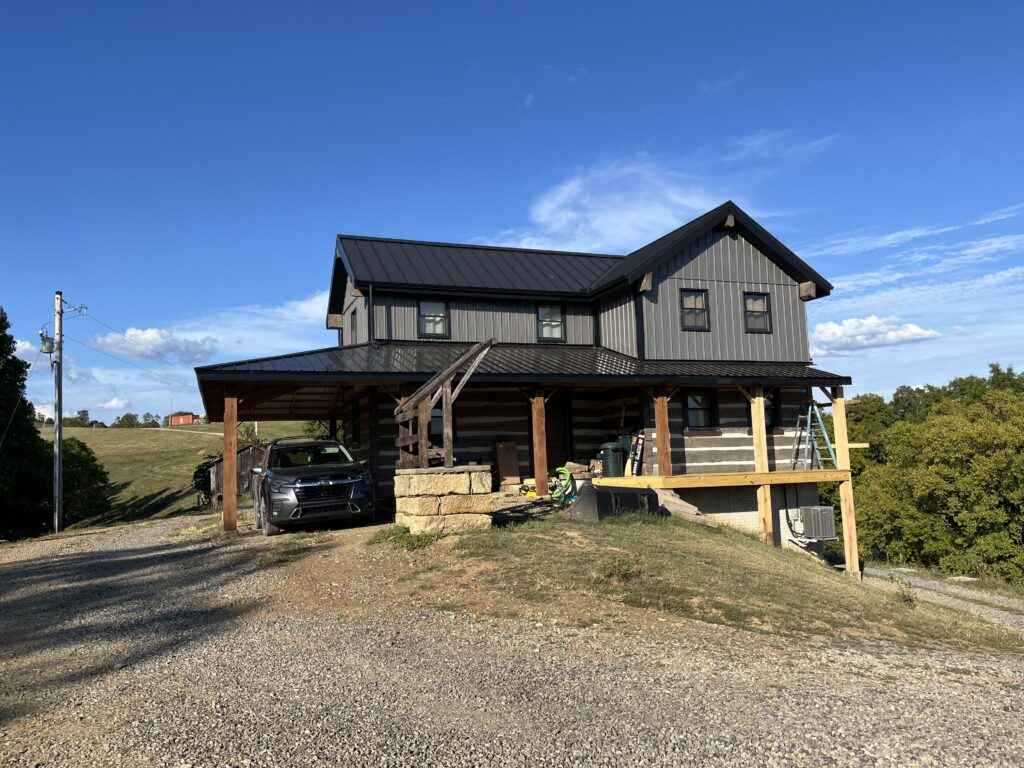
Rural homes often include features not found in mass-produced suburban houses: custom log construction, hand-built elements, large porches, metal roofs, and unique architectural designs. The home shown in your images—a tall, multi-story log-style residence—is exactly the type of structure that can challenge insurers.
Rural homes often require:
- Specialty replacement cost estimators
- Extended replacement cost endorsements
- Additional log cabin or custom home riders
- Higher rebuilding allowances for rural construction premiums
- Consideration of transportation distance for materials and labor
In many rural markets, rebuilding costs can exceed home value due to contractor scarcity and material transport challenges.
Are you in Ohio and looking to purchase a home? Please visit your Ohio House Finder.
8. Bundling Home + Land Coverage Requires Coordination Across Multiple Policy Types
Insuring a home on a large plot of land often involves multiple overlapping policies, such as:
- Homeowners insurance
- Farm or ranch liability
- Vacant land liability
- Equipment coverage
- Commercial general liability (if income is generated)
- Umbrella insurance
- Specialized environmental coverage
A rural property that is incorrectly classified can end up underinsured, overpriced, or denied coverage entirely. Working with an agency experienced in rural land and large-property risk is essential to avoid misclassification.
Conclusion: Insuring Rural Homes Requires Precision, Experience, and Local Knowledge
Homes situated on large plots of land are more than residences—they are complex, living systems that blend natural landscape, agricultural potential, environmental volatility, and lifestyle-based liability exposures. Insuring them properly requires a nuanced understanding of land use, weather patterns, outbuilding classification, liability risks, and the limitations of traditional homeowners insurance.
Whether your property includes rolling hillsides, wooded acreage, barns, ponds, or heavy equipment, the insurance strategy must be tailored to the land as much as to the home itself. The right policy protects more than structures—it protects your way of life, your investment, and your financial future.
The Complexities of Insuring Homes on Large Plots of Land: FAQ
1. Why is insuring a rural home more complex than insuring a suburban home?
Rural homes involve unique exposures—terrain hazards, outbuildings, livestock, long driveways, limited fire protection, and heavy equipment. These complexities require specialized underwriting not needed for typical residential properties.
2. Does standard homeowners insurance cover all the land on a large rural property?
No. A standard policy covers liability for the premises but may exclude activities or hazards associated with large acreage. It does not insure the land itself, nor does it automatically include liability for recreational or agricultural use.
3. Are barns and outbuildings automatically covered under my home insurance?
Most outbuildings are not automatically covered. They are often classified as “other structures,” which have limited coverage, and many require separate endorsements or farm/ranch policies depending on use.
4. Does homeowners insurance cover tractors and farm equipment?
Standard policies do not cover tractors, ATVs, skid steers, or farm machinery unless specifically endorsed. Equipment may require farm personal property coverage or a separate inland marine policy.
5. How does distance from a fire hydrant affect insurance premiums?
Homes far from hydrants or municipal fire services often receive higher fire protection classifications, resulting in higher premiums or limited carrier options. Long driveways may further restrict emergency access.
6. Are private roads and long driveways covered if damaged?
No. Most homeowners policies exclude damage to private roads, driveways, culverts, and access routes. Repairs fall solely on the homeowner unless special coverage is purchased.
7. Does insurance cover injuries that occur far from the home but still on my land?
Yes, liability coverage typically extends across the entire property boundary—but only for covered exposures. High-risk activities such as hunting or ATV use may require endorsements.
8. Are hunting accidents covered on rural properties?
Not always. Many policies exclude firearm-related incidents or require special hunting liability coverage. If land is leased out for hunting, a commercial endorsement is often necessary.
9. Do I need special insurance if I have livestock?
Yes. Livestock introduces liability risk, particularly if animals escape and cause accidents. Some policies include limited animal liability, but many rural properties require farm liability coverage.
10. Is a workshop or detached studio covered under a standard homeowners policy?
Only in limited ways. If the structure is used for business, agriculture, or income-producing activities, it typically needs its own coverage or a farm/ranch endorsement.
11. Does homeowners insurance cover wildfire risk on large rural properties?
Coverage varies by carrier and region. Insurers increasingly evaluate vegetation management, access routes, and terrain. Some require fire breaks or mitigation plans to insure rural homes.
12. How do insurers classify homes with both residential and agricultural use?
Mixed-use properties often fall into farm/ranch insurance categories. A typical HO-3 homeowners policy may be insufficient if any agricultural or commercial activity occurs on the land.
13. Are water features like ponds or creeks covered?
Ponds, creeks, and drainage areas create liability exposure but are not insured physical assets. Additional coverage may be needed if recreational or agricultural use increases risk.
14. Does an umbrella policy help protect rural homeowners?
Yes. Umbrella policies offer $1–5 million+ in additional liability protection and are highly recommended for owners of large acreage due to higher injury and dispute risks.
15. Is land under an LLC insured differently than land owned personally?
Yes. A homeowners policy does not cover land owned by an LLC, trust, or corporation. These ownership structures require commercial or farm liability policies that list the entity as the insured.
16. What happens if a contractor is injured while working on my rural property?
Injury claims may fall under your liability coverage unless the contractor has their own insurance. Homeowners should always verify contractor insurance and require certificates of coverage.
17. Are solar panels, wind turbines, or other rural energy systems covered?
These installations require specific endorsements. Insurers evaluate electrical systems, maintenance practices, and fire exposure before extending coverage.
18. Does homeowners insurance cover damage caused by falling trees?
Damage to the home or insured structures is typically covered, but damage to land, fences, or private roads is often excluded. Liability arises if the landowner knew a tree was hazardous and failed to act.
19. Does the size of the acreage affect premiums?
Yes. Larger properties often carry higher premiums due to expanded liability exposure, multiple structures, longer access distances, and increased environmental risks.
20. What insurance should I buy if my rural property is primarily recreational?
Recreational land—used for ATVs, hunting, fishing, or trails—often requires vacant land liability coverage, recreational land endorsements, or umbrella protection. Standard homeowners policies may not fully apply.