
A First-Time Homebuyer’s Guide to Ohio Home Insurance
Buying your first home in Ohio is exciting—but it can also feel overwhelming, especially when it comes to understanding homeowners insurance. From roof age rules to deductible traps to the difference between water damage and flooding, Ohio’s insurance market has its own quirks that first-time homebuyers rarely see coming. This guide walks you through everything you need to know in plain English—what’s covered, what isn’t, how to choose deductibles, and how to avoid the biggest mistakes new homeowners make. For even deeper insights, see our complete Ohio Insurance FAQ.
Understanding Home Insurance Coverage for Ohio First-Time Homebuyers
Homeowners insurance protects your home, your belongings, and your finances if something unexpected happens. But coverage can vary widely from one carrier to another—especially in Ohio, where roof age, weather patterns, and home age impact how policies are written.
Before you shop for your first policy, it’s essential to understand the six key coverage components found in most Ohio home insurance policies.
Dwelling Coverage (The Structure of Your Home)
This protects the physical structure of your home—its walls, roof, floors, cabinets, built-ins, and attached structures. The amount of coverage should reflect the rebuild cost, not the market value. In Ohio, rebuild costs often exceed sale prices due to labor and material costs.
Older homes in cities like Dayton, Miamisburg, and Kettering may need higher dwelling limits because rebuilding plaster walls, masonry chimneys, hardwood floors, and custom trim costs far more than buying the home did.
Other Structures
This covers fences, sheds, detached garages, and other structures not attached to your home. Ohio homes often have:
- Detached garages (especially in Dayton, Kettering, Englewood, and Oakwood)
- Sheds and outbuildings
- Workshops or storage barns in township or rural areas
Most policies automatically include 10% of your dwelling limit, but many homeowners increase this for large garages or workshops.
Personal Property
This covers your belongings—furniture, clothes, electronics, etc. For first-time buyers, this is often underestimated. Most policies include Replacement Cost personal property, but some cheaper policies only offer Actual Cash Value (ACV), which reduces payouts for age and depreciation.
Common mistake: Assuming your belongings are covered at full replacement value. Ask your agent to confirm.
Loss of Use
If your home becomes uninhabitable after a covered loss (fire, storm damage, etc.), Loss of Use pays for:
- Temporary housing
- Hotel stays
- Increased food costs
- Transportation
Ohio storms can cause extended power outages and structural damage, making this one of the most valuable coverage components.
Liability Coverage
Liability coverage protects you financially if someone is injured on your property or if you accidentally damage someone else’s property. Coverage typically ranges from $100,000 to $500,000, but first-time homeowners should consider increasing to $300k–$500k minimum.
Medical Payments
This pays for minor injuries to guests, regardless of fault. It’s a goodwill coverage that prevents small incidents from becoming lawsuits.
What Ohio Home Insurance Does Not Cover (Common Surprises)
One of the biggest mistakes first-time homebuyers make is assuming homeowners insurance covers everything. It doesn’t—especially in Ohio, where weather and water issues are common.
Flooding
Homeowners insurance does not cover flood damage. Flood insurance must be purchased separately through FEMA or a private carrier. Homes near the Great Miami River, Wolf Creek, and Mad River should seriously consider flood insurance—even if not in a FEMA flood zone.
Groundwater Seepage
This is not covered under any standard home insurance policy. If water seeps into your basement due to poor drainage, grading, or hydrostatic pressure, it’s considered a maintenance issue.
Wear and Tear
Insurance covers sudden and accidental damage—not long-term deterioration. This is important for:
- Aging roofs
- Rotting siding
- Deteriorating brick or mortar
- Settlement cracks
- Old plumbing or wiring
Old Roof Leaks
Ohio homeowners often believe a leaky roof is covered. It is not—unless the leak is caused by a covered peril like wind or hail.
Mold (Most of the Time)
Some policies offer limited mold remediation, but prevention is primarily the homeowner’s responsibility.
The Biggest Risks Ohio First-Time Homebuyers Overlook
Roof Age (Massive Underwriting Factor)
Roof age is one of the most critical rating factors in Ohio. Many carriers won’t insure roofs over 15–20 years old for full Replacement Cost, and some refuse to insure roofs older than 25 years entirely.
This makes it crucial that first-time buyers:
- Ask the seller for roof receipts
- Review the inspection report carefully
- Get clear documentation of roof age
Learn more in our guide to Roof Age Rules in Ohio Insurance.
Water-Backup Coverage
Ohio’s older homes—especially in Dayton, Oakwood, Kettering, and Miamisburg—are prone to sewer and sump pump backup. This is not included in standard homeowners insurance.
First-time buyers should strongly consider adding $10k–$25k of water-backup coverage.
ACV vs RCV Roof Coverage
Many first-time buyers unknowingly choose policies that only pay ACV for roof damage. This reduces payouts dramatically—sometimes by 60–80%.
Always confirm your policy has Replacement Cost on the roof and dwelling.
Deductibles That Are Too High
Big carriers sometimes offer ultra-low premiums by quietly adding:
- 2% wind/hail deductibles
- $5,000 All-Peril deductibles
- Separate deductibles for roof-only claims
These can be financially devastating for new homeowners.
Unknown Prior Claims on the Home
Insurance follows the property—not just the homeowner. Prior claims affect pricing and eligibility for five years.
Your agent should run a CLUE report before binding coverage.
How Deductibles Work for Ohio First-Time Homebuyers
$1,000 vs $2,500 Deductibles
Most first-time buyers start with a $1,000 deductible. However, in Ohio:
- $2,500 deductibles may save 15–20%
- $5,000 deductibles may save 25–35%
The trick is balancing affordability with realistic out-of-pocket ability.
Wind/Hail Deductible Traps
Ohio is in a wind/hail corridor—meaning many carriers apply separate deductibles automatically. First-time buyers often don’t notice this in the quote.
Always ask whether the deductible applies to:
- All claims
- Only roof claims
- Only wind/hail damage
Why Cheaper Policies Have Higher Deductibles
If a price seems too good to be true, the deductible is usually where corners were cut.
Typical Ohio Home Insurance Costs for First-Time Buyers
Ohio’s average homeowners premium is $1,300–$1,700 annually, but first-time buyers often pay more due to:
- Location
- Roof age
- Square footage
- Credit score
- Prior claims (including those from previous owners)
Common Mistakes First-Time Ohio Homebuyers Make
- Not verifying roof age with documentation
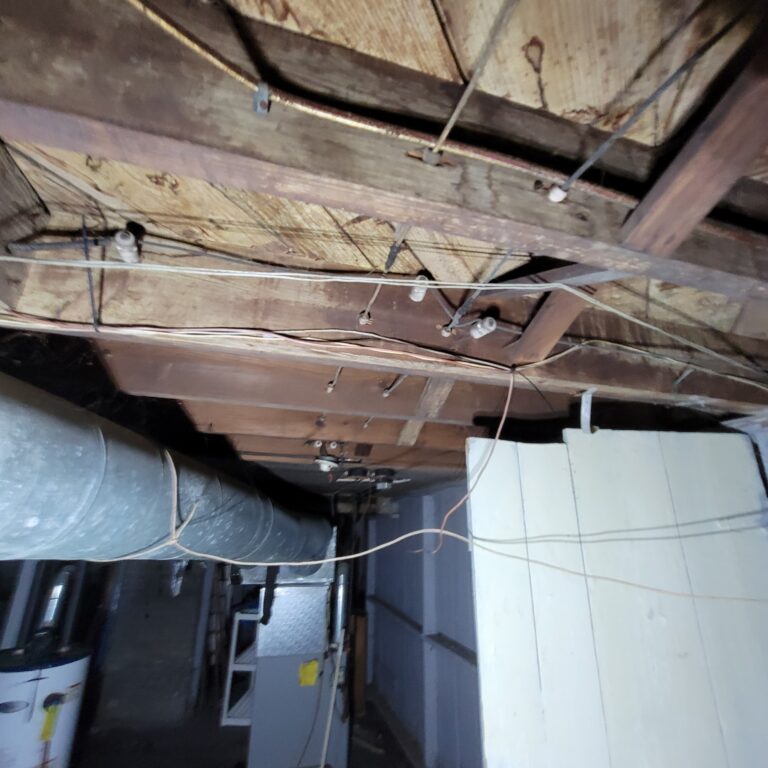
- Buying a flipped home with outdated wiring behind new drywall
- Confusing water damage with flood coverage
- Not adding sewer/water-backup protection
- Underinsuring personal property
- Choosing based solely on price
How to Choose the Right Ohio Home Insurance Policy
First-time homebuyers can follow this simple 5-step checklist:
- Verify roof age and request receipts
- Confirm plumbing, wiring, and HVAC system age
- Compare deductibles carefully
- Add water-backup and service-line coverage
- Work with a local independent agent who understands Ohio homes
Related Resources
For more deep-dives, explore:
How Ohio’s Housing Stock Affects Home Insurance Requirements
Ohio’s homes vary dramatically by city, county, age, and neighborhood, which creates huge differences in insurance eligibility and pricing. For a first-time homebuyer, understanding how your home’s age and construction type influence coverage is essential.
Below is a breakdown of how insurance underwriters view homes across Dayton, Montgomery County, and nearby suburbs—so you can anticipate the requirements and pricing before you buy.
Oakwood: Historic Homes, Slate Roofs & Older Mechanical Systems
Oakwood is stunning, but from an insurance perspective, it’s also one of the most complex markets in Ohio. First-time buyers in Oakwood frequently encounter:
- Slate, clay tile, or cedar shake roofs
- High replacement costs due to custom architecture
- Older plumbing, wiring, and HVAC systems
- Multiple fireplaces and chimneys needing inspection
These factors can dramatically increase premiums and may require specialized carriers. Always ask for documentation of updates before closing.
Kettering: Mid-Century Ranches with Predictable Construction
Kettering is one of the most first-time-buyer-friendly markets for insurance because most homes have simple rooflines, solid framing, and consistent mechanical systems. However, many Kettering homes still need:
- Electrical panel updates
- Roof replacements (15–25 years old)
- Water-backup coverage
- Service line endorsements due to aging sewer laterals
Centerville: High-Value Homes with Large Roof Surfaces
Centerville offers newer construction and high-end finishes, but that means:
- Complex roof structures
- Multiple HVAC zones
- Finished basements requiring significant water-backup protection
- Higher replacement cost values
For first-time homebuyers, expect premiums to be higher due to rebuild cost, not market value.
Washington Township: Luxury Builds and Architectural Complexity
Washington Township homes often exceed 3,500–5,000+ square feet. Insurance carriers heavily focus on:
- Roof complexity and age
- Drainage on sloped or wooded lots
- Custom kitchens and finishes needing detailed valuation
- High-end HVAC and mechanical systems
It’s not uncommon for replacement cost valuations to exceed $750,000–$1,000,000 even if the purchase price is much lower.
Dayton (Traditional Neighborhoods): Older Homes with Mixed Update Histories
Dayton neighborhoods—Belmont, Riverdale, Grafton Hill, Residence Park, College Hill, etc.—have some of the oldest homes in the county. Issues first-time buyers frequently face include:
- Fuse boxes instead of breaker panels
- Cast iron plumbing stacks
- Patchwork roof repairs
- Masonry chimneys needing lining
- Porches and steps requiring repair before binding
Huber Heights: Brick Ranch Capital of Ohio
Huber Heights is extremely insurance-friendly due to its standardized brick ranch construction. Risks are lower, but common issues include:
- Older HVAC systems
- Old water heaters
- Roof age uncertainty
- Garage conversions needing verification
Vandalia: Wind Exposure & Mixed Roof Ages
Vandalia has stable construction but more wind exposure. This affects:
- Roof claims and pricing
- Eligibility for Replacement Cost roofs
- Requirement for clear roof photos
Miamisburg: Hillside Homes with Water-Backup Challenges
Miamisburg’s hills and older neighborhoods create drainage challenges. First-time buyers often need:
- Sump pumps with battery backups
- Extra water-backup coverage
- Service line endorsements
Clayton & Englewood: Mature Trees and Wind Corridors
Large lots often mean long underground service lines and more tree exposure. Coverage essentials include:
- Service line protection
- Wind/hail Replacement Cost
- Tree damage considerations
Moraine & West Carrollton: Mixed Housing Age & Drainage Issues
These areas contain many mid-century homes with:
- Older plumbing
- Roof age concerns
- Basement moisture issues
Water-backup is practically mandatory.
Real First-Time Buyer Scenarios Across Dayton & Surrounding Areas
Scenario #1: The “Brand-New Roof” That Was Actually 18 Years Old
A first-time buyer in Belmont was told the roof was “newer.” During underwriting, the insurer requested photo proof. The inspection revealed:
- Granule loss
- Curled shingles
- ODOT satellite images showing installation prior to 2008
The carrier downgraded the roof to ACV only—raising out-of-pocket risk by $11,000.
Scenario #2: The “Flipped” Home with Old Wiring Hidden Behind Fresh Drywall
A buyer in Twin Towers purchased a beautifully remodeled home. During an insurance inspection, the carrier discovered:
- Knob-and-tube wiring in the attic
- Aluminum branch wiring in multiple circuits
- A 1960s panel with double-tapped breakers
The buyer almost lost coverage until an electrician corrected the issues.
Scenario #3: The $58,000 Water Damage Claim No One Expected
A first-time homeowner in Kettering had a finished basement—new drywall, new flooring, new furniture. During a storm, the sump pump failed, causing extensive damage. The policy did not include water-backup coverage.
The loss was entirely out-of-pocket.
Scenario #4: The Roof That AI Incorrectly Classified as “Damaged”
A Washington Township buyer’s insurer used aerial AI scans to assess the roof. The system flagged:
- “Missing shingles” that were actually sun glare
- “Granule loss” that was debris
A local agent appealed the decision by sending on-site photos and secured full Replacement Cost roof coverage.
Scenario #5: The Prior Claim the Buyer Didn’t Know About
A home in Miamisburg had a sewer-backup claim filed three years earlier. CLUE reported it during underwriting, increasing premiums by 20% and requiring a water-backup endorsement.
Scenario #6: First-Time Buyer Shocked by a Wind/Hail Percentage Deductible
A young couple purchasing in Englewood accepted a low-premium quote without reading the details. Their deductible was:
2% of Coverage A — $6,400 deductible on a $320,000 house.
This made storm claims nearly unaffordable.
Scenario #7: A Huber Heights Buyer Avoids a Big Mistake
A first-time buyer purchased a brick ranch with a 28-year-old roof. Their agent caught it early and arranged for the seller to install a new roof prior to closing, saving the buyer thousands.
Cost Expectations for First-Time Homebuyers Across Ohio
Below are realistic examples of what different homebuyers might expect in Ohio’s major communities.
1,200 sq ft Dayton Home
- Premium: $1,400–$1,800
- Factors: Roof age, wiring type, prior claims
2,000 sq ft Kettering Ranch
- Premium: $1,250–$1,600
- Factors: Sewer lines, finished basement, tree proximity
3,000 sq ft Centerville Home
- Premium: $1,800–$2,700
- Factors: Roof complexity, high rebuild cost
4,500 sq ft Washington Township Home
- Premium: $2,500–$4,000+
- Factors: Custom finishes, multiple HVAC systems, complex roofline
1960s Huber Heights Brick Ranch
- Premium: $1,050–$1,450
- Factors: Roof age, panel updates, water-backup choices
1940s Belmont Home
- Premium: $1,500–$2,100
- Factors: Electrical system, sewer line condition
Important Coverage Add-Ons for First-Time Buyers in Ohio
Water-Backup Coverage
The most critical endorsement in Ohio. Even $10,000 may not be enough for finished basements.
Service Line Coverage
Protects sewer, water, and power lines underground. Especially important in Dayton, Kettering, Oakwood, and Miamisburg.
Equipment Breakdown
Covers HVAC systems, appliances, sump pumps, and more.
Ordinance or Law Coverage
Pays for code upgrades during repairs. Mandatory for older homes.
Matching Siding and Roof Surfaces
If one section of siding or shingles is damaged, this can pay to match undamaged areas.
How Local Independent Agents Help First-Time Buyers Avoid Common Pitfalls
Insurance call centers and national carriers often rely heavily on outdated imagery and AI scans. Independent agents in Ohio can:
- Review inspection reports with you
- Provide real roof photos to carriers to overturn bad AI decisions
- Check CLUE reports before you buy
- Explain deductible traps that call centers gloss over
- Recommend proper coverage add-ons based on the home’s age and location
- Find carriers that specialize in older homes or high-value homes