Loss of Rent Insurance: What It Is, How It Works, and When You Need It
Loss of rent insurance is one of the most valuable — and most misunderstood — coverages available to rental property owners. Many landlords assume their policy automatically replaces lost income after a fire or major loss, only to find out after a claim that coverage limits, waiting periods, or exclusions apply. In this guide, we’ll break down loss of rent insurance in plain language, explain how it works, when it applies, when it doesn’t, and how to structure coverage correctly for rental properties in Ohio and beyond.
Loss of Rent Insurance: What It Is, How It Works, and When You Need It

What Is Loss of Rent Insurance?
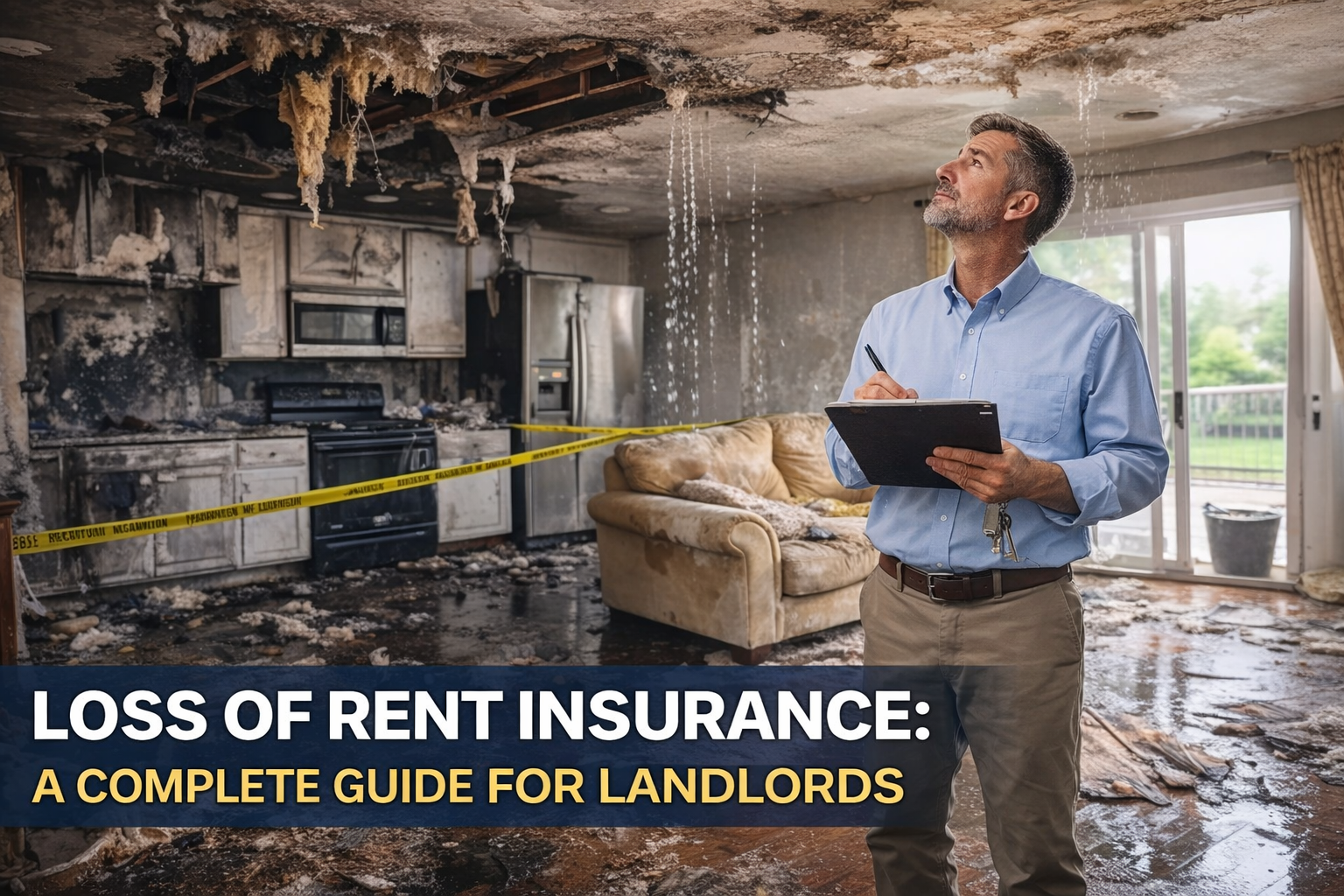
Loss of rent insurance — sometimes called loss of rents coverage or fair rental value coverage — is designed to replace rental income when a covered loss makes a property uninhabitable. The coverage applies when physical damage from a covered peril prevents tenants from occupying the unit and paying rent.
This coverage is not about vacancies, tenant nonpayment, or market downturns. It exists to protect landlords from income disruption caused by insured property damage.
Who Loss of Rent Insurance Is For
Loss of rent insurance is designed for property owners who rely on rental income and want protection against disruptions caused by covered property damage. While the coverage is not necessary for every property owner, it is especially important for landlords whose financial stability depends on consistent rent payments.
This coverage is commonly used by:
- Owners of long-term residential rental properties, including single-family homes, duplexes, and small apartment buildings where rental income is expected on a recurring basis.
- Small landlords with one or more rental units who may not have the financial reserves to absorb several months of lost income following a major loss.
- Real estate investors relying on rental income to service debt, such as mortgage payments, property taxes, insurance premiums, and maintenance expenses.
- Accidental landlords renting former primary residences, who may be new to rental ownership and unaware of how income interruptions can affect personal finances.
- Owners of multi-unit properties, where a single loss event can impact multiple income streams at the same time.
Loss of rent insurance is most valuable when rental income plays a direct role in meeting ongoing financial obligations. Without this coverage, landlords may still be responsible for mortgage payments, utilities, and other fixed costs even when tenants are unable to occupy the property.
This coverage is most commonly included on landlord insurance policies, often referred to as dwelling fire policies (such as DP-1, DP-2, or DP-3 forms), though the scope and structure of coverage can vary significantly by carrier.
Understanding who the coverage is designed for helps landlords decide whether loss of rent protection is a necessity or a secondary consideration based on their individual risk tolerance and financial position.
Loss of Rent vs. Business Interruption Insurance
Loss of rent insurance is often compared to business interruption insurance, but the two are not the same.
Business interruption insurance is typically used for operating businesses and may include lost profits, payroll, and operating expenses. Loss of rent insurance focuses specifically on replacing rental income — not profit — during a period of restoration.
For most residential rental properties, loss of rent coverage is the appropriate form.
How Loss of Rent Insurance Works
Loss of rent insurance does not pay automatically after any disruption. Coverage activates only when specific conditions outlined in the policy are met. Understanding how these conditions work together helps landlords set realistic expectations before a loss occurs.
In general, loss of rent coverage applies when all three of the following conditions are present:
- A covered peril causes physical damage to the property. The underlying cause of loss must be covered under the property portion of the policy. If the damage itself is excluded, loss of rent coverage will not apply.
- The damage renders the property uninhabitable. Minor damage that allows tenants to safely remain in the unit typically does not trigger loss of rent coverage. The property must be unsafe, unlivable, or legally unfit for occupancy.
- Tenants are unable to occupy the property and pay rent. The loss of income must be directly tied to the physical damage. If tenants choose to leave for unrelated reasons, coverage generally does not apply.
When these conditions are satisfied, the insurer pays the rental income that would reasonably have been earned, subject to policy limits, waiting periods, and documentation requirements.
How Rental Income Is Calculated
Insurers typically calculate loss of rent payments based on existing lease agreements or fair rental value, depending on the policy language. Documentation such as leases, rent rolls, or prior payment history may be required to substantiate the claim.
Coverage is intended to replace income — not profit — and does not include expenses that would not have continued during the loss period.
Covered Period (Period of Restoration)
Loss of rent insurance pays during the period of restoration, which is defined as the reasonable amount of time necessary to repair or rebuild the property using due diligence and reasonable speed.
This period typically begins shortly after the covered loss occurs and ends when the property could reasonably be returned to rentable condition, even if tenants have not yet moved back in.
Why the Period of Restoration Matters
The period of restoration is one of the most misunderstood aspects of loss of rent coverage. Insurers do not pay indefinitely, and coverage does not extend simply because repairs take longer than expected.
Delays caused by:
- Contractor shortages
- Material backorders
- Financing issues
- Owner decision-making delays
may not extend the covered period beyond what the insurer considers reasonable.
This is why selecting adequate limits and understanding how restoration timelines are evaluated is critical for landlords who depend on rental income.
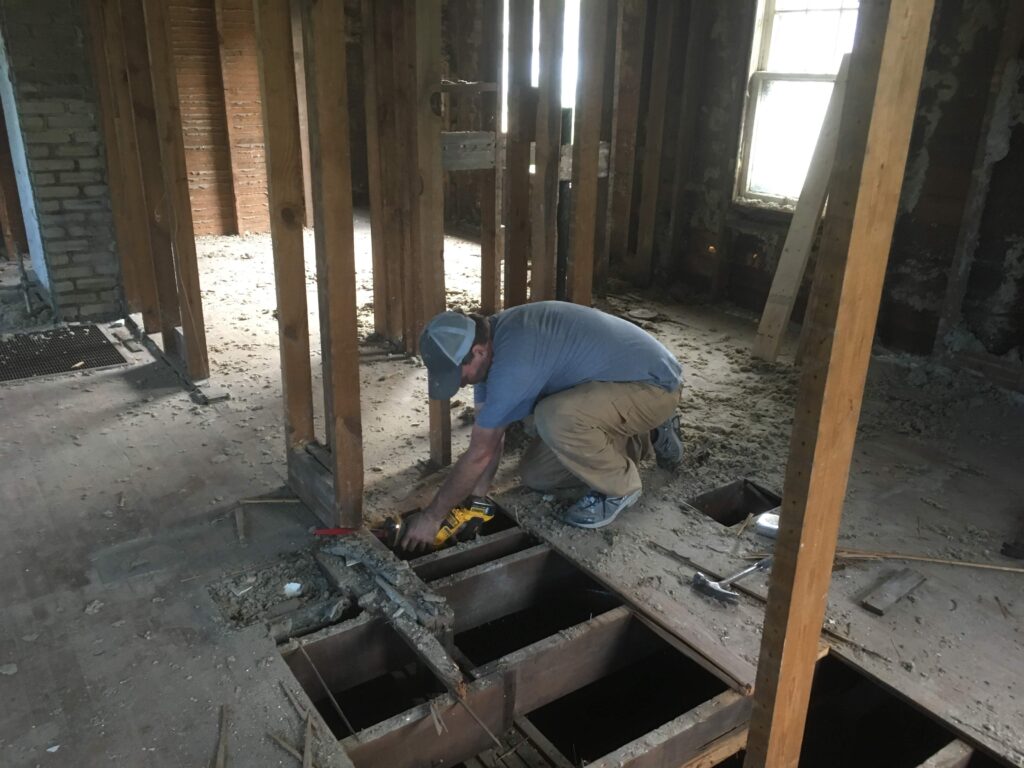
What Loss of Rent Insurance Typically Covers
Loss of rent insurance generally covers:
- Lost rental income during repairs
- Rental income that would have been earned under existing leases
- Rental income at fair market value if the unit was vacant but rentable
Some policies calculate payment based on actual lease terms, while others use fair rental value. This distinction matters significantly at claim time.
Common Covered Causes of Loss
Loss of rent coverage only applies when the underlying damage is caused by a covered peril. Common examples include:
- Fire or smoke damage
- Windstorms or hail
- Vandalism
- Certain types of water damage
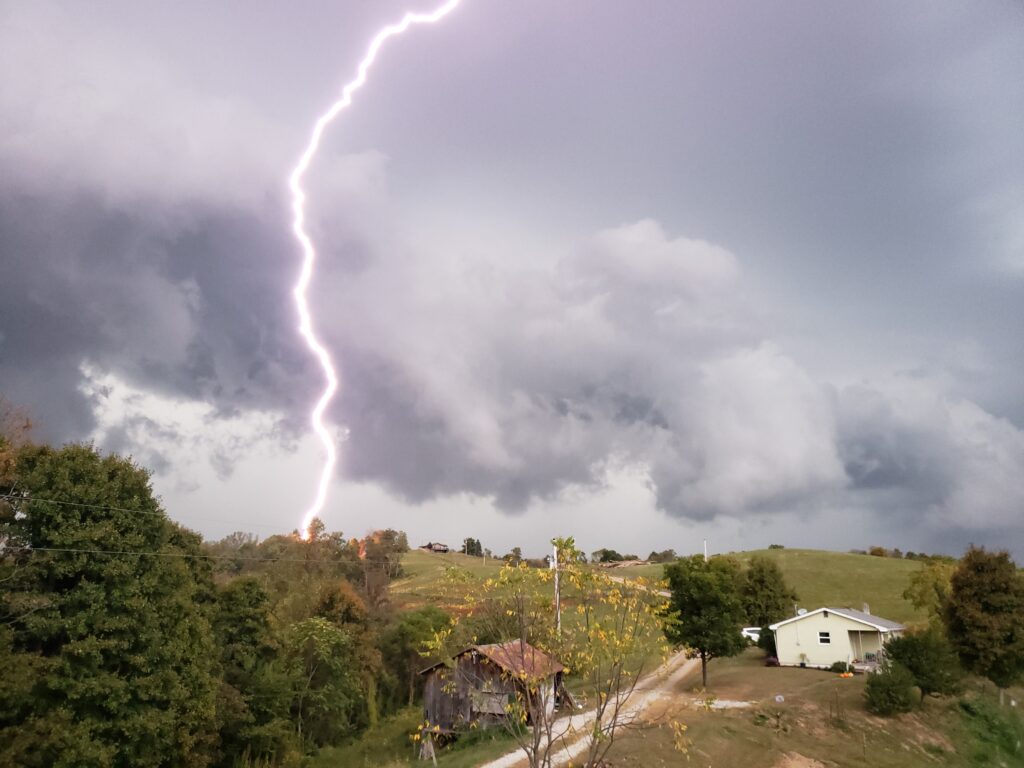
- Lightning or explosion
If the damage itself is not covered, loss of rent coverage will not apply.
What Loss of Rent Insurance Does NOT Cover
This is where confusion is most common. Many landlords assume loss of rent insurance protects against any interruption in rental income, but the coverage is much narrower in scope. Loss of rent insurance applies only when income is interrupted due to covered physical damage — not general business or tenancy risks.
Loss of rent insurance typically does not cover the following situations:
- Tenant nonpayment or eviction. If a tenant stops paying rent, breaks a lease, or is evicted, loss of rent insurance does not apply. These situations are considered credit or tenancy risks, not insured property losses.
- Vacancies unrelated to physical damage. If a unit is vacant due to market conditions, tenant turnover, or difficulty finding a renter, loss of rent coverage does not respond. The vacancy must be directly caused by covered property damage.
- Maintenance issues or normal wear and tear. Gradual deterioration, aging systems, deferred maintenance, or known issues that worsen over time are not covered causes of loss. If the underlying damage is excluded, loss of rent coverage will not apply.
- Mechanical or operational failures. Failures caused by equipment breakdown, electrical issues, or system malfunctions without an external covered event are typically excluded.
- Delays caused by lack of funds or owner decision-making. If repairs are delayed because of financing issues, delayed approvals, or changes in scope chosen by the owner, loss of rent payments generally do not extend beyond the reasonable restoration period.
- Contractor shortages or material delays. While these delays are common, especially after widespread losses, insurers typically do not extend coverage indefinitely due to labor or supply chain constraints.
- Government or permitting delays unrelated to the insured loss. If delays are caused by zoning issues, unrelated code upgrades, or administrative processes not directly tied to repairing covered damage, loss of rent coverage may not apply.
Loss of rent insurance also does not apply when tenants leave for reasons unrelated to a covered loss, such as personal circumstances, lease expiration, or dissatisfaction with the property.
Understanding these limitations is essential. Loss of rent insurance is designed to replace income lost due to insured physical damage — not to eliminate the financial risks inherent in owning rental property.
Vacant Units and Fair Rental Value
Some landlords assume loss of rent coverage only applies when a tenant is actively paying rent. That is not always the case.
Many policies include fair rental value language, meaning the insurer pays the market rent that would have been earned if the unit had been rentable at the time of loss.
This is especially important for properties between tenants.

How Much Loss of Rent Coverage Do You Need?
Coverage limits are typically expressed as a dollar amount or a time-based limit (such as 12 months).
Landlords should calculate:
- Monthly rental income per unit
- Total annual rental income
- Debt service obligations
- Likelihood of extended repairs
Underinsuring loss of rent is a common mistake that leaves landlords exposed during major losses.
Waiting Periods and Deductibles
Some policies include a waiting period before loss of rent payments begin. Others apply the property deductible to loss of rent claims.
Understanding how your policy treats these provisions is critical when evaluating coverage.
Short-Term Rentals and Loss of Rent Insurance
Short-term rental properties (such as Airbnb or VRBO units) are treated differently than long-term rentals. Standard landlord policies may exclude or limit coverage for short-term rental income.
Specialty endorsements or policies may be required to properly insure short-term rental income.

Loss of Rent Insurance vs. Rent Guarantee Insurance
Loss of rent insurance is not the same as rent guarantee or rent default insurance.
Rent guarantee products focus on tenant nonpayment, while loss of rent insurance requires physical damage from a covered peril.
Confusing the two can lead to significant coverage gaps.
Common Loss of Rent Insurance Claim Examples
Loss of rent insurance is easiest to understand through real-world scenarios. While every claim depends on policy language and the cause of loss, the following examples illustrate how coverage commonly applies in practice.
Fire Loss
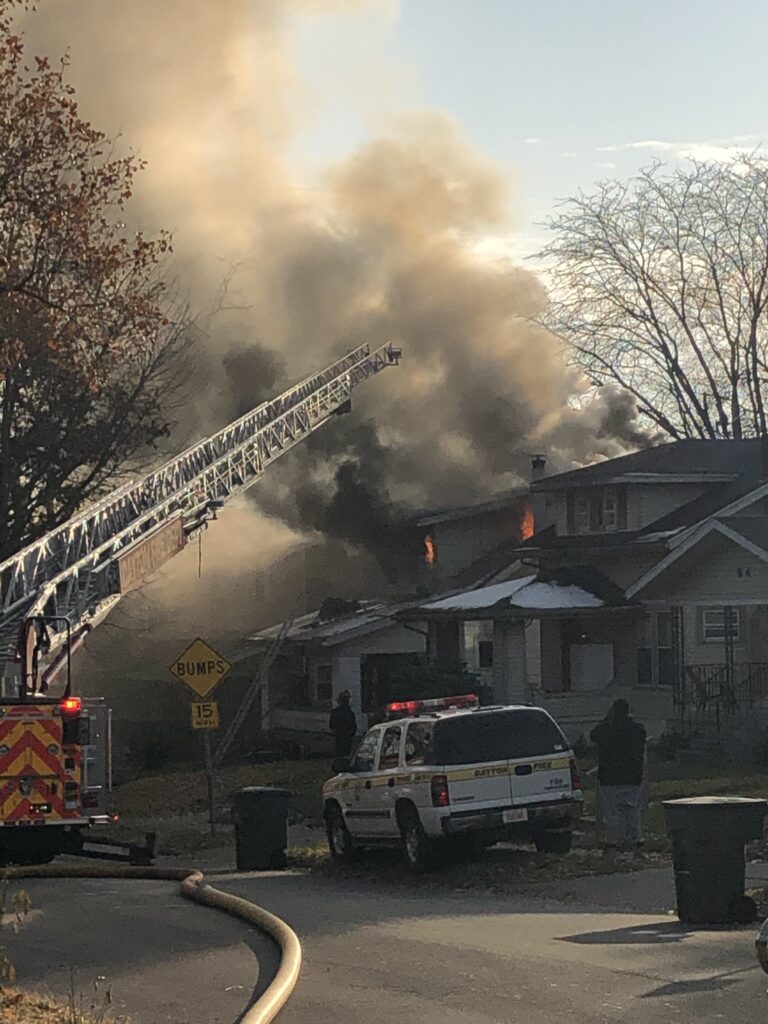
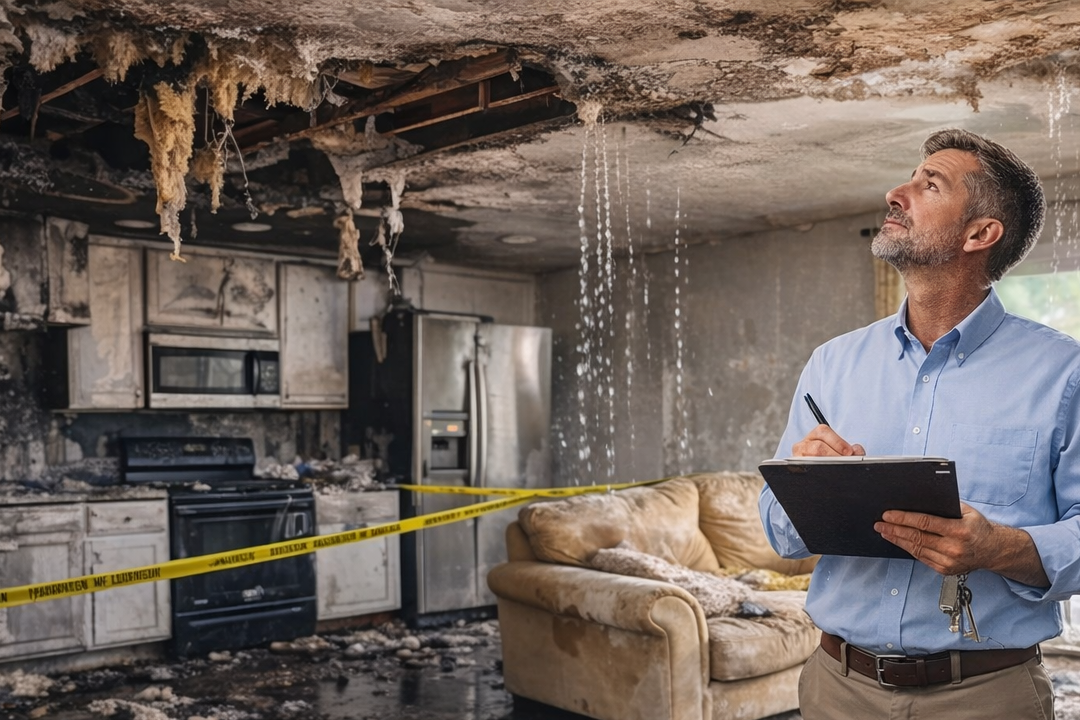
A kitchen fire starts in one unit of a duplex and spreads smoke and fire damage throughout the structure. Local fire officials determine the property is unsafe for occupancy, and both units must be vacated during repairs.
In this situation, loss of rent insurance typically replaces the rental income that would have been collected during the repair period. Coverage applies because the fire is a covered peril and the property cannot be legally occupied while restoration is underway.
The policy pays lost rent during the reasonable period of restoration, which may include time for permitting, contractor scheduling, and code-compliant repairs.
Water Damage
A supply line inside a wall bursts during the winter, causing significant water damage to multiple units. Flooring, drywall, and electrical systems are affected, and tenants are forced to relocate while repairs are completed.
If the water damage is caused by a covered peril — such as a sudden and accidental pipe burst — loss of rent insurance may apply. The insurer typically replaces rental income while repairs are being made, subject to policy limits and any waiting period.
However, if the damage is traced to long-term leakage, deferred maintenance, or seepage, the underlying loss may be excluded — and loss of rent coverage would not apply.
Storm and Wind Damage
A severe windstorm damages the roof of a rental property, allowing rainwater to enter and damage interior ceilings and walls. The property becomes uninhabitable due to safety concerns and moisture intrusion.
In this case, loss of rent insurance often applies because wind damage is a covered peril under many landlord policies. Rental income is replaced while the roof and interior damage are repaired, assuming the loss meets policy conditions.
Delays caused by supply chain issues or contractor availability may not extend coverage beyond the reasonable restoration period, which is why adequate limits are critical.
Vandalism or Accidental Damage
In some cases, vandalism or accidental damage caused by third parties renders a unit temporarily unlivable. Examples include extensive interior damage, broken plumbing fixtures, or compromised electrical systems.
If vandalism is a covered peril under the policy and the damage prevents occupancy, loss of rent insurance may apply during the repair period.
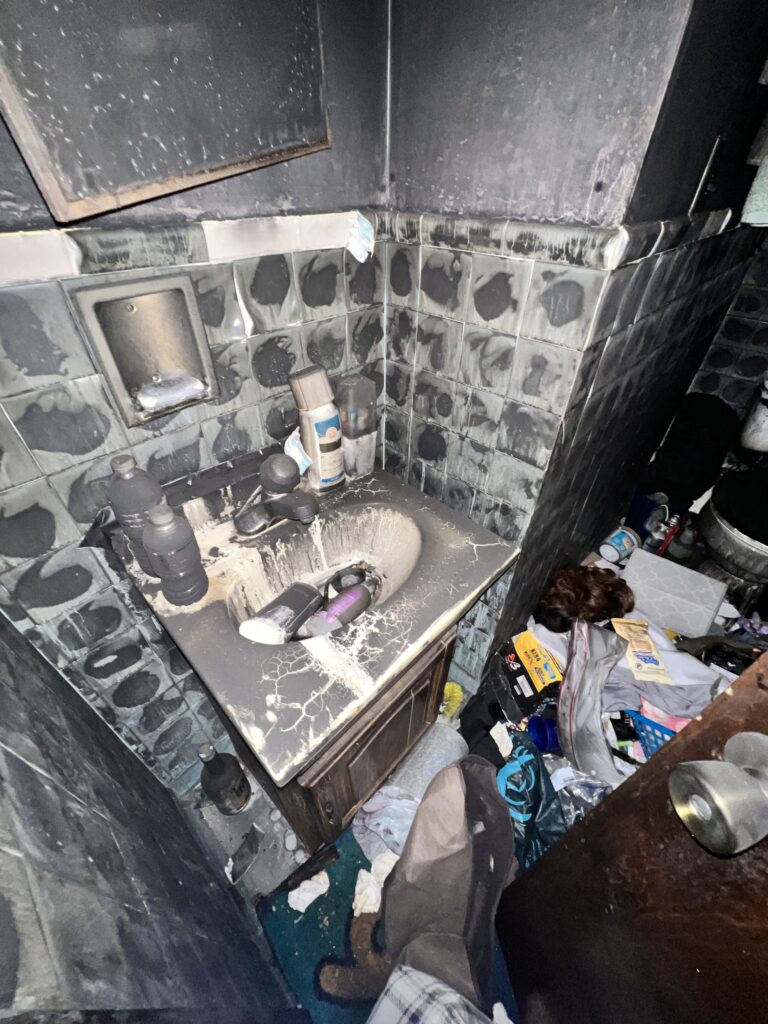
What These Examples Have in Common
In every covered scenario, three elements must be present:
- The loss must be caused by a covered peril
- The damage must make the property uninhabitable
- The lost income must occur during the reasonable period of restoration
If any of these elements are missing, loss of rent coverage typically does not apply.
Why Landlords Often Underestimate This Coverage
Many landlords focus heavily on property limits and liability protection while overlooking income protection. This is understandable — buildings are tangible assets, and physical damage is easy to visualize. Lost income, on the other hand, often feels abstract until a serious loss occurs.
This oversight is especially risky for leveraged properties, where rental income is used to service mortgages, pay property taxes, cover insurance premiums, and fund ongoing maintenance. When a covered loss makes a property uninhabitable, those expenses do not stop — even though rent payments often do.
Without adequate loss of rent insurance, landlords may be forced to cover several months of expenses out of pocket while repairs are completed. For some property owners, this can quickly strain cash reserves, disrupt long-term investment plans, or create cascading financial issues across multiple properties.
Another reason this coverage is underestimated is that loss of rent insurance does not protect a physical structure. Instead, it protects cash flow. As a result, it is sometimes viewed as optional or secondary, rather than a core component of risk management for income-producing properties.
In reality, property damage and income disruption are closely linked. A building can be repaired, but without income protection, landlords may still face financial hardship during the restoration period.
Loss of rent insurance protects cash flow — not just buildings. For landlords who rely on rental income to meet ongoing obligations, this distinction is critical.
How an Independent Insurance Agent Helps
Loss of rent insurance is not standardized across all policies or carriers. Coverage language, limits, waiting periods, and calculation methods can vary significantly, even among policies that appear similar on the surface. This variability is where working with an independent insurance agent becomes especially valuable.
An independent insurance agency is not tied to a single carrier. Instead, agents work with multiple insurers and policy forms, allowing them to compare how loss of rent coverage is structured and identify meaningful differences before a claim occurs.
Specifically, an independent agent can:
- Review how loss of rent is calculated by each carrier, including whether payments are based on actual lease income, fair rental value, or a combination of both. This helps avoid surprises when documentation is requested during a claim.
- Confirm fair rental value language, which is critical for properties that may be vacant at the time of loss or between tenants. Not all policies treat vacant units the same way.
- Identify exclusions, sub-limits, and waiting periods that can materially affect how and when loss of rent payments are made. These provisions are often buried in policy forms and endorsements rather than highlighted on declarations pages.
- Align coverage limits with actual rental income by reviewing rent rolls, lease terms, and potential restoration timelines. This helps ensure coverage is sufficient to protect cash flow during extended repairs.
Beyond policy selection, an independent agent also serves as a resource when a loss occurs. They can help interpret policy language, coordinate with adjusters, and clarify expectations around the period of restoration and required documentation.
For landlords who rely on rental income to meet ongoing obligations, this level of guidance can make the difference between a smooth recovery and prolonged financial strain.
Final Thoughts on Loss of Rent Insurance
Loss of rent insurance is a cornerstone of proper rental property protection. It safeguards income during the most disruptive losses and helps landlords stay financially stable while repairs are completed.
Understanding how the coverage works before a claim occurs is the difference between continuity and crisis.
Ingram Insurance
733 Salem Ave, Dayton, OH
Phone: (937) 741-5100
Email: contact@insuredbyingram.com
Website: https://www.insuredbyingram.com/