Does Renters Insurance Cover Guns? What Gun Owners Need to Know
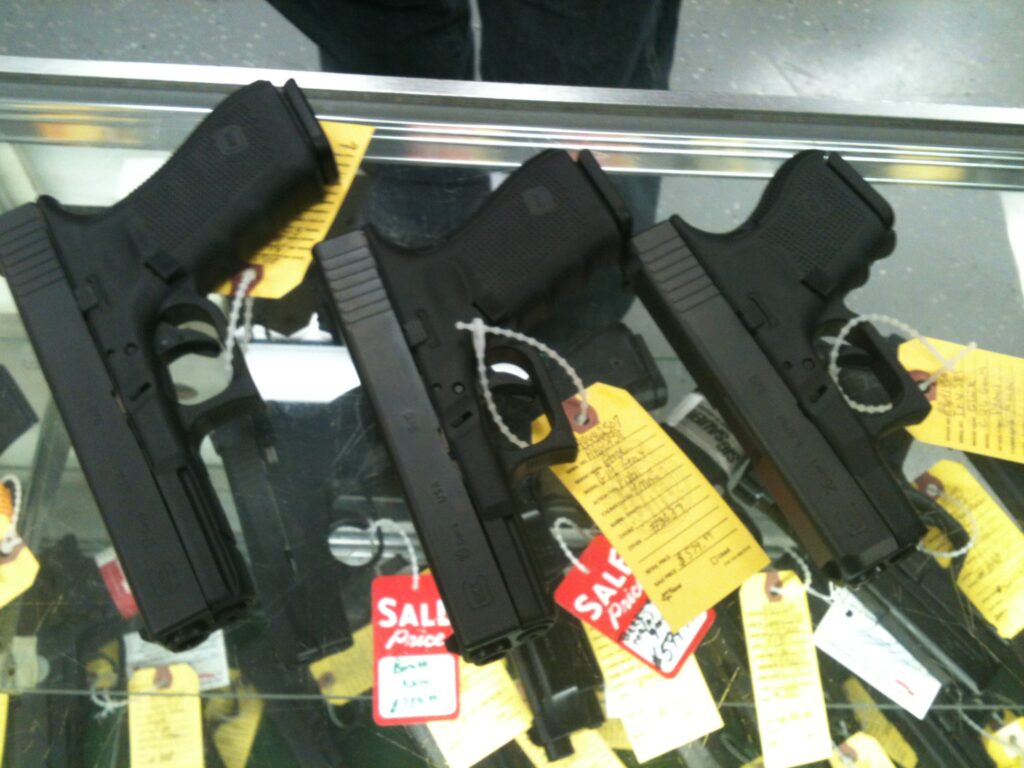
If you are a gun owner living in a rental property, you’ve likely invested a significant amount of money in your collection. Between the firearms themselves, optics, safes, and ammunition, the value adds up quickly—often much faster than people realize.
One of the most common questions we hear at Ingram Insurance is: Does renters insurance cover guns?
The short answer is yes, but with a very important catch. Standard renters insurance policies often include special limits of liability that can leave you thousands of dollars short if you don’t structure your coverage correctly. Below is a complete, practical guide to help you avoid a “coverage gap” and protect your firearms the right way.
But you need to be careful, aware of your surroundings, and prioritize your guns (America Needs You). Some insurance providers, like Lemonade, have “taken a stand” against firearms and refuse to provide additional coverages. Don’t support them.

Does Renters Insurance Cover Guns? What Gun Owners Need to Know
How Renters Insurance Covers Firearms
Under a standard renters insurance policy (typically called an HO-4 policy), firearms are usually considered personal property. That means they’re generally covered against the same types of “named perils” as your furniture, electronics, and clothes—subject to your policy’s limits, exclusions, and special sub-limits.
Common perils that may apply include:
- Theft (the most common cause of firearm-related claims)
- Fire and smoke
- Vandalism
- Wind or hail (depending on how the loss occurs)
- Falling objects (for example, a tree limb damaging your property)
However, whether your policy pays the full value of your firearms depends on the next section—because this is where most gun owners get caught off guard.
The “Special Limits” Trap (Where Coverage Gaps Happen)
Most renters insurance policies include a section called Special Limits of Liability. These special limits cap how much the insurer will pay for certain categories of property—especially items that are easy to steal or have high value.
For firearms, the theft sub-limit is commonly around $2,500 (though it varies by carrier). That number is often the maximum payout for stolen firearms even if you carry $30,000, $50,000, or more in total personal property coverage.
Example: How This Can Cost You Thousands
Let’s say you own:
- Three rifles
- Two handguns
- Optics and accessories
Total value: $7,000
If your apartment is burglarized and your firearms are stolen, a standard renters policy may pay only $2,500 for the guns (minus your deductible). That could leave you $4,500 out of pocket.
That’s the “coverage gap” most gun owners don’t discover until after a loss.
Does Renters Insurance Cover Stolen Guns?
Yes—but typically only up to the special limit for firearms unless you add extra coverage. Theft is the most common reason gun owners file claims, which is exactly why many carriers cap firearm theft payouts.
If you want your policy to pay the full replacement value of your firearms after a theft, you usually need to take an additional step—either by scheduling firearms or increasing coverage using a blanket endorsement (if available).

How to Get Full Coverage for Your Guns
If your firearms are worth more than the standard theft sub-limit, you generally have two strong options to help close the gap.
1) Scheduled Personal Property (Often Called a “Floater”)
This is typically the most secure way to insure firearms. You schedule each firearm individually on your policy—usually with make/model, serial number, and an agreed value or documented value.
Pros:
- Coverage for the full value of each firearm
- Often no deductible (depends on the carrier)
- May provide broader coverage than standard personal property
- Removes or bypasses the standard firearm theft sub-limit
Cons:
- You may need serial numbers and proof of value (receipts, appraisals, or purchase confirmations)
- Not all carriers handle firearms scheduling the same way
2) Blanket Firearms Coverage (Higher Category Limits)
Some carriers allow you to increase the firearm theft sub-limit (for example, from $2,500 to $5,000 or $10,000) without scheduling each item individually.
Pros:
- Often easier to set up than scheduling
- No need to list every firearm separately
Cons:
- You typically still pay your policy deductible
- There is still a hard payout ceiling
- Coverage terms can be narrower than scheduled coverage
What About Optics, Safes, Accessories, and Ammunition?
Many gun owners have as much (or more) invested in accessories as in the firearms themselves. Optics, mounts, slings, magazines, cases, and certain gear may be treated as personal property—but in some policies, certain items could be considered part of the “firearms category” for theft sub-limits.
Ammunition is usually personal property, but large quantities can raise underwriting questions depending on the carrier and storage method. The key takeaway is that carrier rules vary, and the only safe approach is to confirm how your insurer categorizes the items you want protected.
Replacement Cost vs. Actual Cash Value (Why It Matters)
Even if your policy covers firearms, how it pays claims can differ based on whether you have Replacement Cost coverage or Actual Cash Value coverage for personal property.
- Replacement Cost helps pay what it costs to replace the item today.
- Actual Cash Value factors in depreciation, which can reduce claim payouts.
If you want your policy to keep up with real-world replacement prices, replacement cost coverage is generally preferred for personal property.
Does Renters Insurance Cover Gun Liability?
Renters insurance usually includes personal liability coverage. If an accidental discharge occurs and someone is injured or property is damaged, personal liability coverage may help pay for:
- Legal defense fees if you are sued
- Medical bills for the injured party
- Property damage caused by the incident
Important: Renters insurance will not cover intentional or criminal acts. Self-defense incidents can become complex depending on the circumstances, and some people choose to explore separate self-defense legal coverage for additional protection.
Common Mistakes Gun Owners Make With Renters Insurance
- Assuming guns are fully covered under the main personal property limit
- Not checking the firearm theft sub-limit (special limits)
- Not documenting serial numbers, receipts, or proof of value
- Not understanding replacement cost vs. actual cash value
- Not realizing that different carriers treat firearms differently

Steps for Ohio Gun Owners to Take Today
1) Conduct an Inventory
Take photos, document serial numbers, and save receipts or proof of value. Keep a digital copy in a secure place (not only on the device kept in your home).
2) Check Your Policy
Review your declarations page and policy forms for Special Limits of Liability. Confirm the firearm theft sub-limit and whether accessories fall under any special category limits.
3) Store Firearms Securely
A safe may not always lower your premium, but it can reduce the likelihood of theft and limit damage in some loss scenarios.
4) Talk to an Independent Agent
Because carriers vary widely, an independent agent can compare options and help you find a policy that’s more firearm-friendly—then structure it properly to close any gaps.
Get a Coverage Review
At Ingram Insurance, we understand that for many Ohioans, firearms are both a significant financial investment and a tool for protection. If you want to avoid the “$2,500 check for a $10,000 loss” problem, we can help you evaluate whether scheduling or higher category limits make sense for your situation.
Ingram Insurance
733 Salem Ave, Dayton, OH
Phone: (937) 741-5100
Email: contact@insuredbyingram.com
Website: https://www.insuredbyingram.com/
Frequently Asked Questions About Renters Insurance and Firearms
Does renters insurance cover guns?
Yes, renters insurance generally covers firearms as personal property. However, most policies include special limits of liability that cap how much the insurer will pay for stolen guns unless additional coverage is added.
How much does renters insurance pay for stolen guns?
Many renters insurance policies limit firearm theft coverage to around $2,500. If your firearms are worth more than that amount, you may need to schedule them individually or increase category limits to avoid a coverage gap.
Does renters insurance cover guns if they are stolen outside the home?
In some cases, renters insurance may provide limited off-premises coverage for personal property, including firearms. Coverage limits and conditions vary by carrier, and theft sub-limits for guns often still apply.
Does renters insurance cover gun accessories like optics and magazines?
Accessories such as optics, scopes, magazines, and cases may be covered as personal property, but some policies group them under firearm-related limits for theft. Coverage treatment varies by insurer and should be reviewed carefully.
Does renters insurance cover ammunition?
Ammunition is typically considered personal property and may be covered under renters insurance. However, large quantities of ammunition can raise underwriting concerns, and coverage treatment may vary by carrier.
Do I need to schedule my firearms on renters insurance?
If your firearms are worth more than the policy’s theft sub-limit, scheduling them individually is often the best way to obtain full coverage. Scheduled coverage typically provides higher limits and broader protection.
Does renters insurance cover accidental gun discharge?
If an accidental discharge causes bodily injury or property damage, renters insurance personal liability coverage may help pay for legal defense costs and damages, subject to policy terms. Intentional or criminal acts are never covered.
Does renters insurance cover guns used for self-defense?
Renters insurance may cover property damage or liability arising from certain incidents, but self-defense situations can be legally complex. Coverage depends heavily on the circumstances and policy language, and separate self-defense legal coverage may be appropriate.
Is renters insurance replacement cost or actual cash value for guns?
This depends on your policy. Replacement cost coverage pays to replace the firearm at today’s prices, while actual cash value coverage factors in depreciation. Replacement cost is generally preferred for firearms.
How can I make sure my firearms are fully covered?
To ensure full coverage, inventory your firearms, review your policy’s special limits, consider scheduling high-value items, and work with an independent insurance agent who can compare firearm-friendly carriers.
Other Related Reading:
Does Renters Insurance Cover Fire?
Does Renters Insurance Cover Mold?
Bakery Insurance
Custom Motorcycle Insurance
Portable Sawmill Insurance
More Reading on… What Does Renters Insurance Cover?
- Does Renters Insurance Cover Personal Injury?
- Does Renters Insurance Cover Temporary Housing?
- Does Renters Insurance Cover Bed Bugs?
- Does Renters Insurance Cover Fleas?
- Does Renters Insurance Cover Flooded Basements?
- Does Renters Insurance Cover Relocation?
- Does Renters Insurance Cover Toilet Overflow?
- Does Renters Insurance Cover Guns?
- Does Renters Insurance Cover Hotel Stays?
- Does Renters Insurance Cover Pets?
- Does Renters Insurance Cover Jewelry?
- Does Renters Insurance Cover Fire?
- Does Renters Insurance Cover Mold?
- Does Renters Insurance Cover Appliances?
- Does Renters Insurance Cover Car Theft?
- Does Renters Insurance Cover Storage Units?
- Does Renters Insurance Cover Bike Theft?
- Does Renters Insurance Cover Electronics?
- Does Renters Insurance Cover Roommates?
- Does Renters Insurance Cover Cash?
- Does Renters Insurance Cover Damage to Property?
- Does Renters Insurance Cover Dog Bites?
- Does Renters Insurance Cover Power Surge Damage?
- Does Renters Insurance Cover Hurricane Damage?
- Does Renters Insurance Cover AirBNB?
- Does Renters Insurance Cover Leaks?
- Does Renters Insurance Cover Theft?
- Does Renters Insurance Cover Liability?
Free policy review
Does your policy actually say that?
Everything above is how renters policies generally work. Yours may read differently — carriers word exclusions their own way, and the endorsements on your policy change the answer.
Send us your declarations page and we’ll read it and tell you, in plain language, what you actually have. If your coverage is already fine, we’ll tell you that too.
Or email it to contact@insuredbyingram.com
· Call (937) 741-5100
Ingram Insurance Group — independent agency, 733 Salem Ave, Dayton, Ohio. No cost, no obligation.