
The Ultimate Guide to Coinsurance: Definition, Calculations, and P&C Strategy
In the Property and Casualty (P&C) insurance industry, the coinsurance definition is often a point of significant friction between policyholders and carriers. While it sounds like a simple cost-sharing mechanism, it is actually a contractual requirement that can determine whether a business survives a major loss or faces financial ruin.
What is the Coinsurance Definition in P&C Insurance?
At its most fundamental level, coinsurance is a provision in a property insurance policy that requires the policyholder to carry a limit of insurance equal to a specific percentage of the property’s total value. Most commonly, this requirement is set at 80%, 90%, or 100%.
Unlike health insurance—where you pay a portion of every doctor’s visit—property coinsurance only triggers a penalty if you fail to insure the building for what it is truly worth. If you meet the requirement, the insurance company pays 100% of your covered loss (up to the policy limit).
The “Did/Should” Formula: How Penalties are Calculated
When a property is underinsured, the insurance company applies a mathematical formula to determine the claim payout. This is often referred to as the “Did/Should” rule.
The Formula: (Actual Limit Carried ÷ Required Limit) x Amount of Loss = Claim Payout
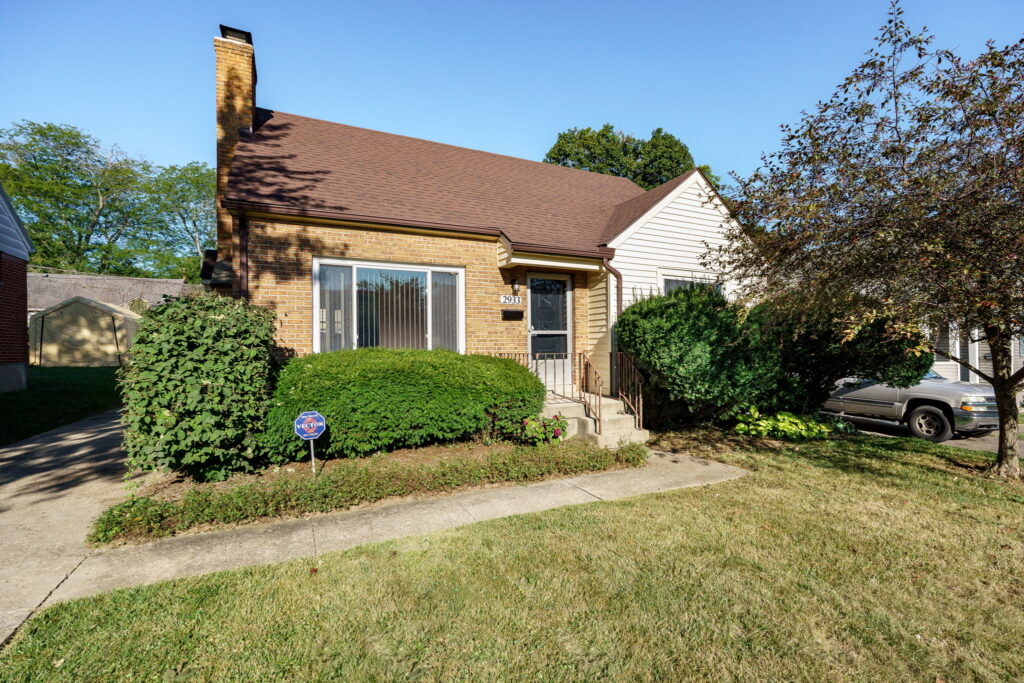
Special Note: Understanding “Coins %” on Wayne Insurance Group Policies
If you are a real estate investor or property owner with a policy through Wayne Insurance Group, you may see a field labeled “Coins %” on your quote or declarations page. However, it is important to understand that in this specific context, the term does not function as a traditional coinsurance penalty clause like the ones defined earlier in this guide.
A Unique Feature for Real Estate Investors
Wayne Insurance Group offers a level of flexibility that is rare in the Property and Casualty market. While most carriers mandate an 80% or 90% insurance-to-value requirement, Wayne allows insureds to select their own Coverage A (dwelling) limit—sometimes as low as 40% of the property’s replacement cost.
This is particularly beneficial for Midwestern investors who have secured “great deals” on properties where the market value or purchase price is significantly lower than the cost to rebuild the structure from scratch.
How Wayne Uses the Percentage
Instead of using that percentage to penalize you during a claim, Wayne uses it as an internal pricing tool. Here is how it works:
- The Premium Surcharge: The “Coins %” represents the level of insurance you have chosen relative to the replacement cost.
- Surcharge Logic: Wayne applies a premium surcharge for each percentage point the property is insured for under its full replacement cost.
- The Benefit: You gain the ability to lower your total limit to match your specific investment strategy without fearing a “Did/Should” math penalty during a partial loss claim.
In short: When you see “Coins %” on a Wayne Insurance Group quote, think of it as a pricing factor rather than a claims penalty. It allows you to customize your coverage to fit your budget and asset value, provided you understand that your total payout is still capped at the limit you choose to purchase.
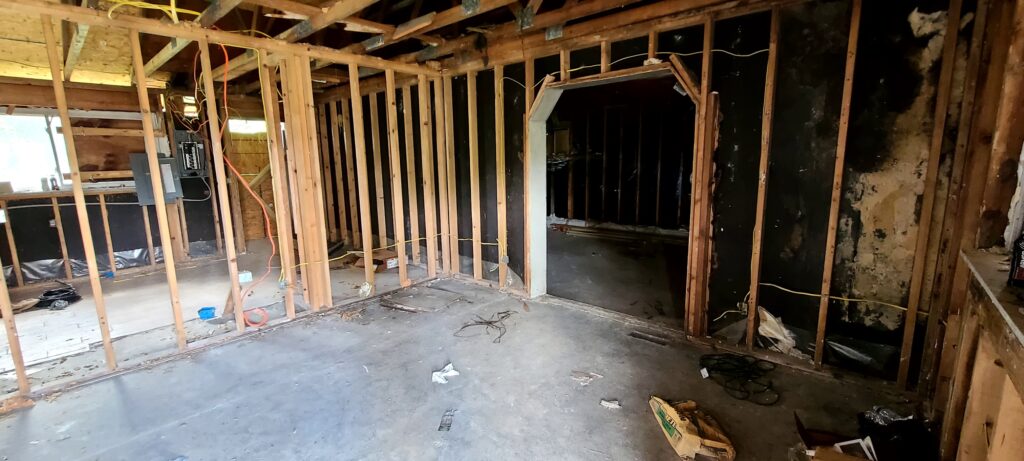
Coinsurance in Business Interruption (Time Element) Coverage
While most discussions of the coinsurance definition focus on bricks and mortar, some of the most devastating penalties occur in Business Interruption (BI) coverage. Also known as Business Income insurance, this coverage protects your “time element” losses—the net income and continuing expenses you lose while your property is being repaired.
The Unique Basis of BI Coinsurance
In property insurance, coinsurance is based on the Replacement Cost at the time of loss. In Business Interruption, coinsurance is based on your projected net income and operating expenses for the 12 months following the policy inception or renewal.
Common BI coinsurance percentages include 50%, 80%, or 100%. If you choose a 50% coinsurance clause, you are essentially telling the insurer that you only expect your “period of restoration” (the time it takes to rebuild) to last six months.
Case Study: The Growing Tech Hub
The Scenario: A software company projects their annual net income + continuing expenses to be $2,000,000. They select an 80% coinsurance clause.
- Required Limit (Should): $1,600,000 (80% of $2M)
- Actual Limit Purchased (Did): $800,000
- The Event: A fire closes the office for 3 months, resulting in a $400,000 loss in business income.
The Calculation: The company only carried 50% of the required limit ($800k ÷ $1.6M). Even though their $800,000 total limit is much higher than their $400,000 loss, the penalty still applies.
The Payout: 50% of $400,000 = $200,000.
The Danger: The company is left with a $200,000 shortfall simply because they underestimated their growth or misunderstood how the coinsurance definition applies to future earnings.
How to Prevent BI Coinsurance Penalties
To avoid these mathematical traps, businesses should utilize the following two strategies:
1. The Business Income Worksheet (Form CP 15 15)
Most insurers require the completion of a Business Income Worksheet. This is a rigorous accounting of your historical and projected financial data. When you submit this worksheet accurately and annually, it helps ensure your “Should” number is defensible during a claim adjustment.
2. Actual Loss Sustained (ALS)
Some modern commercial policies offer Actual Loss Sustained coverage for a period of 12 or 24 months. This often removes the coinsurance requirement entirely for business income, paying whatever the actual loss is during that timeframe, provided the business is acting with due diligence to reopen.
| Clause Component | Building Property | Business Income (BI) |
|---|---|---|
| Value Basis | Replacement Cost Value | Future Net Income + Expenses |
| Common % | 80%, 90% | 50%, 80%, 100% |
| Primary Risk | Underestimating construction cost | Underestimating business growth |
Real-World Case Studies
Case Study 1: The Underinsured Retailer (Partial Loss)
Imagine a boutique owner with a building valued at $500,000 and an 80% coinsurance clause. To save on premium, she only carries $300,000 in coverage.
- Should Have Carried: $400,000 (80% of $500k)
- Actually Carried: $300,000
- The Loss: $100,000 fire damage.
Because she only carried 75% of the required amount ($300k / $400k), the insurer only pays 75% of the loss. She receives $75,000 and must pay the remaining $25,000 herself.
Case Study 2: The Manufacturing Plant (BPP)
A plant upgrades its machinery but fails to update its Business Personal Property (BPP) limits. They have $2,000,000 in equipment but only $1,000,000 in coverage with a 90% clause.
When a $200,000 machine is destroyed, the “Did/Should” ratio is 55.5% ($1M / $1.8M). The payout is only $111,000, leaving the business owner with an $89,000 shortfall.
Advanced Solutions: Bypassing the Penalty
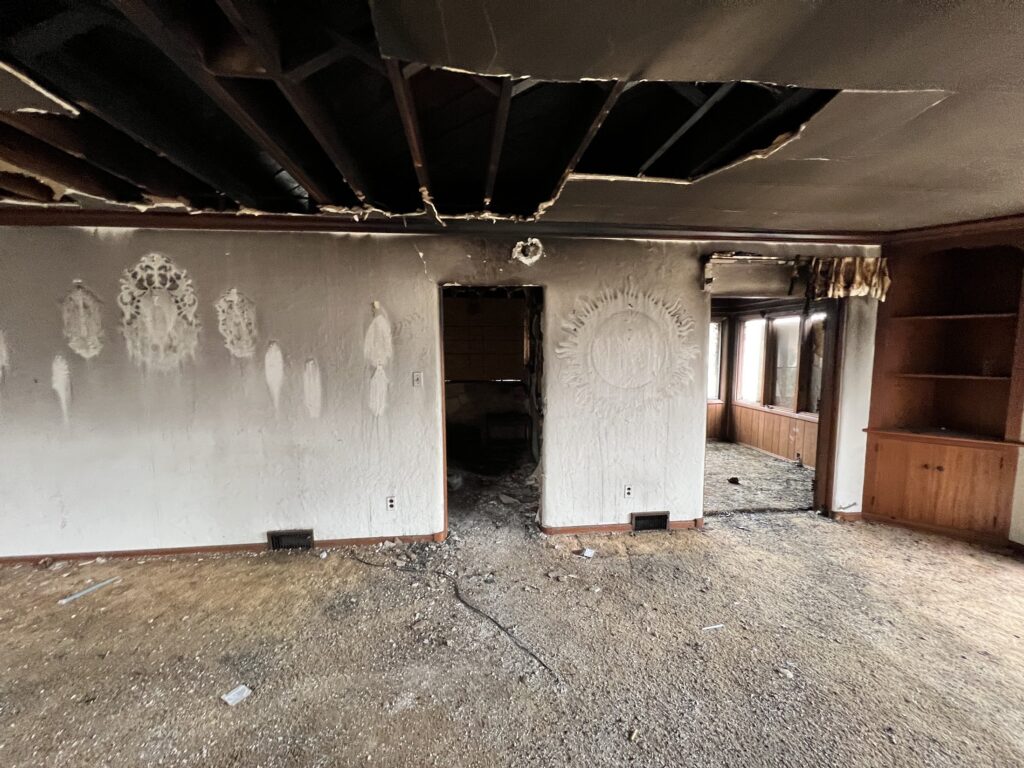
1. Agreed Value Endorsement
The most effective way to eliminate the risk of a coinsurance penalty is the Agreed Value Endorsement. This provision suspends the coinsurance clause entirely for the policy term. The insurer agrees that the limit you’ve purchased is sufficient, provided you submit an annual Statement of Values (SOV).
2. Inflation Guard
Construction costs rise daily. An Inflation Guard automatically increases your building limits by a set percentage (e.g., 4% or 8%) annually. This ensures that even if a loss happens 11 months into your policy, your “Did” amount has kept pace with inflation to satisfy the “Should” requirement.
At-A-Glance: Coinsurance Compliance
| Compliance Status | Scenario | Final Payout |
|---|---|---|
| Compliant | Limit >= Required % | 100% of loss (up to limit) |
| Non-Compliant | Partial Loss | Reduced by “Did/Should” ratio |
| Non-Compliant | Total Loss | Full Policy Limit (No penalty) |
Final Thoughts on Property Coinsurance
Understanding the coinsurance definition is the first step in sophisticated risk management. By performing regular appraisals and utilizing endorsements like Agreed Value, you can ensure that your coverage performs exactly as expected when you need it most.
Real-World Case Studies: How the Coinsurance Penalty Hits Your Bottom Line
To truly master the coinsurance definition in a Property and Casualty (P&C) context, you have to look past the vocabulary and look at the math. In property insurance, the coinsurance clause is effectively a “truth in insurance” requirement. If the value you report to the insurer is lower than the actual replacement cost, the insurer will view you as a “co-insurer” of the risk.
Case Study 1: The Underinsured Retail Boutique (Partial Loss)
The Scenario: Sarah owns a high-end clothing boutique. To save on monthly premiums, she insured her building for $300,000. However, the actual replacement cost of the building (what it would cost to rebuild from scratch today) is $500,000. Her policy contains a standard 80% coinsurance clause.
- Required Coverage (The “Should”): $400,000 (80% of $500,000)
- Actual Coverage (The “Did”): $300,000
- The Event: A burst pipe causes $100,000 in water damage.
The Math: Sarah carried 75% of what was required ($300k ÷ $400k). Therefore, the insurer only pays 75% of her $100,000 loss.Payout: $75,000 (Minus Deductible)
The Takeaway: Even though Sarah had $300,000 of “total” coverage, the coinsurance definition dictates that for a partial loss, she is only covered for the percentage of the value she actually reported. She must pay the remaining $25,000 out of pocket.
Case Study 2: The Manufacturing Plant (Business Personal Property)
The Scenario: A manufacturer ignores their 90% coinsurance clause while adding new CNC machines. Their equipment is now worth $2,000,000, but their policy still lists the limit as $1,000,000.
- Required Coverage: $1,800,000 (90% of $2M)
- Actual Coverage: $1,000,000
- The Event: An electrical fire destroys one machine valued at $200,000.
The Calculation: $1,000,000 ÷ $1,800,000 = 55.5% (The “Did/Should” ratio).
The Payout: The insurer pays 55.5% of the $200,000 loss, which is $111,000. The business owner loses $89,000 because they failed to update their Business Personal Property (BPP) limits.

Quick Reference: Coinsurance Compliance Matrix
| Scenario | Compliance Status | Claim Result |
|---|---|---|
| Coverage ≥ Coinsurance % | Compliant | 100% of loss paid (up to policy limit). |
| Coverage < Coinsurance % (Partial Loss) | Non-Compliant | Proportional penalty (The “Did/Should” ratio). |
| Coverage < Coinsurance % (Total Loss) | Non-Compliant | Policy limit is paid; owner absorbs the massive gap. |
How coinsurance status impacts P&C claim settlements.
The Solution: Using the Agreed Value Endorsement
For many business owners, the risk of a coinsurance penalty is too great to leave to chance. Fluctuating construction costs, inflation, and supply chain disruptions can make it difficult to maintain a limit that exactly matches 80% or 90% of a building’s value. This is where the Agreed Value Endorsement becomes a critical tool in your risk management strategy.
What is an Agreed Value Endorsement?
An Agreed Value Endorsement is an optional provision that effectively suspends the coinsurance clause for the duration of the policy term. When this is active, the insurer and the policyholder agree upfront that the limit of insurance purchased is adequate. If a loss occurs, the “Did/Should” calculation is ignored, and the claim is settled based on the actual loss, up to the policy limit.
How to Qualify for Agreed Value
Insurers do not grant this endorsement lightly. Because it removes a major protection for the carrier, they require proof that the property is insured to its true value. To secure this, you will typically need:
- A Statement of Values (SOV): A detailed document listing the replacement cost of all buildings and equipment.
- A Recent Appraisal: Often, insurers require a professional appraisal conducted within the last 12 to 36 months.
- Annual Updates: The endorsement usually expires at the end of the policy year. You must submit an updated Statement of Values every year to maintain the “Agreed Value” status.
Protecting the Limit: The Inflation Guard
If you cannot secure an Agreed Value Endorsement, the next best way to satisfy the coinsurance definition requirements is through an Inflation Guard Endorsement. This is a “set it and forget it” mechanism that protects you from the rising cost of materials and labor.
Construction costs rarely stay flat. If a policy is written in January, the cost to rebuild that same structure in December might be 5% higher. An Inflation Guard automatically increases your policy limit by a pro-rata percentage throughout the year (e.g., a 4%, 6%, or 8% annual increase). This helps ensure that even if a loss happens late in the policy term, your “Did” amount still satisfies the “Should” requirement.
| Protection Method | How it Affects Coinsurance | Best For |
|---|---|---|
| Agreed Value | Completely suspends the clause. | Complex commercial risks & high-value assets. |
| Inflation Guard | Gradually increases limits to keep pace with costs. | Homeowners and small business owners. |
| Blanket Insurance | Applies one limit across multiple locations. | Portfolios with multiple properties. |
Expert Tip: The “Margin Clause” Warning
When discussing the coinsurance definition with your agent, ask about Margin Clauses. Some insurers will provide a “Blanket Limit” but then add a Margin Clause that limits any single location’s payout to 110% or 120% of its reported value. This can act as a “soft” coinsurance penalty if you haven’t reported values accurately!

While coinsurance ensures you have enough limit for a rebuild, you also need Ordinance or Law coverage to handle modern building codes.
Frequently Asked Questions About Coinsurance
Navigating the complexities of Property and Casualty (P&C) insurance is difficult. Below are 20 of the most common questions regarding the coinsurance definition, penalties, and policy applications.
1. What is the most common coinsurance percentage?
The 80% coinsurance clause is the industry standard for most residential and small commercial property policies. However, larger commercial risks often see 90% or even 100% requirements.
2. Does coinsurance apply if I have a total loss?
Generally, no. If your building is completely destroyed and the loss exceeds your policy limit, the insurer typically pays the full limit of the policy without applying a coinsurance penalty.
3. Is coinsurance the same as a deductible?
No. A deductible is a fixed dollar amount you pay first. Coinsurance is a requirement to maintain a certain level of insurance to avoid a penalty on partial losses.
4. Can I remove the coinsurance clause from my policy?
Yes, by adding an “Agreed Value” endorsement. This suspends the coinsurance requirement, provided you and the insurer agree on the property’s value at the start of the policy.
5. What is “Insurance to Value”?
Insurance to value is the process of ensuring your policy limit matches the actual replacement cost of your property, which is the primary goal of the coinsurance clause.
6. Does coinsurance apply to the land value?
No. Coinsurance only applies to the “insurable value” of the structures and contents. Land does not burn or blow away, so its value is excluded from the calculation.
7. What is a 90% coinsurance clause?
It means you must insure the property for at least 90% of its total replacement cost to receive full payment for a partial loss.
8. Why do insurers penalize underinsurance?
Insurers collect premiums based on the total risk. If a policyholder only insures a small fraction of the value but expects full payment for partial losses, the insurer isn’t receiving enough premium to cover the potential risk.
9. How does inflation affect my coinsurance compliance?
If construction costs rise (inflation) and your policy limits stay the same, you may unintentionally fall below the required 80% or 90% threshold, triggering a penalty.
10. What is “Actual Cash Value” (ACV) vs. Replacement Cost in coinsurance?
Most coinsurance clauses are based on Replacement Cost (new for old). If your policy is an ACV policy, the coinsurance is calculated based on the depreciated value of the property.
11. Does coinsurance apply to Business Personal Property (BPP)?
Yes. If you have $1 million in inventory but only insure it for $500,000, a coinsurance penalty will likely apply to any claim involving that inventory.
12. What is a “Waiver of Coinsurance”?
Some policies include a provision that waives the coinsurance penalty for small losses (e.g., losses under $10,000 or 5% of the limit).
13. How often should I review my limits to stay compliant?
Ideally, every year at renewal. You should also review them after any major renovation or equipment purchase.
14. What happens if I have 100% coinsurance?
You must insure the property for its full 100% replacement value. Any amount less than the full value will result in a pro-rata penalty on every claim.
15. Is a “flat rate” policy different from coinsurance?
A flat-rate policy (or “No Coinsurance” policy) does not have a coinsurance requirement, but it usually carries a much higher premium rate per $100 of coverage.
16. Can an appraisal prevent a coinsurance penalty?
An appraisal gives you the data to set correct limits, but it only “prevents” the penalty if the insurer accepts it as part of an Agreed Value endorsement.
17. Does coinsurance apply to liability insurance?
No. Coinsurance is a property insurance concept. Liability insurance (lawsuits) does not use coinsurance clauses.
18. What is the “Did/Should” ratio?
It is the percentage of the claim the insurer will pay. (What you DID carry) divided by (What you SHOULD have carried).
19. Does a “Blanket Limit” help with coinsurance?
Yes. Blanket insurance combines values across multiple locations, which can provide a buffer if one specific building is undervalued but the others are overvalued.
20. Who determines the replacement cost during a claim?
The insurance adjuster calculates the replacement cost at the time of the loss. If you disagree, you may need to hire an independent appraiser or public adjuster.
If you’re in Ohio and need a restoration company – consider Steelman & Co. Restoration.