
Campground Insurance: The Comprehensive Guide for RV Park Owners
Running a campground or RV park is the ultimate “lifestyle business,” but it comes with a unique set of hazards that a standard business policy simply can’t handle. From a falling tree limb damaging a guest’s expensive Class A motorhome to a campfire getting out of control, the liability profile of an outdoor hospitality business is complex.
Whether you offer primitive tent sites, luxury glamping pods, or full-hookup RV pads, having the right campground insurance is the difference between a minor setback and a business-ending lawsuit. This guide covers the essential coverages, common risks, and how to lower your premiums.
1. Essential Coverage Types for Campgrounds
A “one-size-fits-all” policy doesn’t exist in the camping industry. You need a modular plan that covers three main areas: Liability, Property, and Operations.
General Liability Insurance: The “Safety Net” for Outdoor Hazards
General Liability (GL) is the foundation of any campground policy. While it is often summarized as “slip-and-fall” coverage, the reality of a campground is much more rugged than a standard retail store.
-
Premises Liability & Natural Hazards: Unlike a paved parking lot, your premises include uneven terrain, hiking trails, and waterfronts. If a guest trips over a tree root that “should have been marked” or slips on a mossy boat ramp, GL covers the medical costs and your legal defense.
-
Tree Liability (The “Silent” Risk): One of the most common claims in campgrounds involves falling branches or trees. If a “dead or dangerous” limb falls on a guest’s tent or person, you could be held liable for failing to maintain a safe environment. A robust GL policy handles these complex negligence claims.
-
The Cost of Legal Defense: Perhaps the most valuable part of GL isn’t the settlement itself, but the legal defense. In the outdoor hospitality industry, lawsuits can be frivolous. Your insurance company is obligated to provide an attorney and pay all legal fees to defend your business, which can easily reach five figures before a case even reaches a courtroom.
-
Products-Completed Operations: If your camp store sells a defective propane heater or contaminated food that makes a camper ill, this portion of your GL policy protects you from the resulting liability.
Commercial Property Insurance: Protecting the Infrastructure of the Outdoors
Campground property insurance is unique because so much of your “property” isn’t actually a building. While the camp store and bathhouses are covered, a specialized policy must account for the infrastructure scattered across dozens of acres.
-
Utility Infrastructure & RV Pedestals: The “heartbeat” of a modern RV park is the electrical grid. A standard property policy might ignore the $2,500 electrical pedestals at every site. Specialized campground insurance extends coverage to these pedestals, as well as underground piping and transformers, which are vulnerable to lightning strikes and vehicle impacts.
-
Inland Marine (Mobile Property): Many campgrounds own tractors, golf carts, and maintenance equipment. Since these aren’t “stationary buildings,” they often require an Inland Marine rider to ensure they are covered whether they are in the shed or out on the trails.
-
Valuation: Replacement Cost vs. Actual Cash Value: It is vital to insure your bathhouses and stores for Replacement Cost. If an old bathhouse burns down, an “Actual Cash Value” check might only give you $20,000 due to depreciation, while the cost to rebuild to modern ADA-compliant codes could be $100,000.
-
Specialized Structures: This covers the “fun” parts of your park that are expensive to replace: playgrounds, swimming docks, fences, and even the expensive signage at the park entrance.
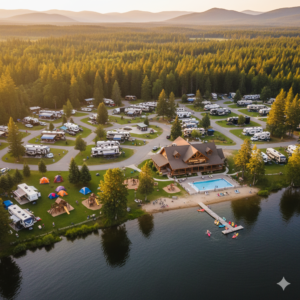
Business Interruption Insurance: Safeguarding Your Seasonal Cash Flow
For most campgrounds, 80% of the year’s revenue is earned in a 3- to 4-month window. If a disaster strikes in June, you don’t just lose a building; you lose your entire year’s profit.
-
Revenue Displacement: If a wildfire smoke-out or a localized flood makes your sites unusable, Business Interruption (also called Business Income coverage) pays you the net income you would have earned based on your historical records.
-
Extra Expense Coverage: This is a crucial “add-on” that pays for costs above and beyond your normal operating expenses to help you get back in business faster. For example, if you need to rent temporary portable toilets because your main bathhouse was damaged, this coverage pays that bill.
-
Civil Authority Clause: Sometimes, your campground isn’t damaged, but the government closes the access road due to a nearby forest fire or bridge failure. A good policy includes “Civil Authority” coverage, which triggers even if the physical damage didn’t happen on your specific property.
-
Utility Service Interruption: If a storm knocks out the main power lines five miles away and your park has no electricity for two weeks in July, guests will demand refunds. This coverage can reimburse you for the lost revenue caused by off-premises utility failure.
2. Comparison: Coverage Needs by Campground Type
| Feature | Primitive / Tent Camping | Full-Service RV Park | Luxury Glamping Resort |
|---|---|---|---|
| Primary Risk | Forestry/Fire Hazards | Utility/Electrical Failure | High-Value Amenities |
| Essential Add-on | Tree Liability | Septic/Sewer Backup | Cyber Liability (Bookings) |
| Liability Focus | Remote Rescue Costs | RV Damage (Falling Limbs) | Professional Service Liability |
3. The “High-Risk” Amenities: What Insurers Watch
When you apply for a quote, the insurance company will look closely at these specific areas. These are often the “red flags” that can drive rates up:
- Swimming Areas: Lakes, rivers, and pools are high-risk. Insurers look for “No Lifeguard” signage, depth markers, and proper fencing.
- Propane Sales: If you fill LP gas tanks on-site, you need a specific endorsement for propane liability.
- Rental Equipment: Renting out canoes, kayaks, ATVs, or bicycles requires an “Inland Marine” policy to cover the equipment and additional liability for the activities.
- Liquor Liability: If your camp store sells beer or you have an on-site bar, you MUST have liquor liability to protect against alcohol-related incidents.
4. 20 Frequently Asked Questions (FAQ)
While most states don’t have a specific “Campground Insurance Law,” you will likely be required to have liability and workers’ compensation to get a business license. Furthermore, if you have a mortgage or lease the land, your lender will mandate coverage.
Yes, if you have General Liability. However, the insurer will investigate if you were “negligent” (i.e., did you leave a dead tree standing?). Regular tree maintenance logs are vital for these claims.
This is specialized coverage for guests’ property that is in your “care, custody, and control.” This is common if you offer RV storage or if guests leave valuables in a camp safe.
Commercial Property insurance typically covers wind and hail for your buildings. However, damage to guests’ vehicles is usually covered by their own auto/RV insurance unless you are found at fault.
Laws vary by state, but generally, any “employee” (even family) should be covered. If an uncle falls off a ladder while repairing a cabin, health insurance may deny the claim if it happened during “work.”
Small primitive camps might start at $2,000/year, while large RV resorts with pools and stores can exceed $15,000+. Factors include location, revenue, and guest capacity.
This is a critical rider for RV parks. If your main septic line clogs and causes an overflow at multiple pedestals, the cleanup and repair costs are covered.
Some insurers categorize long-term stays (30+ days) as “Mobile Home Parks” rather than “Campgrounds.” Be honest about your stay lengths to ensure claims aren’t denied.
Yes, under Property and Liability. However, equipment must meet modern safety standards. Old-fashioned metal slides or “unanchored” swing sets may be excluded.
Your General Liability may cover you if you are sued for “allowing a dangerous animal,” but most campgrounds require guests to carry their own liability insurance for their pets.
Yes! If you take online bookings and store credit card data or emails, you are a target for hackers. This covers the cost of notifying guests and legal fees after a breach.
If the fire was caused by your negligence (e.g., poorly maintained fire rings), your liability coverage kicks in. You should always have clear “Fire Rules” posted.
Yes. Insurers love 24/7 presence. It reduces the risk of undetected fire, theft, and vandalism.
It provides extra protection (usually $1M to $5M) above your primary policy limits. This is recommended if you have high-risk features like boat rentals or a pool.
Canvas tents are often treated as “Personal Property” or “Inland Marine” rather than permanent buildings. They have a shorter lifespan and higher wind-damage risk.
This covers you if an employee sues for wrongful termination, harassment, or discrimination. Essential for parks with seasonal staff.
Typically, no. You need a “Mobile Equipment” or “Commercial Auto” endorsement for any motorized vehicles used on the premises.
Standard policies may exclude large “Special Events.” You may need a one-day “Special Event Rider” for crowds exceeding your normal capacity.
Proximity to flood zones, high-wind coastal areas, or wildfire-prone forests will significantly impact your property premiums.
Yes. Documenting staff training for First Aid, CPR, and “Emergency Evacuation” can make you a “Preferred Risk” to insurers.
Ready to Secure Your Campground’s Future?
Don’t wait for the first storm or guest incident to find out you have a gap in coverage. Our specialized agents understand the outdoor hospitality industry.