
Everything About Commercial Dump Truck Insurance in Ohio (2026)
Whether you are hauling limestone in the Mahoning Valley, asphalt for ODOT projects in Columbus, or managing a fleet of tri-axle rigs in Cincinnati, your dump truck business faces extreme physical and financial risks. In 2026, the Ohio insurance landscape is more data-driven than ever.
At Ingram Insurance, we specialize in the unique needs of Ohio’s construction and aggregate hauling industries. This 2,500-word guide covers every facet of commercial dump truck insurance, ensuring your business stays compliant, protected, and profitable.
Why Dump Truck Insurance is Specialized
Unlike standard long-haul trucking, dump trucks operate in “mixed environments”—switching from high-speed Ohio interstates like I-71 to tight, unstable off-road job sites. A standard commercial auto policy often misses the “Static and Dynamic” risks unique to dumping operations.
- Tip-Over Risks: Physics changes when the bed is raised. Insurance must account for stability issues on uneven Ohio soil.
- Loading/Unloading Liability: Protection against damage caused by falling debris or heavy machinery during the “drop.”
- Environmental Hazards: Navigating soft soil, underground utilities, and overhead power lines common in Ohio construction zones.
The Physics of Risk: Understanding Tip-Over Liability
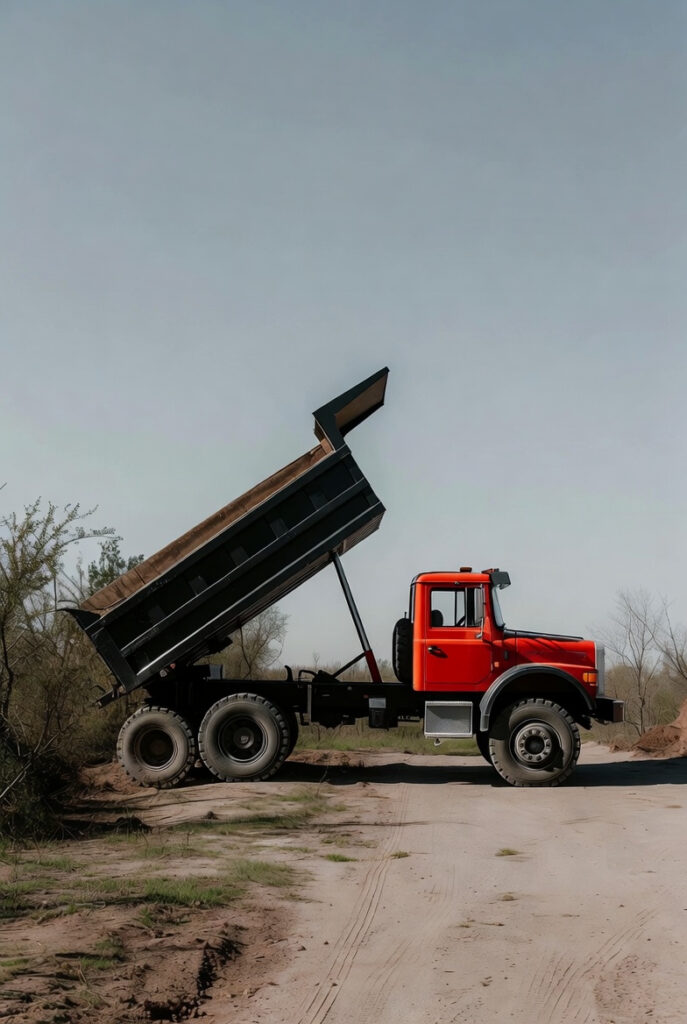
In the dump truck industry, a “tip-over” is one of the most expensive claims. When a tri-axle bed is fully extended, the center of gravity shifts dangerously high. If the ground settles or the load “sticks” (common with wet Ohio clay or frozen aggregate), the truck can roll.
Standard liability covers the damage to others, but you need specialized Physical Damage coverage with a “Stated Amount” endorsement to protect your actual rig. In 2026, we also recommend Inland Marine riders to cover the specialized hydraulic systems and high-value liners that standard policies may undervalue.
Mandatory Ohio Insurance Requirements & Filings
Operating “for-hire” in Ohio requires specific filings with the Public Utilities Commission of Ohio (PUCO). Failure to maintain these can result in the immediate suspension of your plates by the Ohio BMV.
1. Liability Minimums (CSL)
While state law sets a lower floor, most Ohio general contractors won’t let you on a job site without a $1,000,000 Combined Single Limit (CSL). If you haul hazardous materials or contaminated soil, these requirements can jump to $5,000,000.
2. Form E and Form H Filings
If you are an intrastate hauler (Ohio only), we handle your Form E filing to prove you meet PUCO financial responsibility laws. If you move household goods or specific regulated materials, a Form H (Cargo) may also be required.
2026 Cost Breakdown: What You’ll Pay in Ohio
In 2026, premiums are heavily influenced by your Safety Score and Telematics data. Below are estimated monthly ranges for Ohio operators:
| Truck Type | Monthly Premium (Est.) | Primary Risk Factor |
|---|---|---|
| Single-Axle | $275 – $400 | Local radius, lower weight class. |
| Tandem-Axle | $375 – $575 | Construction site maneuverability. |
| Tri-Axle / Quad | $550 – $800 | High GVWR and tipping risk. |
| Super Dump | $700 – $950 | Maximum payload liability. |
Advanced Safety Tech: The “Premium Killer”
In 2026, insurers are rewarding “Smart Trucks.” Equipping your dump truck with the following can lead to a 10-20% reduction in your annual commercial dump truck insurance rates:
- Bed-Up Indicators: Prevents “bridge strikes” by alerting the driver if the bed isn’t fully stowed.
- In-Cab Dashcams: AI-powered cameras that detect distracted driving or harsh braking.
- Tire Pressure Monitoring (TPMS): Crucial for heavy loads where a blowout can lead to a catastrophic rollover.
Frequently Asked Questions
1. Does my policy cover “Non-Owned” trailers?
If you are pulling a trailer you don’t own, you need a Trailer Interchange endorsement to stay protected.
2. Is debris removal covered if I spill a load?
Standard cargo policies often exclude debris removal unless specifically added. This is vital for hauling aggregate on Ohio highways.
3. Can I get insurance for a new dump truck venture?
Yes. While “new ventures” are higher risk, Ingram Insurance works with carriers that specialize in getting Ohio startups on the road.
Get a Custom Ohio Dump Truck Quote
Ready to protect your iron? At ohio.insuredbyingram.com, we know the Ohio aggregate and construction market. We don’t just find a policy; we build a shield for your business.
Get Your Free Dump Truck Quote
Contact Ingram Insurance today to speak with an Ohio-based agent who understands your haul.
Strategies to Lower Your Ohio Dump Truck Insurance Premiums
In 2026, insurance carriers are moving away from flat-rate pricing and toward behavior-based underwriting. This means that Ohio dump truck operators who can prove their safety record with data will see significantly lower rates than those who rely on “clean MVRs” alone. Here is how to strategically lower your costs.
1. Leverage Ohio BWC Safety Intervention Grants
One of the best-kept secrets for Ohio fleet owners is the Safety Intervention Grant (SIG) program offered by the Ohio Bureau of Workers’ Compensation (BWC). In 2026, this program offers a 3-to-1 matching grant up to $40,000 for equipment that reduces workplace injuries.
- What it covers: Automated tarping systems (to prevent fall-from-cab injuries), back-up sensors, and advanced 360-degree camera systems.
- The Insurance Benefit: By using state funds to install these safety tools, you aren’t just protecting your workers; you are providing your insurance agent with “Risk Mitigation” proof that can trigger 10-15% premium credits.
2. Implement “High-Frequency” MVR Monitoring
Waiting until your annual insurance renewal to check your drivers’ Motor Vehicle Reports (MVRs) is a recipe for a rate hike. If a driver receives a “Failure to Control” or “Overweight” ticket in April and you don’t find out until December, you’ve lost months of coaching time.
In 2026, we recommend using Continuous MVR Monitoring services. These tools alert you the moment a driver has a violation. Insurance carriers often reward this proactive stance with lower “Management Risk” scores, leading to more favorable renewal terms.
3. Pay Annually to Eliminate “Installment Friction”
While monthly payments help with cash flow, they are expensive. Most Ohio insurers charge administrative fees per installment and interest on the unpaid balance. In 2026, paying your commercial dump truck insurance in full can save you 5% to 10% off the total premium. If the upfront cost is a barrier, consider premium financing, which often carries lower interest rates than the insurance carrier’s own installment plan.
4. Right-Size Your Deductible
If you have a solid cash reserve, moving from a $500 deductible to a $2,500 or $5,000 deductible can drastically reduce your fixed monthly costs. For an Ohio tri-axle fleet, this shift can save upwards of $1,000 per truck per year. However, this strategy only works if you have a proactive maintenance program to prevent the small, “fender-bender” claims that eat up a higher deductible.
| Strategy | Potential Savings | Implementation Time |
|---|---|---|
| Pay in Full (Annual) | 5% – 10% | Immediate |
| Telematics/Dashcams | Up to 15% | 30 – 60 Days |
| BWC Safety Grants | Up to $40,000 in gear | 3 – 6 Months |
| Bundle with GL/Cargo | 10% – 12% | Immediate |
Frequently Asked Questions: Ohio Dump Truck Insurance
1. What is the average cost of dump truck insurance in Ohio?
For a single-axle truck, expect $2,500–$4,500 annually. Tandem and tri-axle rigs typically range from $6,000 to $9,500 per year depending on driver MVRs and radius.
2. Does Ohio require a Form E filing for dump trucks?
Yes. If you operate “for-hire” within Ohio, your insurance carrier must electronically file a Form E with the PUCO to prove you meet state financial responsibility laws.
3. What is the minimum liability limit for Ohio dump trucks?
While the PUCO intrastate floor is $350,000, nearly all Ohio general contractors and asphalt plants require a minimum of $1,000,000 Combined Single Limit (CSL).
4. Does insurance cover a dump truck tip-over?
Primary Liability does not cover your truck. You must have Physical Damage coverage with a specific endorsement to cover the rig if it tips during unloading.
5. Do I need cargo insurance for sand and gravel?
Yes. Even though the material is low-value, cargo insurance often covers the “Debris Removal” costs if you spill a load on an Ohio highway.
6. Are my hydraulic rams and specialized beds covered?
Standard policies use Actual Cash Value (ACV). We recommend “Stated Amount” coverage to ensure your specialized bed and hydraulics are fully insured for replacement.
7. How does hauling asphalt affect my premium?
Asphalt is considered higher risk than dry aggregate due to its heat and the potential for “sticky” loads that lead to tip-overs. Expect a slightly higher rate for asphalt hauling.
8. Is my dump truck covered while off-road on a job site?
Most policies cover job site activity, but “Off-Road” exclusions can exist. Always verify that your policy includes “Loading and Unloading” and job site liability.
9. Can I get insurance for a new dump truck startup in Ohio?
Yes. While some carriers require 2 years of experience, we have markets specifically designed for new ventures with clean CDL records.
10. Does Ohio require Workers’ Comp for dump truck drivers?
Yes. Ohio is a monopolistic state; you must obtain coverage through the Ohio BWC if you have one or more employees.
11. What is “Overweight Liability”?
If you are cited for being overweight, it goes on your DOT record. Frequent violations can lead to non-renewal or significant premium increases.
12. Does a “Super Dump” cost more to insure?
Yes. Because they carry more weight and have more complex axle configurations, Super Dumps usually carry a 15-20% higher premium than standard tri-axles.
13. Will dashcams lower my dump truck insurance?
Many 2026 insurers offer a “Safety Tech Discount” of up to 15% for trucks equipped with dual-facing AI cameras.
14. What happens if I cross state lines into Michigan or PA?
You move from “Intrastate” to “Interstate.” You will need an MC number and a BMC-91X filing with a minimum limit of $750,000.
15. Does insurance cover damage to a customer’s driveway?
This falls under General Liability. If your truck cracks a residential driveway, your GL policy—not your auto policy—typically handles the claim.
16. What is “Down Time” coverage?
An optional endorsement that pays you a daily amount if your truck is off the road due to a covered accident, helping you make truck payments while it’s in the shop.
17. Does my policy cover “Pollution” from a burst hydraulic line?
Standard policies often exclude it. You need a Broadened Pollution endorsement to cover the environmental cleanup of hydraulic fluid or fuel spills.
18. Can I exclude a driver with a bad record?
Yes. To keep the rest of your fleet’s rates low, you can sign a “Named Driver Exclusion” for an individual with a high-risk MVR.
19. Why did my premium go up if I had no accidents?
General “Social Inflation” and the rising cost of truck parts affect everyone. However, an independent agent can re-shop your policy to find better rates.
20. Why choose Ingram for Ohio dump truck insurance?
We live here. We understand PUCO filings, ODOT contract requirements, and the specific risks of hauling in the Buckeye State.