
Understanding Fire Protection in Your Rental: A Comprehensive Guide
Does Renters Insurance Cover Fire: When you sign a lease for a new apartment or rental home, you are likely focused on the layout, the neighborhood, and the monthly rent. However, one of the most critical aspects of protecting your financial future is understanding the nuances of your renters insurance policy, particularly regarding fire. Fire is one of the most destructive forces a tenant can face, capable of destroying a lifetime of belongings in a matter of minutes.
The short answer is yes: renters insurance does cover fire. In fact, fire and lightning are considered “named perils” in almost every standard (HO-4) renters insurance policy. But simply knowing it is covered isn’t enough. To truly be protected, you need to understand the limits of that coverage, the different types of protection included in your policy, and the steps you must take to ensure a claim is paid out successfully.
The Three Core Components of Fire Coverage
A renters insurance policy isn’t just a single bucket of money. It is divided into three distinct sections that work together to rebuild your life after a fire. Understanding these pillars is essential for any tenant.
1. Personal Property Coverage
This is the bread and butter of your policy. Personal property coverage protects the items you own—your clothes, furniture, electronics, kitchenware, and even your bed. If a fire starts in your kitchen and spreads to your bedroom, the insurance company will compensate you for the value of the items destroyed.
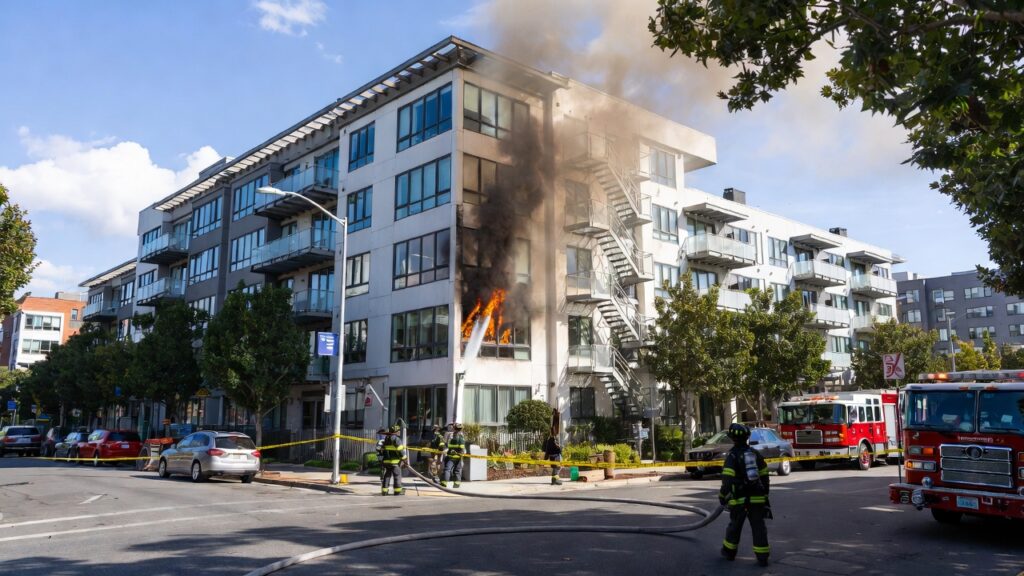
It is important to note that this coverage applies even if the fire didn’t start in your unit. If a neighbor’s unit catches fire and the smoke damage ruins your expensive mattress and designer clothing, your personal property coverage handles the bill. Smoke damage is often just as costly as fire damage, as the soot and odors can be nearly impossible to remove from porous materials.
2. Loss of Use (Additional Living Expenses)
If a fire occurs, your apartment may become uninhabitable for weeks or even months while repairs are made. Where will you live? Your landlord is generally not required to pay for your hotel stay. This is where Loss of Use coverage kicks in.
This portion of your policy covers the “additional” costs you incur because you can’t live at home. This includes:
- Hotel or short-term rental bills.
- The increase in your food budget (since you likely won’t have a kitchen and must eat out).
- Laundry services if your washer/dryer was destroyed.
- Storage fees for any salvaged furniture.
3. Personal Liability Protection
This is perhaps the most overlooked part of renters insurance. If you are found to be at fault for the fire—perhaps you left a pan on the stove or a candle burning—the landlord’s insurance company may come after you for the damages to the building. Building repairs can easily reach hundreds of thousands of dollars.
Personal liability coverage helps pay for your legal defense and any settlements or judgments against you. Without this, a single accidental fire could lead to lifelong financial ruin.
Common Fire Scenarios and Coverage Realities
To understand the depth of fire coverage, let’s look at common scenarios renters face. Most accidental fires are covered, but the “how” and “why” matter during the claims process.
Kitchen Fires and Grease Fires
Kitchen fires are the leading cause of home fire damage. Whether it’s a grease fire or a toaster malfunction, these are typically covered under the “accidental” clause of your policy. Even if the fire was caused by your own momentary lapse in judgment, your liability and property coverage should remain intact.
Electrical Fires
Old wiring in aging apartment buildings can lead to electrical fires behind the walls. While the landlord’s insurance covers the wall itself, your renters insurance covers your electronics and furniture that might be destroyed. If an overloaded power strip (provided by you) causes the fire, you are still generally covered, though your insurer may offer safety tips for the future.
Wildfires
In certain regions, wildfires are a significant threat. Renters insurance typically covers fire damage regardless of whether it started inside the building or outside as a natural disaster. However, if you live in a high-risk area, it is vital to check if there are any specific “fire exclusions” or higher deductibles in your policy.
Note: If you are concerned about other types of damage, such as water or biological growth, be sure to read our companion piece on Does Renters Insurance Cover Mold?
Replacement Cost vs. Actual Cash Value
When setting up your policy, you will choose between two ways of being reimbursed. This choice is the difference between a smooth recovery and a financial headache.
Actual Cash Value (ACV): This pays you what your items were worth at the time of the fire. If your 5-year-old laptop is destroyed, the insurance company will pay you the “used” price—perhaps $200—even though a new one costs $1,200. This is the cheaper policy option but leaves you with a significant “gap” to fill out of pocket.
Replacement Cost Value (RCV): This is the gold standard. RCV pays you the amount it costs to buy a brand-new version of the item today. While the monthly premium is slightly higher, it is almost always worth it after a total loss like a fire.
Limits and Sub-Limits: Protecting High-Value Items
Every policy has a total limit (e.g., $30,000). However, most people don’t realize that certain categories of items have “sub-limits.” For example, a standard policy might only cover jewelry up to $1,500 or electronics up to $2,500, even if your total policy is much higher.
For those who own specialized equipment or collections, you may need to “schedule” those items or add an endorsement. For example, if you own firearms for sport or protection, you should investigate how your policy handles them. You can learn more by visiting this guide on does renters insurance cover guns.
What to Do After a Fire: A Step-by-Step Recovery
If the worst happens, the hours and days following the fire are critical for your insurance claim. Follow these steps to ensure you receive the maximum benefit from your policy:
- Ensure Safety First: Do not enter the dwelling until the fire department has cleared it. Structural integrity and air quality are major concerns after a fire.
- Contact Your Insurer Immediately: Start the claim process as soon as possible. Ask for an immediate advance on your “Loss of Use” funds to cover your hotel and food.
- Document Everything: Take photos and videos of all damaged items. Do not throw anything away until an adjuster has seen it.
- Keep Receipts: Every meal, hotel stay, and tube of toothpaste you buy while displaced should be documented. These are reimbursable under your Loss of Use coverage.
- Review Your Inventory: Compare the damage against your pre-existing home inventory. (If you don’t have one, try to recreate it using old photos or bank statements).
Preventing Fires in Your Rental
While insurance is there to catch you when you fall, prevention is always better than a claim. Renters can take several proactive steps to minimize fire risk:
- Test Smoke Detectors: Do this monthly. If your landlord hasn’t provided working detectors, notify them in writing immediately.
- Avoid “Daisy-Chaining”: Never plug one power strip into another. This is a leading cause of electrical fires.
- Space Heater Safety: Keep space heaters at least three feet away from curtains, bedding, or furniture.
- Kitchen Vigilance: Never leave a stove unattended. Keep a small fire extinguisher in the kitchen, but only use it if the fire is contained and you have a clear exit.
Final Thoughts on Renters Insurance
Fire coverage is a foundational element of any renters policy. For a relatively low monthly cost—often less than the price of a single pizza delivery—you gain protection for your property, your temporary housing, and your legal liability. Without it, you are one accident away from losing everything you’ve worked for.
For more information on the various types of coverage available to tenants, visit our main Renters Insurance page to see how you can customize a policy that fits your lifestyle and budget.
Frequently Asked Questions: Does Renters Insurance Cover Fire?
1. Does renters insurance cover fire damage to the building itself? No. Your renters insurance is designed to protect your personal belongings and your liability. The physical structure of the building—the walls, roof, and flooring—is the responsibility of the landlord and is covered by their landlord insurance policy.
2. Am I covered if I accidentally started the fire? Yes, typically. Standard policies cover accidental fires, such as those caused by a cooking mishap or an unattended candle. Your liability coverage will even help if the landlord’s insurance company sues you for the building damage.
3. Does renters insurance cover smoke damage if there was no actual flame in my unit? Yes. Smoke damage is a covered peril. If a fire in a neighboring apartment sends smoke into your unit and ruins your furniture or clothing, your policy will pay to clean or replace those items.
4. Will my insurance pay for a hotel if my apartment smells like smoke? If the smoke damage makes the unit “uninhabitable” (unsafe or unhealthy to live in), your “Loss of Use” coverage will kick in to pay for a hotel and additional living expenses while the unit is being professionally cleaned.
5. Does renters insurance cover fires caused by wildfires? Yes, wildfires are generally covered under the standard “fire” peril. However, if you live in a high-risk area, check your policy for any specific exclusions or higher deductibles related to brush fires or wildfires.
6. Is my roommate’s stuff covered if there is a fire? Usually, no. Renters insurance only covers the person named on the policy. Unless your roommate is specifically listed as a “named insured,” they will need their own separate policy to protect their belongings.
7. Does renters insurance cover fire damage to my car if it’s parked in the garage? No. Fire damage to a vehicle is covered by the comprehensive portion of your auto insurance policy, not your renters insurance. However, any personal items inside the car that burned (like a laptop or gym bag) would be covered by your renters policy.
8. What is the “deductible” in a fire claim? The deductible is the amount you pay out of pocket before the insurance company pays the rest. For example, if you have $5,000 in damage and a $500 deductible, the insurance company will send you a check for $4,500.
9. Will my insurance cover my electronics if they melt? Yes, electronics are personal property. However, be aware of “sub-limits.” Some policies cap electronic coverage at a certain amount (like $1,500) unless you have specifically increased those limits.
10. Does renters insurance cover fire caused by a lightning strike? Yes. Lightning is almost always listed alongside fire as a covered peril in standard HO-4 policies.
11. What happens if my fire was caused by old wiring in the building? You are still covered. Your insurance will pay to replace your belongings, and they may then choose to “subrogate” (pursue the landlord’s insurance) to get their money back since the fire was caused by poor building maintenance.
12. Does the policy cover “Loss of Use” if I am evacuated but my building isn’t on fire? Often, yes. If a “civil authority” (like the fire department) orders an evacuation due to a nearby fire threat, many policies will cover your hotel stay for a limited time, even if your apartment remains untouched.
13. Are my pets covered in a fire? Renters insurance typically does not cover the “value” of a pet or their vet bills under personal property. However, if your pet is injured, some policies offer small “guest medical” or “property” extensions, but you should check your specific policy language.
14. What is the difference between “Actual Cash Value” and “Replacement Cost”? Actual Cash Value (ACV) pays you what your items were worth used. Replacement Cost (RCV) pays you what it costs to buy those items brand new today. Always opt for RCV if possible.
15. Does insurance cover fires caused by smoking or e-cigarettes? Yes, as long as it was an accident. If a cigarette starts a fire, it is treated like any other accidental fire. However, frequent claims for this reason could lead to your policy being canceled later.
16. Am I covered if a fire happens while I am moving? Most renters policies cover your property “anywhere in the world,” but often at a lower limit (typically 10% of your total property coverage) while the items are in transit or in a storage unit.
17. What if I don’t have receipts for my burned items? You can still file a claim. Use photos, bank statements, or even “before” photos of your apartment to prove you owned the items. A detailed “Home Inventory” app is a great tool to have before a fire happens.
18. Does insurance cover fire damage to my “home office” equipment? Standard policies usually have a low limit for “business property” (often $2,500). If you run a business from home and have expensive equipment, you may need a business endorsement. This is very similar to both jewelry and firearms.
19. Can my claim be denied if I didn’t have a smoke detector? Potentially. If your policy requires you to maintain certain safety standards and you were found to be negligent, it could complicate your claim. However, in most states, the landlord is legally responsible for providing smoke detectors.
20. How long does it take to get paid after a fire? While the full settlement can take weeks or months for large fires, most companies can issue an “advance” on your Loss of Use coverage within 24–48 hours to help you get into a hotel and buy essentials.