General Liability Insurance
In the modern business landscape, risk is not a matter of “if,” but “when.” Whether you are a real estate investor managing a growing portfolio in Dayton or a contractor navigating the complexities of the construction industry, General Liability (GL) insurance is your primary line of defense. This guide breaks down everything you need to know about this essential coverage, common mistakes that bankrupt businesses, and how to secure the best rates for your industry.
Part 1: Why General Liability Insurance is Non-Negotiable
General Liability insurance is often called “slip-and-fall” insurance, but that nickname undersells its utility. It is a broad policy designed to protect your business from “third-party” claims. In legal terms, a third party is anyone who is not you or one of your employees—this includes customers, vendors, and even random passersby.
1. Bodily Injury Protection
If a customer trips over a loose piece of carpet at an office or slips on a wet floor at a retail location, you are legally liable for their medical bills. Without GL insurance, these costs come directly out of your business’s operating capital. A single fractured hip or head injury can result in a settlement exceeding $100,000.
2. Property Damage Coverage
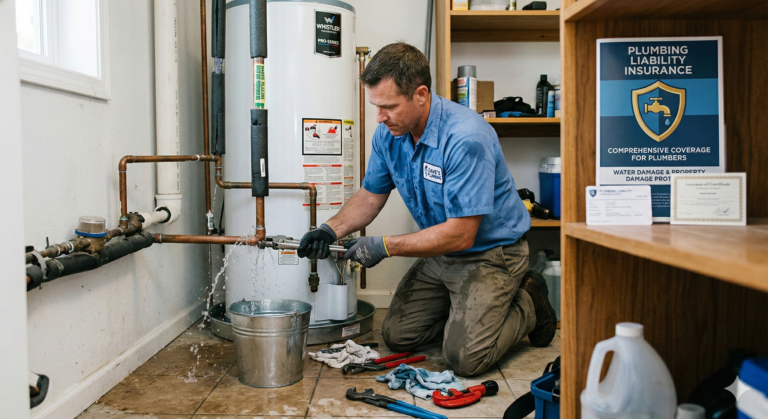
This is particularly vital for contractors and real estate professionals. If your team is working on a client’s home and accidentally causes a fire or a major pipe burst, your general liability insurance policy covers the repair or replacement costs. In the world of real estate investing, if a tenant’s guest claims your negligence led to the destruction of their personal property, this is the policy that steps in.
3. Personal and Advertising Injury
In the digital age, your marketing efforts can inadvertently lead to lawsuits. If a competitor claims your social media post defamed them, or if you accidentally use a copyrighted image in a blog post about SEO strategies, General Liability provides the legal defense and settlement funds for libel, slander, and copyright infringement claims.
Part 2: Common Pitfalls and Expensive Misconceptions
The biggest mistake business owners make is assuming that “having insurance” means “being covered for everything.” Insurance is a contract of specifics. Here are the most common pitfalls that lead to denied claims.
The “Employee” Confusion
Many entrepreneurs believe General Liability covers their staff. It does not. If your office assistant falls and breaks their arm, GL will not pay a dime. You need Workers’ Compensation for that. Mixing these up is a common reason businesses face massive fines from the state of Ohio.
The Professional Services Gap
GL covers physical mishaps. It does not cover financial mishaps caused by your advice or professional services. If you are an insurance agent, a lawyer, or a consultant, and you give a client advice that loses them money, they will sue you for Professional Liability (Errors & Omissions). You must ensure your GL policy is augmented by E&O if you provide professional advice.
Contractual Liability and Certificates of Insurance (COI)
If you are a subcontractor, the “General” on the job will require a COI. A common pitfall is failing to check if your policy allows for “Additional Insured” endorsements. If your policy is too restrictive, you might lose out on major contracts because you cannot meet the insurance requirements of the prime contractor.
Part 3: Things to Avoid When Shopping for a Policy
- Choosing the Lowest Premium Above All Else: Cheap policies often have “sub-limits.” For example, a policy might have a $1 million limit but a $50,000 sub-limit for “action over” claims. This is a trap that leaves you exposed.
- Inaccurate Payroll Reporting: Your premium is calculated based on your exposure. If you tell your agent you have $50,000 in payroll but you actually have $500,000, the insurance company will perform an audit at the end of the year and hit you with a massive, unexpected bill.
- Ignoring Local Expertise: Using a massive, faceless online aggregator might save you $10 a month, but they won’t understand Ohio-specific risks or the nuances of the Dayton business environment.
Part 4: Average Costs by Industry (2026 Estimates)
| Industry Type | Est. Monthly Premium | Primary Risk Factor |
|---|---|---|
| Professional Services (IT, SEO, Consulting) | $35 – $60 | Data Privacy/Advertising Injury |
| Real Estate (Landlords/Property Mgrs) | $60 – $110 | Premises Liability/Slip & Fall |
| Retail & Hospitality | $70 – $150 | High Foot Traffic Accidents |
| Construction & Skilled Trades | $200 – $500+ | Completed Operations & Property Damage |
| Pest Control & Specialized Services | $150 – $300 | Chemical Exposure/Pollution Risks |
Part 5: The “Ingram Advantage” – Why Local Expertise Matters
When you are building a business—whether it’s a pest control startup like Greater Dayton Pest & Rodent or a real estate empire—you don’t just need a policy; you need a strategist. General Liability is the starting point, but it must be integrated into a larger framework including Umbrella policies, Cyber Liability, and Equipment Floaters.
Ingram Insurance Group understands the Dayton market because we are part of it. We see the same streets, understand the local building codes, and know the specific risks facing Ohio business owners today.
How to Get a Quote
Getting a quote shouldn’t be a headache. To ensure you have the right coverage at the right price, contact us today for a full review of your current exposures.
- Visit our Office: 733 Salem Ave, Dayton, OH 45406
- Online: insuredbyingram.com
- Specialties: Real Estate Portfolios, Construction, Small Business Startups, and Commercial Property.
“Insurance isn’t about the premium you pay today; it’s about the claim that gets paid five years from now.”— The Ingram Insurance Group Philosophy
Don’t leave your hard work to chance. Secure your legacy with a policy that actually protects you.
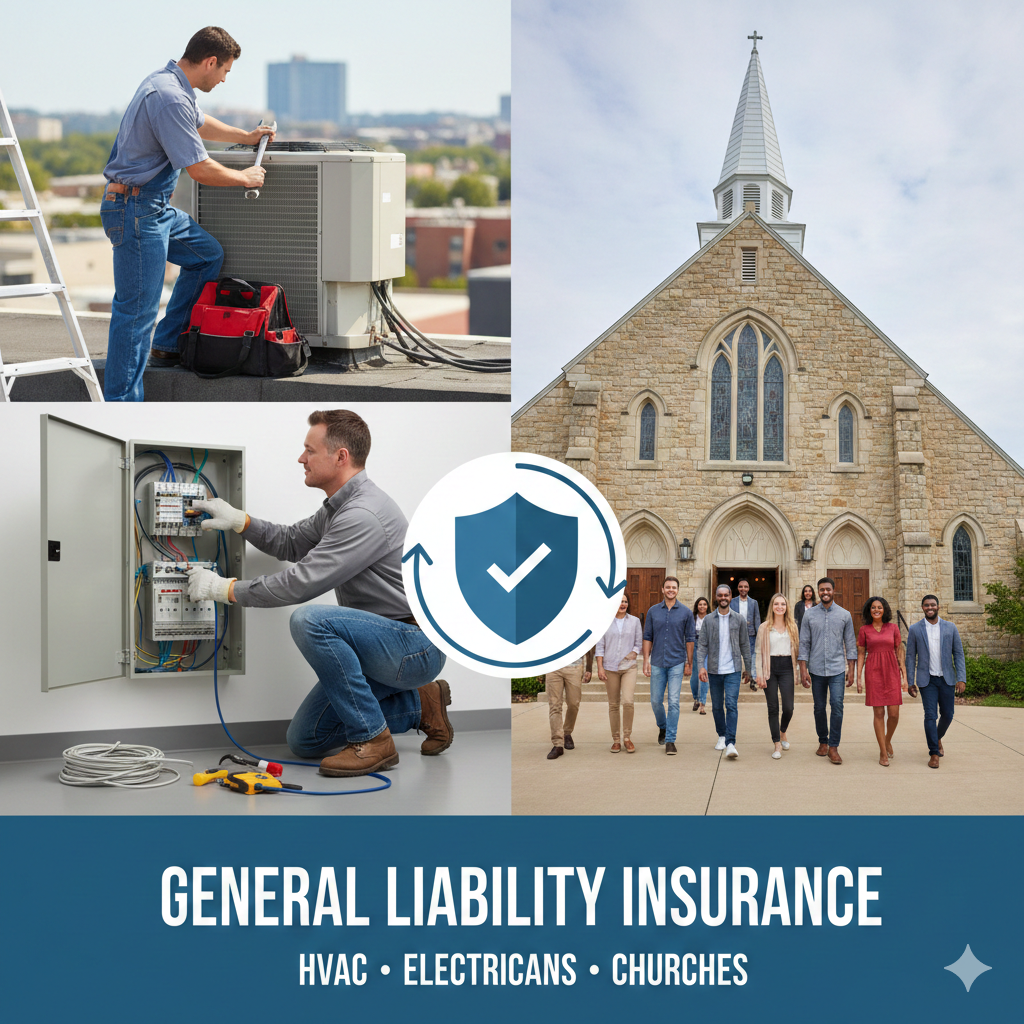
Industry-Specific General Liability: HVAC, Churches, and Electricians
General Liability is not a “plug-and-play” product. A policy that works for a retail shop will leave a contractor or a non-profit dangerously exposed. Here is how the coverage needs to be tailored for specific sectors.
General Liability for HVAC Contractors
For HVAC professionals in Ohio, the stakes are incredibly high. You aren’t just dealing with mechanical repairs; you are managing pressurized gasses, combustible fuels, and complex electrical systems. To maintain your state license through the OCILB, you must carry a minimum of $500,000 in liability coverage, but for most, that is just the floor.
- Completed Operations: This is the most critical component for HVAC. If a furnace you installed in December develops a slow gas leak that causes an issue in March, your “Completed Operations” coverage is what pays the claim. Without it, you are only covered while your boots are on the ground.
- Pollution & EPA Fines: Standard GL often excludes “pollutants.” If a refrigerant leak occurs during a repair, you could be liable for environmental cleanup costs and hefty EPA fines. Ensure your policy includes a pollution rider.
General Liability for Churches & Ministries
Churches function as community hubs, which creates a unique liability profile. You aren’t just protecting a building; you are protecting a mission. A standard commercial policy will almost always have gaps in the following areas:
- Sexual Misconduct & Molestation (SMM): This is the most vital addition to a church policy. Most basic GL policies explicitly exclude these claims. Given the youth programs and volunteer-heavy nature of ministry, having specific SMM coverage is non-negotiable for protecting the congregation’s assets.
- Pastoral Professional Liability: If a member of the clergy provides counseling that a parishioner later claims caused emotional distress or bad financial outcomes, standard GL won’t cover the defense. You need this “Counseling Liability” bridge to protect the staff.
- Directors & Officers (D&O): This protects the church board from personal liability regarding the decisions they make on behalf of the organization.

General Liability for Electricians
As an electrician, your biggest risk isn’t an injury on the job—it’s the fire that starts two years after you’ve finished the project. Like HVAC, Ohio requires proof of $500,000 in coverage for licensing, but the complexity of modern electrical work often demands more.
- Care, Custody, and Control (CCC): Standard GL has a “damage to your work” exclusion. If you are wiring a $50,000 industrial machine and you accidentally fry the motherboard, a standard policy might deny the claim. A CCC endorsement ensures the property you are actually working on is covered.
- Fire Damage Legal Liability: If your work causes a fire that spreads to an entire strip mall or apartment complex, the damages can quickly reach into the millions. We recommend a robust GL policy paired with a Commercial Umbrella to handle these catastrophic “tail” risks.
Frequently Asked Questions About General Liability Insurance
Navigating the world of business protection can be complex. Below are 20 of the most common questions we receive regarding general liability insurance and how it impacts your business operations.
- What exactly is general liability insurance?
General liability insurance is a fundamental business policy that protects your company against third-party claims involving bodily injury, property damage, and advertising injuries like libel or slander. - Is general liability insurance required by law in Ohio?
While Ohio state law does not universally mandate general liability insurance for all businesses, it is often required to obtain professional licenses or to fulfill the terms of commercial leases and client contracts. - Does general liability insurance cover my employees?
No, general liability insurance only covers injuries to third parties (customers or visitors). To cover employee injuries, you must have Workers’ Compensation insurance. - Will general liability insurance protect my own business equipment?
Standard general liability insurance does not cover your own tools or property. You would need to add “Inland Marine” or “Commercial Property” coverage to your policy for that protection. - How much does general liability insurance cost on average?
The cost of general liability insurance varies by industry, but many small businesses in Ohio can find coverage starting between $40 and $80 per month. - What are the standard limits for general liability insurance?
Most small businesses opt for general liability insurance limits of $1 million per occurrence and $2 million aggregate. - Does general liability insurance cover professional mistakes?
No. General liability insurance covers physical accidents. If you are sued for giving bad advice or making a professional error, you need Professional Liability (Errors & Omissions) insurance. - What is a “Certificate of Insurance” for general liability insurance?
A certificate of general liability insurance is a document issued by your agent that proves to a third party (like a landlord or client) that you have an active policy. - Does general liability insurance cover data breaches?
Typically, general liability insurance does not cover cyber-attacks or data loss. You would need a specific Cyber Liability endorsement or a separate policy. - Can I get general liability insurance for a single day?
While most general liability insurance policies are annual, “Special Event” insurance is available for short-term needs, though a standard annual policy is usually more cost-effective for ongoing businesses. - Does general liability insurance cover liquor-related accidents?
Standard general liability insurance provides “Host Liquor Liability” for occasional office parties, but if you sell alcohol, you need a specific Liquor Liability policy. - What is “Completed Operations” in general liability insurance?
This part of general liability insurance covers you if the work you did in the past causes an injury or damage today, long after you’ve left the job site. - Does my LLC mean I don’t need general liability insurance?
An LLC protects your personal assets, but general liability insurance protects your business’s assets. Without it, a lawsuit could still bankrupt your company. - What is a “per-occurrence” limit in general liability insurance?
This is the maximum amount your general liability insurance will pay for a single claim or incident. - What is an “aggregate” limit in general liability insurance?
The aggregate limit is the total amount your general liability insurance provider will pay out across all claims during the policy’s one-year term. - Can I bundle general liability insurance with other coverages?
Yes! Many owners choose a Business Owner’s Policy (BOP) which bundles general liability insurance with property insurance, often at a discounted rate. - Does general liability insurance cover mold or pollution?
Most standard general liability insurance policies exclude mold and pollution. Specialized contractors usually need a specific endorsement for these risks. - Why do I need to audit my general liability insurance?
Carriers audit general liability insurance policies at the end of the year to ensure your premium matches your actual sales or payroll for that period. - Does general liability insurance cover copyright infringement?
Yes, general liability insurance typically includes “Advertising Injury” coverage, which can protect you if you accidentally use a copyrighted image in your marketing. - Who can help me find the best general liability insurance in Dayton?
Ingram Insurance Group specializes in general liability insurance for local businesses, providing tailored quotes that fit your specific industry needs.