
Storm & Weather Risks for Homeowners in Linden Heights, Dayton
Homeowners in Linden Heights, Dayton, occupy a neighborhood where historic housing, mature urban tree canopy, and early-20th-century infrastructure intersect with modern Midwestern weather volatility. Severe thunderstorms, convective wind events, hail, snow and freeze–thaw cycles, as well as chronic basement moisture all combine to shape a distinct risk environment. Understanding how these physical conditions interact with the age and design of Linden Heights housing is essential for structuring effective homeowners insurance and avoiding costly coverage gaps. This article provides an academically oriented, neighborhood-specific examination of storm and weather risks in Linden Heights and explains how those risks translate into underwriting decisions, policy language, and coverage priorities for local residents.
For readers seeking a broader view of property coverage in this neighborhood, our dedicated guide on Linden Heights homeowners insurance offers complementary analysis of non-weather-related risks, rating factors, and coverage structures.
Meet Linden Heights, Dayton, Ohio
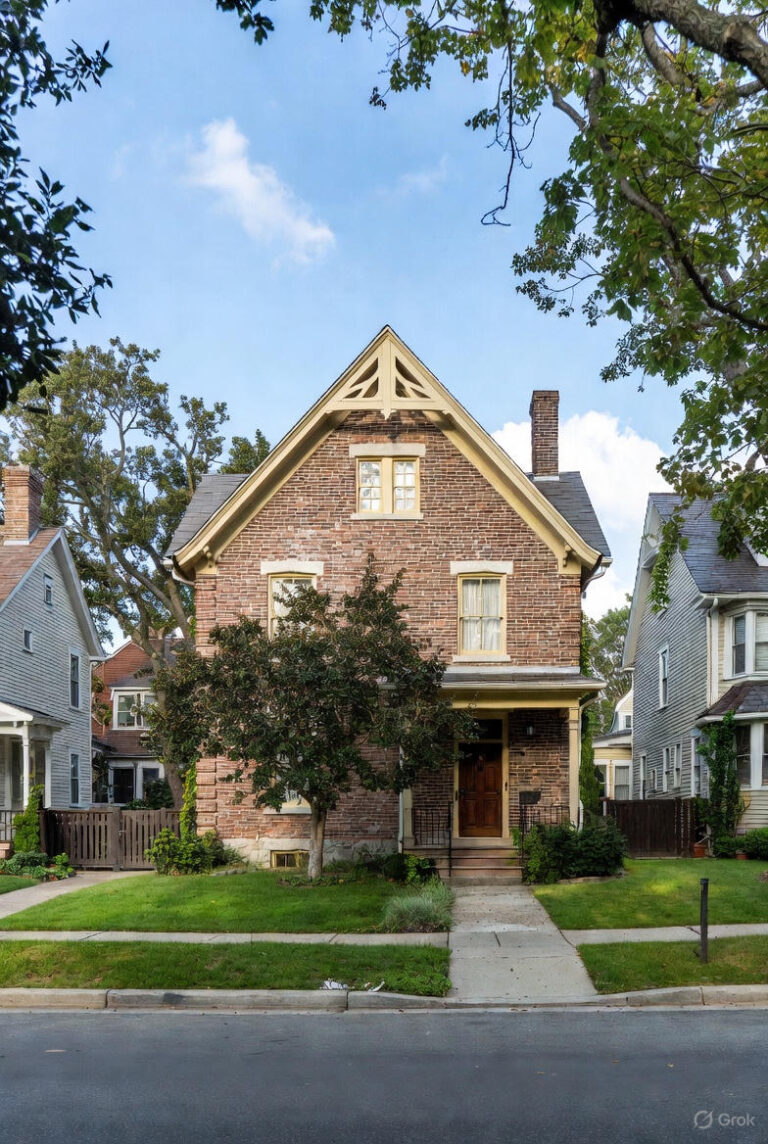
Linden Heights is one of Dayton’s most architecturally cohesive early- to mid-20th-century neighborhoods. Residential construction in this area occurred primarily between the early 1900s and the 1950s, producing a housing stock dominated by bungalows, American foursquares, and modest frame or brick houses with prominent front porches. Many structures have undergone incremental renovation, with a growing subset fully revitalized by owner-occupants and small-scale investors. The neighborhood also maintains an increasingly visible arts and community presence, supported by active neighborhood organizations and proximity to other revitalizing districts such as Belmont and the Historic Inner East.
From a physical risk standpoint, Linden Heights is characterized by relatively tight lot spacing, a well-developed street grid, and a robust urban tree canopy. Mature street trees provide shade, aesthetic value, and ecological benefits, but they also introduce a heightened exposure to limb drop, windthrow, and root-related infrastructure impacts. Pervasive hard surfaces—streets, sidewalks, driveways, and smaller yard footprints—limit permeable ground area, influencing how stormwater moves throu
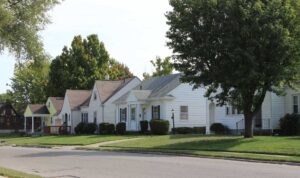
gh the neighborhood during heavy precipitation events. These underlying conditions materially affect weather-related loss patterns and therefore influence how insurers evaluate homes in Linden Heights.
As part of Dayton’s broader east and southeast residential corridor, Linden Heights functions as a representative example of older, walkable neighborhoods where historical building practices intersect with contemporary climate and infrastructure realities. For that reason, it provides a useful lens for understanding how storm and weather risks are underwritten and priced in similar Dayton communities, including nearby Historic Inner East, Twin Towers, Walnut Hills, and Eastmont.
How the Built Environment in Linden Heights Shapes Weather-Related Insurance Risk
The built environment of Linden Heights—its housing age, construction methods, lot configuration, and street infrastructure—plays a decisive role in determining how storm and weather events translate into insured losses. Because the majority of homes were constructed before contemporary building and energy codes were fully institutionalized, many properties incorporate assemblies and materials that respond differently to wind, precipitation, and thermal stress than newer construction.
Roof systems are a primary example. Most Linden Heights homes rely on asphalt shingle roofs, with a subset of older structures retaining slate or other legacy materials. Even where roofs have been resurfaced, underlying sheathing, flashing details, and attic ventilation may remain original. Roof age and design directly influence susceptibility to wind uplift, shingle loss, hail impact, and ice dam formation. From an underwriting perspective, documented roof age and condition are among the most heavily weighted variables when evaluating storm risk for Linden Heights homeowners.
The neighborhood’s compact lot sizes and relatively dense pattern of development also affect stormwater behavior. Impervious coverage—driveways, sidewalks, patios, and limited yard space—reduces infiltration capacity. During high-intensity rainfall, stormwater can concentrate along foundation walls, in rear-yard low points, and in combined sewer lines, increasing the probability of seepage, hydrostatic pressure, and sewer or drain backup. These dynamics are particularly consequential for older basements with fieldstone, brick, or early concrete foundations and limited modern waterproofing. Consequently, Linden Heights exhibits a higher-than-average frequency of basement moisture and water intrusion events compared to newer suburban subdivisions with engineered stormwater controls.
Finally, mature trees and overhead utility infrastructure create exposure to wind- and ice-related damage. Limb failure can puncture roofs, sever service drops, and damage vehicles or accessory structures. Root systems intruding into sewer laterals or shifting adjacent soil can exacerbate drainage and structural issues. Insurers account for these conditions by modeling both the physical characteristics of individual parcels and neighborhood-level tree canopy density when assessing risk.
Key Insurance Risks for Home Insurance in Linden Heights
Weather-related risk in Linden Heights can be organized into several recurring categories, each with distinct coverage implications. Understanding these categories helps homeowners structure their policies and risk-mitigation activities in a way that is aligned with neighborhood realities.
Roof and Wind Damage
Convective storms in the Dayton region routinely produce strong straight-line winds and occasional hail. In Linden Heights, where many roofs are 15–25 years into their service life—or older—wind uplift can compromise shingles, ridge caps, and flashing, while hail impact can bruise or fracture roofing materials in ways that are not immediately obvious from ground level. Over time, these small defects may transition into active leaks, culminating in interior water damage, sheathing rot, or structural deterioration.
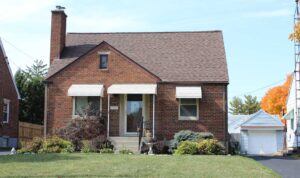
Insurers respond to this risk by carefully evaluating roof age, material, and prior loss history. Many carriers apply separate wind and hail deductibles, which may be either a flat dollar amount or a percentage of the dwelling limit. In neighborhoods like Linden Heights with aging roofs and dense tree cover, some insurers require photographic documentation or inspections as a condition of binding or renewal. Homeowners who proactively replace roofs with modern, impact-resistant materials are often rewarded with improved eligibility and more favorable pricing for storm-related coverage.
Water Backup and Basement Moisture
Basement water intrusion is one of the most pervasive issues affecting older Dayton neighborhoods, and Linden Heights is no exception. The combination of tight lots, older sewer infrastructure, and mature tree roots can create conditions where stormwater and wastewater systems are temporarily overwhelmed during heavy precipitation, resulting in water forcing its way into basements through floor drains, sump pits, or foundation cracks.
Standard homeowners insurance forms in Ohio typically exclude loss caused by water backing up through sewers or drains or discharged from a sump pump, unless a specific endorsement is attached. For Linden Heights homeowners, the absence of a water backup endorsement represents a significant coverage gap. Claims involving even modest basement flooding can quickly escalate once structural drying, mold remediation, and damaged mechanical systems are considered.
Given the neighborhood’s known drainage profile, local homeowners are generally well-advised to pair physical mitigation measures (functional gutters and downspouts, grading adjustments, sump pumps with battery backup) with appropriately sized water backup coverage. This dual approach is particularly important for homes with finished basements, laundry areas, or mechanical equipment located below grade.
Plumbing and Electrical System Failures
Mechanical systems in Linden Heights frequently reflect a layered upgrade history. While many homes have seen partial modernization, it is common to encounter original or mid-century plumbing lines, mixed piping materials, and legacy electrical circuits coexisting with newer components. Such hybrid systems can be uniquely failure-prone.
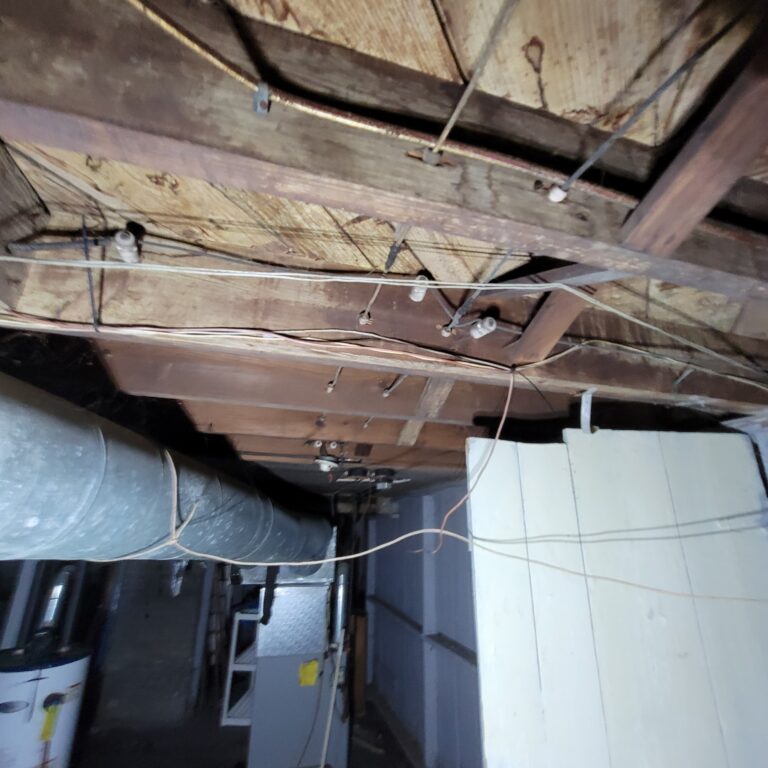
On the plumbing side, galvanized steel or cast-iron lines may be approaching or beyond their expected service lives, increasing the likelihood of leaks, bursts, or blockages. Tree root intrusion into older sewer laterals is a recurrent source of claims. On the electrical side, undersized service panels, older breaker technologies, or residual knob-and-tube wiring in attics pose elevated fire risk, particularly when combined with today’s higher household electrical loads.
Insurance underwriters factor the age and documented condition of these systems into eligibility and pricing decisions. Homes with unaddressed mechanical deficiencies may be offered coverage only on stricter terms, with higher deductibles or limited replacement cost options. Conversely, homeowners who invest in system modernization often gain access to a broader carrier market and more favorable pricing—a dynamic explored in more detail in our article on why Ohio homeowners insurance premiums are rising.
Trees, Falling Debris, and Liability Considerations
Mature trees are a defining visual and ecological feature of Linden Heights, but they also represent a measurable hazard in storm conditions. High winds and ice loading can precipitate limb failure or, in some cases, whole-tree uprooting. Impact with a dwelling can damage roofs, exterior walls, windows, decks, and accessory structures such as garages or sheds. Powerline contact may also lead to secondary fire or electrical hazards.
From an insurance standpoint, damage to a home caused by a falling tree or large limb is generally covered if the event stems from a sudden and accidental occurrence such as a windstorm or ice storm. However, coverage nuances arise when questions of maintenance and negligence enter the picture—for example, where a tree was visibly dead or structurally compromised and no corrective action was taken. Linden Heights homeowners should therefore treat tree inspection and pruning not only as aesthetic or arboricultural tasks but as integral components of risk management and liability control.
Underinsurance and Replacement Cost Volatility
Linden Heights, like many older Dayton neighborhoods, exhibits a persistent divergence between market value and reconstruction cost. A home that might sell on the open market for $150,000 could require substantially more to rebuild following a total loss, particularly if it contains high-quality original finishes, complex roof geometry, or detailed millwork. Rising material prices and labor shortages can widen this gap over time.
Insufficient dwelling limits—commonly referred to as underinsurance—present one of the most significant long-term financial risks to Linden Heights homeowners. Policies written on an actual cash value (ACV) basis further compound this exposure by subtracting depreciation from loss payments. In contrast, replacement cost coverage seeks to fund repair or reconstruction at current prices, without depreciation, up to the policy limit. For a deeper discussion of these valuation frameworks, see our guide on replacement cost versus actual cash value for Ohio homeowners.
How Home Insurance Works in Ohio (and What Is Distinctive About Linden Heights)
At a high level, homeowners insurance in Ohio functions as a contract that transfers defined categories of property and liability risk from the homeowner to an insurer in exchange for premiums. Most owner-occupied single-family homes are insured on an HO-3 or similar “special form” policy, which provides open-perils coverage for the dwelling (subject to exclusions) and named-perils coverage for personal property. The policy typically includes protections for the main structure, detached structures, personal belongings, additional living expenses due to loss of use, personal liability, and medical payments to others.
While this structure is broadly consistent statewide, Linden Heights introduces several distinctive variables. First, the concentration of older homes amplifies the importance of endorsements such as water backup, ordinance or law coverage, and enhanced dwelling limits. Second, local microclimate and infrastructure characteristics—such as combined sewers and aging lateral lines—elevate certain perils that may be peripheral in newer neighborhoods. Third, the neighborhood’s ongoing revitalization can cause property values and reconstruction costs to shift more rapidly than in stable markets, necessitating more frequent coverage reviews and limit adjustments.
In practical terms, this means that a generic Ohio homeowners policy, purchased without attention to these nuances, may leave substantial gaps. Tailoring coverage to Linden Heights requires careful attention to how specific exclusions interact with local loss patterns and how deductibles, valuation methods, and optional endorsements align with household financial resilience and risk tolerance. Homeowners can use our broader Linden Heights homeowners insurance overview as a complement to this weather-focused analysis when making comprehensive coverage decisions.
Coverage Decisions Linden Heights Residents Cannot Afford to Misjudge
Replacement Cost Versus Actual Cash Value on the Dwelling
For Linden Heights homeowners, the decision between replacement cost and actual cash value on the dwelling is not a minor technical detail; it is a central determinant of post-loss financial outcomes. Replacement cost coverage pays the cost to repair or rebuild the home using materials of like kind and quality, up to the policy limit, without deducting for age-related depreciation. ACV coverage, by contrast, subtracts depreciation from the payout, which can significantly reduce the funds available for reconstruction.
Consider a hypothetical 1920s bungalow with a roof replacement cost of $20,000. Under an ACV framework, a roof that is halfway through its expected life might be depreciated by 50%, leaving only $10,000 payable (less the deductible). Under a replacement cost framework, the homeowner would receive the full $20,000 cost (subject to deductible), assuming adequate dwelling limits and compliance with policy conditions. In a neighborhood where roof ages are often elevated and depreciation substantial, replacement cost coverage is frequently the more prudent option.
Water Backup and Sewer Coverage Endorsements
As noted earlier, losses caused by water backing up through sewers, drains, or sump systems are typically excluded from base policies. In Linden Heights, where basement moisture and drainage challenges are well documented, the absence of a water backup endorsement is a material exposure. This endorsement is generally available at various limit tiers and can cover structural drying, clean-up, damaged finishes, and sometimes limited mold remediation, depending on carrier and form.
Homeowners should align endorsement limits with the realistic cost of replacing finished materials and mechanical equipment housed in the basement. Properties with finished living areas, home offices, or significant storage below grade may warrant higher limits than minimally finished basements used only for utilities.
Wind and Hail Deductibles and Special Roof Provisions
Many Ohio insurers apply separate wind and hail deductibles due to the loss frequency associated with convective storms. In Linden Heights, where older roofs are more vulnerable to storm damage, it is especially important for homeowners to understand whether their wind/hail deductible is a fixed dollar amount or a percentage of Coverage A (dwelling) limits. A 2% deductible on a $300,000 dwelling limit translates to a $6,000 out-of-pocket obligation before insurance pays for storm-related roof damage.
Some carriers also differentiate between cosmetic and functional damage to roofing and siding, affecting how hail claims are evaluated. Others may limit full replacement cost to roofs under a certain age. Close reading of policy language and active discussion with an agent are essential for avoiding surprises at claim time.
Ordinance or Law Coverage for Code-Driven Upgrades
Because many Linden Heights homes predate modern building, electrical, and energy codes, any significant reconstruction effort following a covered loss is likely to trigger upgrade requirements. Ordinance or law coverage is designed to pay for these additional costs—such as panel upgrades, stairway reconfiguration, or enhanced insulation—that are not related to direct physical damage from the covered event but are mandated by current code.
Without ordinance or law coverage, homeowners may find themselves paying substantial upgrade expenses out-of-pocket, even when the originating loss is fully covered. Given the age of the housing stock, this coverage is particularly important in Linden Heights and similar historic Dayton neighborhoods.
Real-World Scenarios from Linden Heights Streets and Homes
Scenario 1: Wind and Hail Damage to a 1920s Roof
A homeowner on a tree-lined Linden Heights block owns a 1923 bungalow with an 18-year-old asphalt shingle roof. A spring storm produces high winds and hail, dislodging shingles and causing multiple leaks. An inspection reveals widespread impact and deterioration. The dwelling is insured for $250,000 with a 2% wind/hail deductible and replacement cost on the roof.
The roof replacement estimate totals $19,000. After the $5,000 deductible, the insurer pays $14,000. Because the policy includes replacement cost, there is no additional depreciation deduction. Under an ACV structure, however, the payout might have been significantly lower, leaving the homeowner to fund a larger portion of the project personally.
Scenario 2: Sewer Backup into a Finished Basement
A Linden Heights household with a finished basement experiences a severe summer rain event. Combined sewers in the area back up, forcing water through a basement floor drain. Carpeting, drywall, and personal belongings are damaged, and professional remediation is required. The homeowner’s base policy excludes sewer backup losses; as a result, the entire $13,000 remediation and repair cost falls to the homeowner.
Following the event, the household adds a $10,000 water backup endorsement for a modest additional annual premium and upgrades the sump system with battery backup. The combination of physical mitigation and coverage enhancement markedly reduces their future financial exposure.
Scenario 3: Electrical Fire and Code Upgrade Requirements
An updated but still partially original American foursquare experiences an electrical fire originating in an older branch circuit in the attic. The fire damages the roof structure and portions of the upper floor. The insurer covers $80,000 in direct physical damage. However, local code officials require that the remaining knob-and-tube wiring be removed and the home’s electrical system fully updated.
Because the homeowner’s policy includes ordinance or law coverage, an additional $18,000 in code-driven electrical upgrades is paid under that endorsement. Without it, the homeowner would have been responsible for funding those improvements independently, despite the fire being a covered event.
Cost, Discounts, and Strategies for Managing Premiums
Premiums for homeowners insurance in Linden Heights are shaped by a combination of dwelling characteristics, coverage selections, deductibles, and carrier-specific rating variables. While the neighborhood’s age and weather exposure may elevate baseline pricing relative to some newer subdivisions, homeowners retain significant agency in managing costs through targeted improvements and informed coverage choices.
Common premium-reduction strategies include:
-
- Replacing older roofs with modern, impact-resistant materials
-
- Upgrading electrical panels, wiring, and plumbing systems
-
- Installing monitored alarm systems and smart detection devices (water, fire, freeze)
-
- Implementing sump pumps with battery backups and verifying proper grading and gutter function
-
- Selecting deductibles aligned with personal risk tolerance and emergency savings capacity
-
- Bundling home and auto coverage through the same carrier where appropriate
These interventions not only support more favorable premiums but also reduce the likelihood and severity of storm-related losses, which in turn contributes to long-term neighborhood stability.
Nearby Neighborhoods and Comparative Risk Profiles
These neighboring Dayton communities share several attributes with Linden Heights—aging housing stock, established tree canopies, and historic infrastructure—yet each presents distinct micro-level differences in topography, stormwater behavior, and revitalization trajectory. Comparing risk profiles across these neighborhoods can help homeowners and prospective buyers understand how location-specific variables influence both everyday weather resilience and long-term insurability.
When and How to Review Your Policy if You Live or Own Property in Linden Heights
Because both weather patterns and reconstruction costs evolve over time, homeowners in Linden Heights should treat insurance as a dynamic instrument rather than a static purchase. At minimum, an annual review is advisable, with more frequent reassessments following significant home improvements, major weather events, or shifts in household finances.
Key review questions include:
-
- Does the dwelling limit still approximate the full replacement cost of the home given current material and labor pricing?
-
- Are roof age and condition properly documented for underwriting purposes?
-
- Is water backup coverage present and sized appropriately for the level of basement finish and mechanical equipment?
-
- Are wind and hail deductibles set at levels that are affordable in the event of a claim?
-
- Does the policy include ordinance or law coverage sufficient to address potential code upgrades?
-
- Have recent system upgrades (roof, electrical, plumbing, security) been communicated to the agent to ensure accurate rating?
Systematic review against these criteria helps ensure that coverage keeps pace with both household circumstances and evolving neighborhood conditions.
Working With a Local Independent Agent Who Understands Linden Heights
Given the interplay of historic housing, localized weather risk, and evolving redevelopment in Linden Heights, partnering with an insurance professional who actively studies Dayton’s older neighborhoods can materially improve outcomes. An experienced independent agent can translate technical underwriting considerations into clear options, help calibrate deductibles and endorsements to household budgets, and identify carriers whose appetite aligns with Linden Heights’ risk profile.
Ingram Insurance is based in Dayton and routinely works with homeowners in Linden Heights, Belmont, Historic Inner East, and surrounding neighborhoods. Our team is familiar with the structural characteristics of local housing, the behavior of weather-related claims in this part of the city, and the coverage features that tend to be most critical for long-term financial protection.
If you would like a second opinion on your current policy or are preparing to purchase a home in Linden Heights, we are available to review your coverage, explain tradeoffs in plain language, and help you design a program that aligns with both the physical realities of your property and your financial goals.
To discuss your options, call Ingram Insurance at (937) 741-5100, email contact@insuredbyingram.com, or visit https://www.insuredbyingram.com/ to get started.