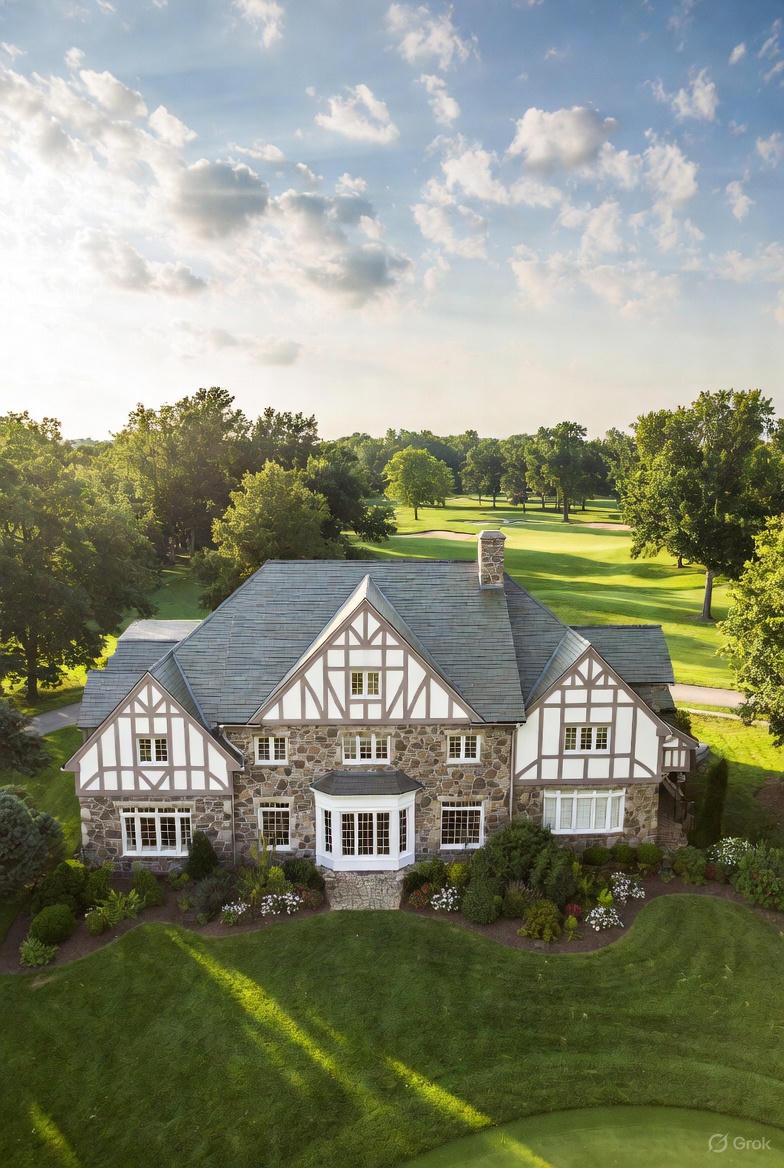
Oakwood Homeowners Insurance: East vs. West of Far Hills Avenue
Oakwood is unlike any other suburb in the Dayton region. With one of the highest household income levels in the area, a dense concentration of physicians, attorneys, and executives, and some of the most historic housing stock in Southwest Ohio, the insurance needs here are far from standard. The same attributes that make Oakwood desirable—walkability, architectural character, proximity to major healthcare and legal employers, and strong schools—also create a risk landscape that is materially more complex than most “typical” suburban markets.
This white-paper-style analysis takes a rigorous, geographically informed look at how homeowners insurance should be structured on the two sides of Far Hills Avenue (State Route 48): the denser, platted lots east of 48 and the hilly, golf-course-adjacent neighborhoods to the west. If you are already familiar with our articles “The Heart of Oakwood” and “Oakwood Ohio Homeowners Insurance: Managing High Replacement Costs”, you can view this article as the next layer of analysis—focused on micro-geography, risk segmentation, and high-net-worth protection strategies specific to Oakwood’s east–west divide.
Oakwood in Context: Historic, Affluent, and Architecturally Complex
From its inception, Oakwood was planned with a deliberate mix of natural topography, walkable streets, and architecturally distinctive homes. The city’s development pattern predates the mass-production subdivisions of the late 20th century. As a result, Oakwood features:
- Mature housing stock built primarily in the early to mid 1900s, often with masonry exteriors, slate roofs, and custom millwork.
- High property values and high incomes, which translate into both elevated replacement costs and elevated liability exposure.
- Smaller geographic footprint but high density, leading to closer lot lines, more interaction between neighbors, and shared infrastructure impacts.
- Strong civic services and enforcement, which affects how strictly building codes, zoning, and safety ordinances are applied after a loss.
That legacy shows up today in elevated replacement costs, complex claim scenarios, and a higher-than-average concentration of clients with significant personal assets to protect. For a broader baseline of how homeowners policies function in Ohio, many Oakwood residents start with our statewide explainer, “What Does Home Insurance Actually Cover in Ohio?” and then move into Oakwood-specific topics like basement water and older foundations or umbrella coverage for Oakwood homeowners.
However, one dimension that is frequently overlooked—even by experienced professionals—is how much risk changes as you cross Far Hills Avenue. Two homes that are only a few minutes apart by car may require fundamentally different insurance design due to lot layout, slope, drainage, and structural characteristics.
Two Oakwoods: East of 48 vs. West of 48
While the City of Oakwood is geographically compact, it is functionally divided into two distinct risk environments. The dividing line is Far Hills Avenue, but the real separation is a combination of urban form, topography, and construction patterns.
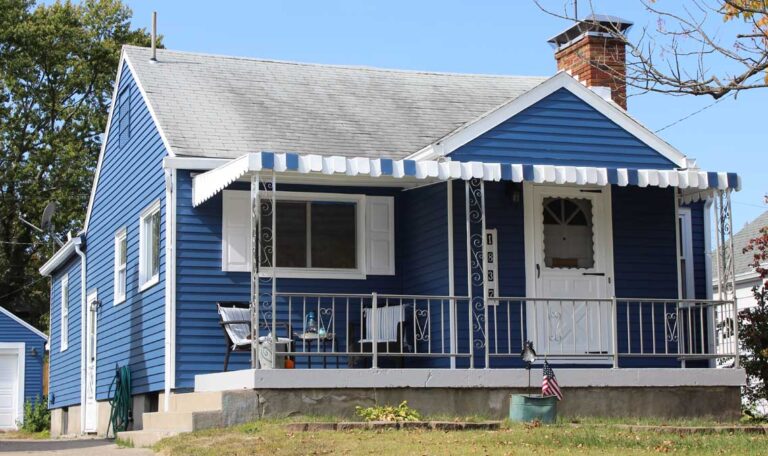
East of Far Hills Avenue: Traditional Midwestern city layout with narrower, platted lots, closer lot lines, sidewalks, significant foot traffic, and a high concentration of early 20th-century homes. Blocks feel more like historic Dayton neighborhoods, with street trees, front porches, and strong pedestrian activity. These streets resemble other legacy areas we write about, such as our Centerville neighborhood analysis in “Centerville, Ohio Homeowners Insurance: A Neighborhood-by-Neighborhood Guide.”
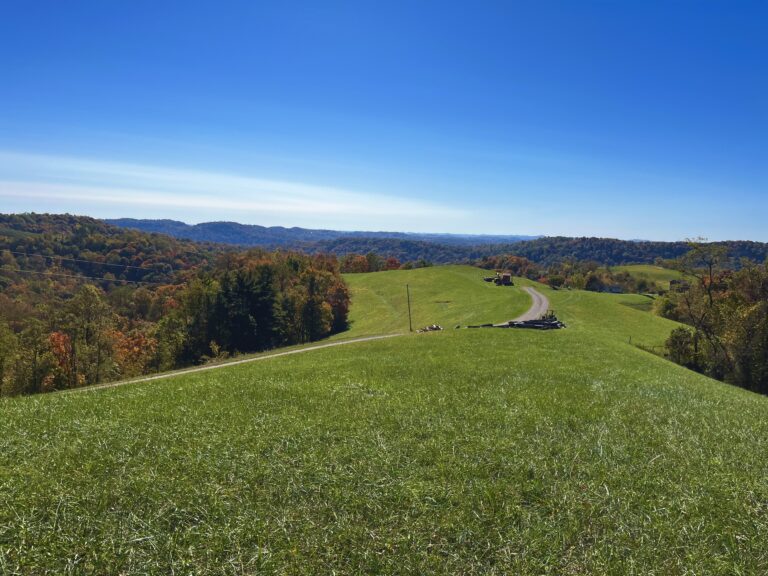
West of Far Hills Avenue: Larger, more irregular plats, with homes built along rolling terrain near Houk Stream and around the golf-course corridor. Lots tend to be more spacious, homes often larger and more customized, and water flow and slope become more significant risk drivers. Rooflines are taller, driveways steeper, and many properties incorporate terraced landscaping, retaining walls, and extensive outdoor living spaces.
Both environments share Oakwood’s core characteristics—mature trees, older housing stock, strong civic services—but their insurance needs diverge in important, highly technical ways. A policy built for a flat, tightly platted east-side bungalow will not necessarily be adequate for a hillside, multi-level home west of 48—and vice versa.
East of Far Hills: Dense, Historic, and Highly Walkable
East-of-48 Oakwood represents the city’s classic image: tree-lined streets, brick and stone homes from the 1910–1940 era, front porches, sidewalks, and neighborhoods where children walk to school and residents walk to parks and local businesses. The housing fabric here is closer to an older Midwestern city than to a typical modern subdivision. From an underwriting and claims perspective, multiple interlocking themes emerge.
1. Historic Construction and Elevated Replacement Costs
Many east-side Oakwood homes are built with features that are either impossible to reproduce at scale today or dramatically more expensive: slate or clay tile roofs, thick plaster walls, coved ceilings, leaded glass windows, true dimensional lumber framing, custom millwork, built-in cabinetry, and original masonry fireplaces and chimneys. These elements are assets from a character and marketability standpoint—but liabilities if the policy is calculated as if the home were a contemporary tract build.
As we explored more broadly in our Oakwood replacement cost article, this makes it dangerously easy to underinsure. A carrier’s default replacement-cost estimator may assume lower-cost finishes, simpler rooflines, and minimal custom carpentry. Unless those assumptions are overridden, the resulting Coverage A (dwelling) limit can be off by hundreds of thousands of dollars.
For professionals used to thinking in terms of “market value,” it is important to separate that from reconstruction value. A home that might reasonably sell for $700,000 in the current market could have a true replacement cost of $1 million or more once specialty labor, debris removal, demolition, code upgrades, and architectural complexity are factored in. In a major fire or catastrophic loss, that gap becomes a very real, very immediate financial problem.
Key strategies for east Oakwood homes include:
- Requesting a detailed, line-item replacement cost estimate rather than relying solely on a carrier’s automated calculator.
- Strongly considering Extended or Guaranteed Replacement Cost coverage where available, to provide a buffer over and above the nominal dwelling limit.
- Documenting high-value interior elements with photos, appraisals, and contractor invoices for major renovations or restorations.
- Reviewing Coverage B (other structures) and Coverage C (personal property) to ensure they track with the elevated character and contents of the home.
2. Ordinance or Law: The Code-Upgrade Problem in Older Housing Stock
Older homes in a jurisdiction like Oakwood almost always trigger code-compliance issues when significant damage occurs. Electrical systems, insulation, structural members, fire separations, stair geometry, guardrails, and energy-efficiency standards may all be governed by modern building codes that your original home pre-dates. Oakwood’s enforcement culture is thorough and standards-driven; after a major loss, the rebuild will not be a simple “patch back what was there.”
In practice, this means a partial loss can behave like a near-total loss once code enforcement gets involved. An insured might expect a claim to cover “fixing the damaged wall,” but if that wall contains obsolete wiring or insufficient insulation, the municipality may require upgrading the entire run. Without Ordinance or Law coverage—ideally set at 25–50% of Coverage A (dwelling)—homeowners may be responsible for the incremental costs of bringing entire systems up to code while the carrier only covers the “like kind and quality” portion.
In east Oakwood especially, where whole blocks of homes share similar construction eras and systems, this exposure is systemic rather than case-specific. Code-driven cost overruns are predictable, not theoretical.
3. Tree Canopy, Wind, and Impact Damage
East Oakwood’s tree canopy is one of its defining features. Mature street trees and large trees on private lots contribute to shade, aesthetic character, and property values—but they also contribute to roof, siding, and gutter claims. Slate and clay tile roofs are particularly susceptible to high per-square repair costs; a single limb strike can generate a repair estimate that approaches or exceeds the deductible multiple times over.
This ties into the concepts we address in “The 15-Year Roof Rule No One Warns Landlords About (Ohio Edition)”, where roof age, material, and condition can influence both insurability and claims outcomes. An older slate roof with prior repairs may be rated differently than a newer architectural shingle roof—both in premium and in available coverage options.
Homeowners on the east side should be aware that:
- Carriers may apply stricter underwriting standards, higher wind/hail deductibles, or even limitations on roof claims for certain materials or ages.
- Proactive tree maintenance (pruning, removal of dead limbs, addressing trees that overhang homes or lines) is a real risk-management tool, not just an aesthetic choice.
- Claims history related to repeated small limb or wind events can influence future pricing and eligibility.
4. Sidewalks, Pedestrian Traffic, and Liability Exposure
Because east-of-48 Oakwood is highly walkable, premises liability is not an abstract risk. Residents share sidewalks with school traffic, runners, dog walkers, and visitors attending community events. Winter weather, freeze-thaw cycles, and tree-root-heaved pavement can increase trip, slip, and fall risk. Combined with Oakwood’s higher-than-average incomes and assets, this creates a meaningful liability profile.
Liability claims can arise from:
- Trips and falls on uneven sidewalks, driveways, or steps, especially in icy conditions.
- Dog bites or other animal incidents, particularly in dense blocks where yards are smaller.
- Injuries to contractors, delivery drivers, or guests on the property.
For high-income households, this reinforces the logic behind the analysis in “Do Oakwood Homeowners Need Umbrella Insurance?”, where we walk through why $1M–$5M in umbrella coverage is often appropriate for Oakwood households. East-of-48 residents, with higher foot traffic around their homes, are particularly strong candidates for elevated liability limits.
5. Basements, Sewer Lines, and Aging Infrastructure
East Oakwood’s basements, sewer laterals, and stormwater systems are typically as old as the homes themselves. Clay laterals, root intrusion, settling, and aging connections increase the likelihood of sewer backup and water-related claims. Even well-maintained homes can experience backups originating in the municipal system, which then push water back through private laterals and into basements.
For a deeper dive, our dedicated article on Oakwood basement insurance breaks down how sump-pump failures, sewer backups, and seepage are (and are not) covered under standard policies, and how specialized Water Backup endorsements can close critical gaps. In east Oakwood, these endorsements are not optional; they are a core component of realistic risk management.
West of Far Hills: Hilly Terrain, Larger Homes, and Water-Flow Complexity
West of Far Hills, the built environment changes in visible and structural ways. Lots are often wider and deeper, topography is more pronounced, and many homes sit on or near the slopes feeding into Houk Stream and associated drainage corridors. Homes in this corridor tend to be larger, frequently renovated, and more custom in layout and finish. This creates a different, but equally complex, insurance profile.
1. Topography, Drainage, and Subsurface Water
Hillside and ravine-adjacent properties introduce a risk profile that cannot be understood solely by looking at the house itself. The land matters. Surface runoff during heavy storms concentrates as it flows downhill, and properties near the bottoms of slopes or along drainage paths can face repeated water challenges: hydrostatic pressure against foundation walls, overwhelmed footing drains, overloaded sump systems, and erosion around driveways and retaining walls.
Standard homeowners insurance generally does not cover groundwater seepage or overland surface water entering a structure at or below grade. Coverage can be improved—but not fully solved—with:
- Robust Water Backup endorsements with higher limits (e.g., $25,000–$50,000+), which can respond when water backs up through drains or sumps due to system overload or failure.
- Flood policies (even for homes outside mapped FEMA flood zones), which can address certain forms of overland water that are excluded from standard policies.
- Infrastructure improvements such as additional sump pumps, battery or generator backup, regrading, French drains, and exterior waterproofing systems.
The themes are similar to those we address in “Do I Need Sewer Backup Coverage in Dayton and Centerville?” but amplified by West Oakwood’s slope and drainage patterns. A west-side homeowner’s insurance plan should be built with the landscape in mind, not just the structure.
2. Larger Square Footage and Custom Renovations
Many west-of-48 homes exceed 3,000 or 4,000 square feet and have seen multiple waves of renovation—kitchens expanded into former porches, basements built out into full living levels, attic spaces converted, and additions layered over original footprints. These renovations often incorporate:
- High-end kitchen and bath finishes (stone, custom cabinets, premium appliances).
- Specialty flooring, built-ins, and custom lighting.
- Expanded primary suites, walk-in closets, and spa-like baths.
- Home offices, wine rooms, home theaters, and gyms.
Automated replacement-cost tools often undervalue these homes if the quality level and complexity are not explicitly accounted for. A “square footage x benchmark cost” formula is too blunt an instrument for a hillside, fully renovated West Oakwood property.
A disciplined approach for West Oakwood includes:
- Reviewing your dwelling limit against a realistic local rebuild cost for your square footage and quality level, recognizing that steep lots and multi-level structures can increase labor and staging costs.
- Ensuring major renovations and additions have been reported to your agent and are fully reflected in Coverage A.
- Confirming that any detached garages, carriage houses, pool houses, or extensive hardscaping are properly categorized under Coverage B (other structures) and insured at appropriate values.
3. Retaining Walls, Driveways, and Exterior Structures
Steep driveways, tiered landscaping, and retaining walls are common on the west side. These exterior structures are often critical to the functionality of the property—supporting slopes, stabilizing soil, and making driveways usable in winter—but they occupy a gray area in many policies. Retaining walls, in particular, may have limited coverage unless damaged by a specifically covered peril (such as a vehicle impact) and can be excluded altogether for issues like soil movement or gradual deterioration.
Homeowners should review, with their agent:
- How their specific policy treats damage to retaining walls, decorative and structural, and whether endorsements are available to enhance coverage.
- Whether the replacement cost of a major retaining wall, multi-level deck, or steep concrete driveway is realistically captured in the combined dwelling + other structure limits.
- How landscaping, trees, and hardscaping are covered or limited in the event of a loss.
4. Higher Personal Property and Liability Exposures
West Oakwood homes often contain significant concentrations of personal property—fine art, jewelry, specialty equipment, collections, and professional instruments. Many of these items exceed standard sub-limits inside the homeowners policy. In a partial or total loss, the gap between standard default limits and the true value of contents can be stark.
At a minimum, high-income households should evaluate:
- Scheduling individually valuable items (jewelry, watches, fine art, collections, firearms) on a separate rider with agreed values where appropriate.
- Using blanket high-value personal property endorsements when itemization is impractical but aggregate value is high.
- Reviewing whether the policy offers broader perils (e.g., “all risk” or “open perils”) on scheduled items versus the narrower named-perils coverage on unscheduled contents.
- Aligning umbrella liability limits with both net worth and the heightened likelihood of people using pools, decks, play structures, or golf-course-adjacent yards.
For liability specifically, we recommend using the framework laid out in our Oakwood umbrella analysis—treating umbrella coverage as a core, not optional, component of the plan.
Comparing East and West Oakwood Risk Profiles
Summarizing at a high level, both sides of Far Hills reflect Oakwood’s overall character, but they do so through different risk lenses.
East of 48: The dominant themes are historic construction, dense lot lines, tree and roof risk, sidewalk and pedestrian liability, and aging basement infrastructure. Claims tend to center around interior water, roof damage from trees and wind, and premises liability arising from a walkable urban environment.
West of 48: The defining characteristics are topography, larger and more customized homes, complex drainage, and higher concentrations of high-value personal property. Claims trends often include water intrusion related to slope, structural elements like retaining walls and driveways, and losses involving valuable contents and recreational amenities (pools, decks, outdoor spaces).
In both areas, the financial stakes are high. Many Oakwood households have accumulated substantial equity, retirement assets, business interests, and professional income streams. Underinsurance or inadequate liability limits do not just risk the home—they risk the broader financial plan. This is why we treat Oakwood as a special case inside our broader Ohio homeowners work, rather than just “another suburb.”
Core Coverages Every Oakwood Homeowner Should Consider Non-Negotiable
Regardless of side of town, several coverage categories tend to be non-negotiable for Oakwood residents. The specific limits may differ between east and west Oakwood, but the categories themselves are constant.
Core Coverages Every Oakwood Homeowner Should Consider Non-Negotiable
Regardless of which side of Far Hills you live on, there is a short list of coverages that move from “nice to have” to “fundamental” in Oakwood. The amounts and structure will vary from household to household, but the categories themselves are consistent. In practice, we spend most of our time with Oakwood clients refining these six areas and documenting the reasoning behind each decision.
1. Robust Dwelling Coverage and Extended/Guaranteed Replacement
Coverage A (Dwelling) is the financial backbone of your homeowners policy. In Oakwood, the stakes are elevated because reconstruction costs are driven by:
- Older, more complex structures: Masonry, slate and clay tile roofs, intricate rooflines, stone chimneys, plaster, millwork, and custom staircases.
- Labor-intensive work: Skilled trades who know how to work on older homes, complex demolition, and careful matching of finishes.
- Volatile material costs: Lumber, roofing, copper, and specialty materials that can spike in cost after storms or during supply chain disruptions.
For these reasons, we almost always recommend extended replacement cost—or, where available, guaranteed replacement cost—for Oakwood homes. Without this, a major loss in a period of elevated construction costs can leave even well-insured homeowners significantly underfunded.
At a practical level, a robust dwelling strategy in Oakwood means:
- Setting Coverage A at a defensible, well-documented reconstruction value. This should be based on detailed replacement-cost estimators that account for your actual materials and features—not a generic square-foot number. For heavily renovated or expanded homes, including those west of 48, this often requires treating the house almost like a custom build for pricing purposes.
- Layering extended or guaranteed replacement cost on top of that base limit. Extended replacement (125%, 150%, or similar) provides a defined buffer above your Coverage A limit. Guaranteed replacement cost goes further by committing the carrier to rebuild the home—even if costs exceed the stated limit—subject to policy terms. For Oakwood’s historic and high-end homes, this buffer isn’t overkill; it is often the only realistic way to manage a worst-case reconstruction scenario.
- Revisiting these values periodically. Any of the following should trigger a fresh reconstruction review:
- Major renovations, additions, or basement build-outs.
- Significant exterior projects such as porches, outdoor kitchens, or extensive hardscaping.
- Recognizable shifts in local construction costs (e.g., after years of inflation or a wave of regional storms).
- Documenting the rationale. For high-net-worth households, treating dwelling limits as a documented risk decision—rather than a guess—helps align expectations if a large claim occurs.
In short, Oakwood homeowners should think about Coverage A and extended replacement in the same way they think about life insurance or disability coverage: as a core pillar of their long-term financial plan, not a commodity number.
2. Ordinance or Law Coverage at 25–50% of Coverage A
In Oakwood, the age of the housing stock and the city’s enforcement of modern codes combine to make Ordinance or Law coverage a non-negotiable item. This coverage pays for the increased cost of construction when you are required to bring undamaged parts of your home up to current code after a covered loss.
Typical triggers include:
- Electrical upgrades: Replacement of older wiring, panels, or circuitry that no longer meets code.
- Structural changes: Reinforcing framing, stairways, or guardrails to current safety standards.
- Insulation and energy standards: Bringing an older home closer to present-day energy codes when walls are opened up during repairs.
- Life-safety measures: Smoke detectors, egress requirements for finished basements or third-floor spaces, and other safety upgrades.
Without Ordinance or Law coverage, your carrier may pay only to replace the damaged portion “as it was,” while the city requires that the surrounding area be brought up to code at your expense. In Oakwood, where many homes pre-date modern standards by several decades, this gap can be enormous.
For most Oakwood homes, we view the following as a reasonable baseline:
- 25% of Coverage A as a starting point for relatively straightforward homes without extensive additions.
- 50% of Coverage A for more complex, historically significant, or heavily renovated structures where each project opens up layers of older systems.
From a planning standpoint, Ordinance or Law coverage is what makes your policy forward-looking rather than backward-looking. You are not insuring the house as it was built in 1925—you are insuring what it will have to be after a 21st-century rebuild in Oakwood.
3. Water Backup and, Where Appropriate, Flood Coverage
Water is one of the most consistent sources of loss in Oakwood, but not all water is treated the same under an insurance policy. The legal and policy language around water is technical, and misunderstandings are common—even among experienced homeowners. As we detail in our Oakwood basement insurance guide and the regional sewer backup article, the distinction between covered “water backup” and excluded “flood” or “groundwater seepage” is critical.
For Oakwood, the water conversation has three major components:
- Water backup through sewers, drains, or sump pumps. This is what Water Backup endorsements are designed to address—water that comes up from within the system (floor drains, sump pits, lower-level plumbing) due to blockages, system overloads, or pump failures.
- Groundwater and seepage. Water that seeps through walls or floor slabs due to hydrostatic pressure or high water tables is often excluded unless specific endorsements are in place. This is a major concern near slopes and in older basements.
- Overland or “flood” water. Surface water moving across the ground and entering the home, or water from overflowing bodies of water, is generally excluded from homeowners policies and requires separate flood insurance.
Between older basements east of 48 and sloped lots west of 48, all three of these categories can come into play. The “right” setup typically includes:
- Meaningful Water Backup limits (not just the minimum $5,000–$10,000; think in terms of what it would cost to remove water, dry out, replace finishes, and remediate as needed).
- Case-by-case evaluation of seepage/foundation options for homes with known water pressures or history, especially west side slopes and older east side basements.
- A flood coverage discussion for any home with identifiable overland water pathways, even if it is not in a mapped special flood hazard area.
- Physical risk-mitigation measures: redundant sump pumps, back-up power for pumps, backflow valves, grading improvements, and periodic inspection of drains and laterals.
In Oakwood, ignoring water is equivalent to ignoring a major class of risk. For many households, water-related planning is the difference between a manageable event and a financially destructive one.
4. High-Value Personal Property Planning
Most standard homeowners policies were designed around “average” household contents. Oakwood, as a community, is not average. Higher incomes, long-term asset accumulation, and professional interests often translate into:
- Jewelry collections that exceed the default jewelry sub-limit.
- Fine art, original works, or valuable prints with appreciating value.
- Firearms collections, wine collections, or hobby collections with substantial replacement costs.
- Specialized professional or creative equipment—medical tools, high-end musical instruments, photography gear, or technology setups.
Standard policies typically impose sub-limits on certain categories (for example, jewelry or firearms per item and in aggregate), especially for theft losses. Those limits might be acceptable in many markets, but they are frequently too low for Oakwood households.
We encourage Oakwood residents to treat personal property as a dedicated planning exercise:
- Start with an inventory and rough valuation. This does not have to be perfect, but it should identify categories where total value is well above typical sub-limits.
- Decide what should be scheduled vs. covered under a blanket endorsement. Items with individual high value or special characteristics (e.g., heirloom jewelry, a particular cello, a named artist’s painting) are good candidates for scheduling. Broader categories of similar items (e.g., “jewelry up to $X total”) can sometimes be handled via blanket high-value endorsements.
- Check the scope of coverage. Scheduled items may receive “all risk” coverage with fewer exclusions and no deductible, whereas unscheduled contents may only be covered for named perils with standard deductibles.
- Update as life changes. Acquisitions, inheritances, and major purchases should trigger an update to scheduled property and overall contents limits.
This is especially relevant for professionals who keep specialized equipment or instruments at home—medical equipment, high-end musical instruments, studio gear, or professional tools that would be costly to replace out-of-pocket. In Oakwood, contents planning is part of wealth protection, not just “stuff insurance.”
5. Umbrella Liability Protection
For Oakwood incomes and asset profiles, an umbrella policy is not a luxury—it is a core risk-management tool. Umbrella coverage provides an additional layer of liability protection above your home and auto policies, typically in increments of $1 million. It is designed for the kinds of claims that can materially alter a family’s financial trajectory.
As we examined in detail in “Do Oakwood Homeowners Need Umbrella Insurance?”, liability exposures in Oakwood commonly include:
- Auto-related claims, especially when young drivers are on the policy or when driving is significant for work or activities.
- Premises liability, such as injuries from falls on steps, sidewalks, or driveways; pool accidents; or incidents on decks and outdoor spaces.
- Social-host liability, tied to gatherings, events, or informal entertaining at home.
- Incidental rental or business exposures, including home offices, consulting, or small-scale rental arrangements.
Umbrella coverage layers additional liability protection above both the home and auto policies, providing a more realistic shield for Oakwood-level net worth and income potential. For many households, especially those with significant equity, savings, and future earnings, we view umbrella limits of $1M–$5M as a baseline range rather than an outlier.
6. Additional Considerations for Oakwood Landlords
Finally, a meaningful subset of Oakwood residents own rental properties—either in Oakwood itself or in surrounding neighborhoods. In those cases, the personal risk profile expands beyond the primary residence. Landlord coverage should be approached with the same level of discipline and locality-specific awareness as the homeowners policy.
Key elements include:
- The right policy form: For one- to four-family rentals, DP3 (Dwelling Special Form) is often preferred over more basic forms, offering broader “all risk” coverage on the structure. In some cases, an HO3 or home-plus-landlord endorsement structure may be appropriate—this is highly fact-specific.
- Accurate dwelling limits: Just like Oakwood primary homes, rentals should be insured to a realistic reconstruction value, not just loan balance or purchase price.
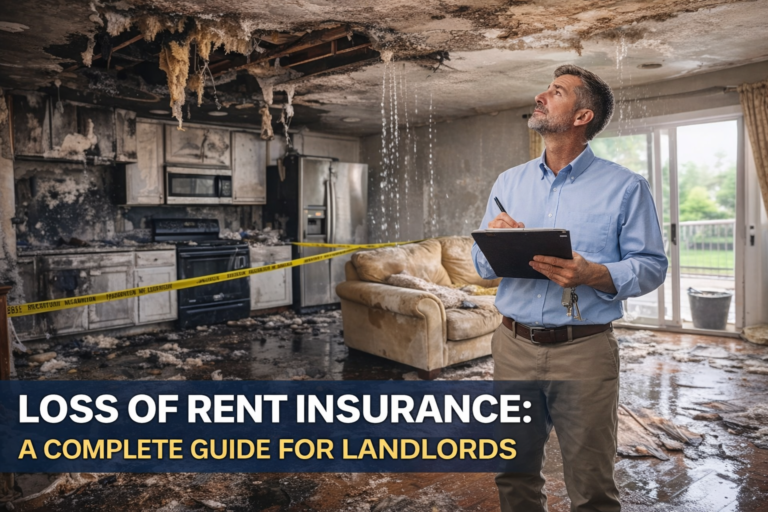
- Loss of Rents coverage: As discussed in our Loss of Rents coverage article, this pays for lost rental income when a covered claim renders the property uninhabitable. In a high-demand market like Oakwood, where rental income is a deliberate part of an investor’s strategy, this coverage is essential rather than optional.
- Landlord-specific liability: Tenant injuries, habitability claims, and premises issues at the rental property should be addressed via appropriate landlord liability and umbrella structures.
For households combining a high-value Oakwood residence with one or more rentals, the goal is an integrated risk plan: homeowners, umbrella, and landlord policies that are aligned, cross-checked for gaps, and built with Oakwood’s unique housing and legal environment in mind.
A Practical Evaluation Framework for Oakwood Professionals
For attorneys, physicians, and executives used to structured analysis, it can be helpful to think of your Oakwood homeowners policy as an annual risk-review exercise, rather than a static product. A disciplined review might include:
- Reconstruction Audit: Compare your dwelling limit with a realistic local rebuild cost for your square footage and quality level, considering steep lots or complex architectural details where applicable.
- Basement and Water Map: Identify your elevation relative to surrounding properties, proximity to Houk Stream or similar drainage paths, and any known water or drainage behaviors (sump run-times, historical seepage, past backups).
- Code and Age Assessment: List major systems (roof, electrical, plumbing, HVAC, windows) by age and note any that clearly pre-date current standards. This will guide Ordinance or Law decisions.
- Personal Property Inventory: Identify jewelry, art, collections, instruments, and specialized equipment above default sub-limits, and determine whether scheduling or blanket high-value coverage is warranted.
- Liability and Asset Review: Align your umbrella limits with your net worth, income, and exposure profile—including young drivers, pools, multi-level decks, significant entertaining, or rental properties.
Homeowners who want a deeper Oakwood-specific perspective on neighborhood character and property trends often start with “The Heart of Oakwood”, then move into this white paper and our other Oakwood-focused pieces as a structured sequence for decision-making.
Work With an Agency That Underwrites Oakwood Every Day
Because Oakwood homes sit at the intersection of historic construction, high incomes, and complex geography, they benefit from an insurance approach that is closer to private-wealth risk management than to mass-market bundling. The nuances described in this article—east vs. west of Far Hills, slope vs. flat, original vs. heavily renovated, standard vs. high-value contents—are not academic; they determine how claims are paid and how well your long-term financial plan is protected.
As an independent agency, Ingram Insurance works with multiple carriers and has the flexibility to match each Oakwood household with the right combination of dwelling, water, and liability protection. Our role is not just to “place a policy,” but to help Oakwood families build a durable, well-documented risk strategy that can stand up to real-world events.
If you live in Oakwood—east or west of Far Hills—or you are considering a move into one of these neighborhoods, we invite you to schedule a detailed review of your current coverage structure.
Ingram Insurance
About Our Agency
(937) 741-5100
contact@insuredbyingram.com
www.insuredbyingram.com