Ohio RV Insurance: The Complete Guide for RV Owners Packed with Info you MUST know
Owning an RV in Ohio represents freedom—weekend getaways to Hocking Hills, summer trips to Lake Erie, fall tailgates across the state, or full-time travel heading south for the winter. But with that freedom comes responsibility. Ohio RV insurance is not one-size-fits-all, and many RV owners unknowingly carry coverage gaps that can lead to devastating financial losses. Whether you own a motorhome, travel trailer, fifth wheel, or camper van, this in-depth guide explains exactly how Ohio RV insurance works, what it covers, what it costs, and how to make sure your RV is properly protected year-round.
Ohio RV Insurance: The Complete Guide for RV Owners
RV insurance in Ohio sits at the intersection of auto insurance, homeowners insurance, and specialty recreational coverage. Because RVs vary so widely in size, value, and usage, coverage must be tailored carefully. A policy that works for a weekend camper may be dangerously inadequate for a full-time RVer.
Ohio RV insurance protects not only your vehicle, but also your liability exposure, your personal belongings, and—in many cases—your living space. Understanding these layers is critical before hitting the road.
Is RV Insurance Required in Ohio?
Whether RV insurance is legally required in Ohio depends largely on how the RV is built and used. Ohio law distinguishes between motorized RVs that operate under their own power and non-motorized RVs that are towed by another vehicle. Understanding this distinction is critical, because the insurance requirements—and risks—are very different.
Motorized RVs
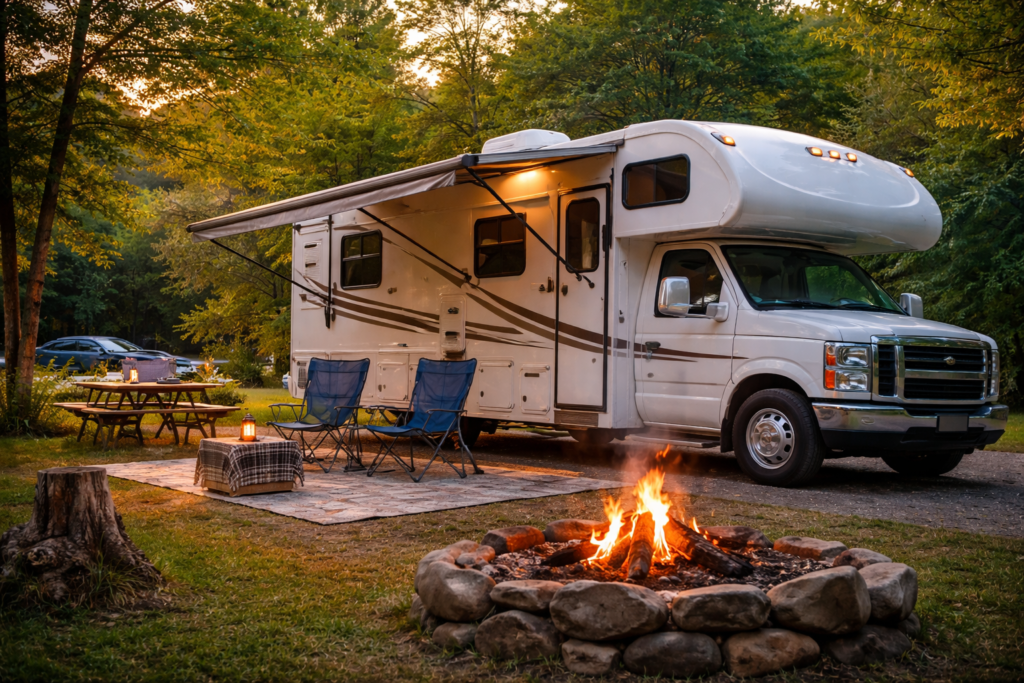
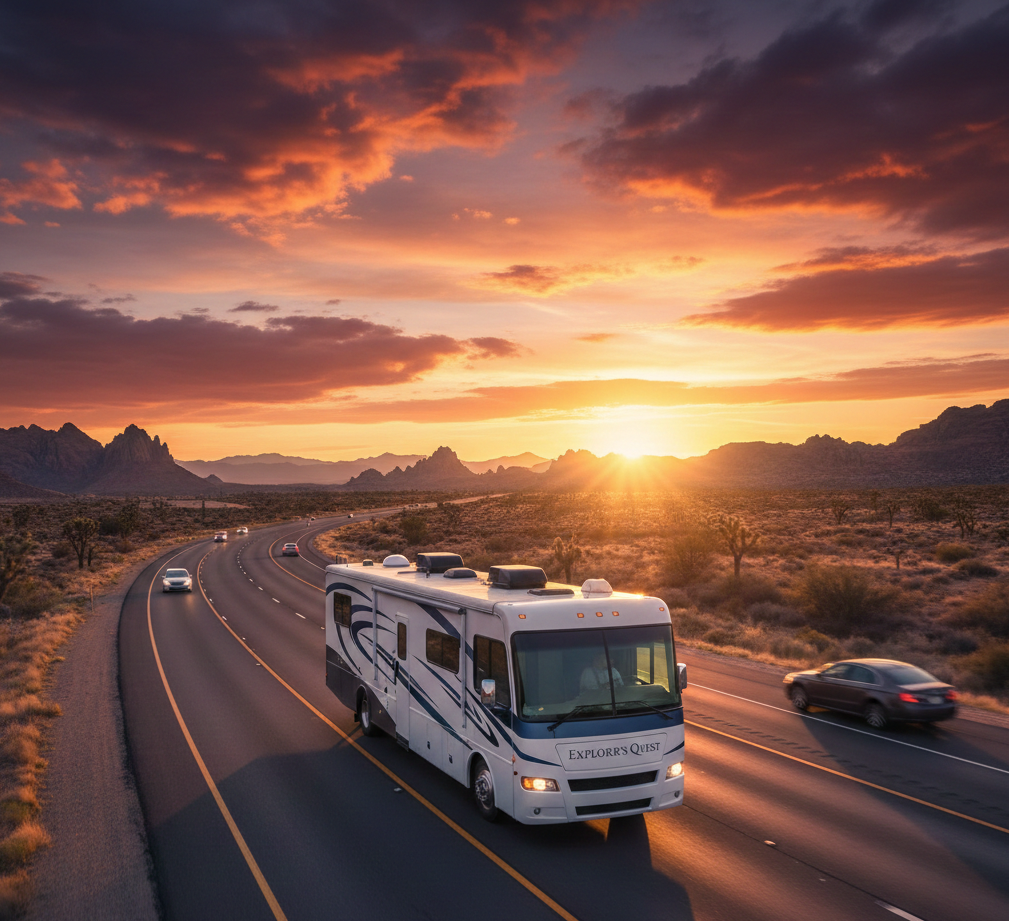
Motorized RVs—including Class A, Class B, and Class C motorhomes—are treated much like passenger vehicles under Ohio law. Because these RVs have their own engines and are driven on public roads, they must be registered with the state and insured accordingly.
If you own a motorized RV registered in Ohio, you are legally required to carry liability insurance that meets Ohio’s minimum auto insurance requirements. This liability coverage pays for bodily injury and property damage if you cause an accident while operating your motorhome.
However, it’s important to understand that meeting Ohio’s minimum requirements does not necessarily mean you are adequately protected. Due to their size and weight, motorhomes can cause significantly more damage than standard vehicles. Many Ohio RV owners choose higher liability limits and often pair their RV policy with an umbrella policy for additional protection.
Non-Motorized RVs
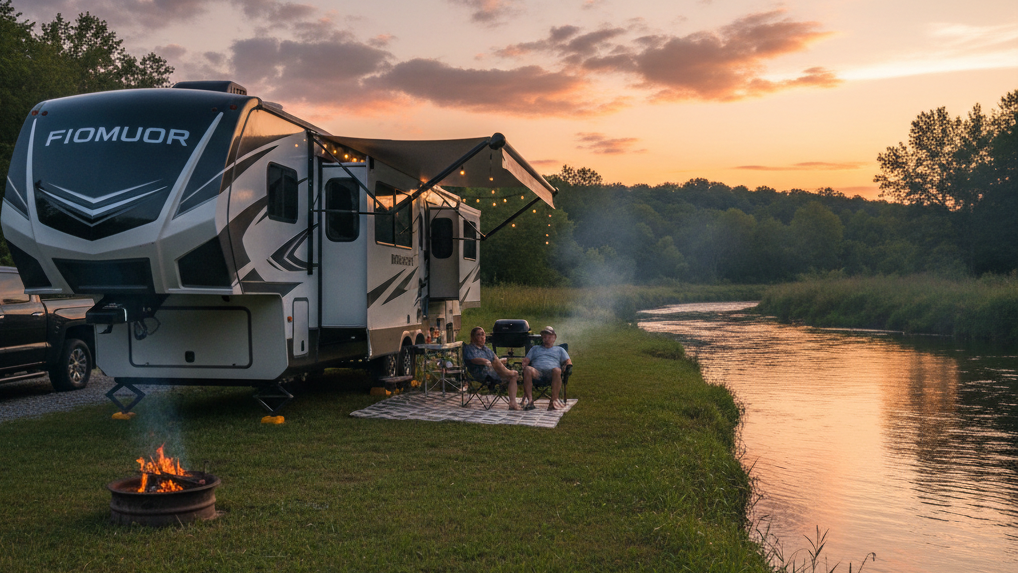
Non-motorized RVs—such as travel trailers, fifth wheels, pop-up campers, toy haulers, and truck campers—are not required by Ohio law to carry their own standalone insurance policy. Because these RVs are towed rather than driven, the state does not mandate liability coverage on the RV itself.
That said, the absence of a legal requirement does not mean insurance is unnecessary. In practice, many Ohio RV owners mistakenly assume their existing auto or homeowners insurance fully protects their trailer or camper. In reality, this often leads to dangerous and expensive coverage gaps.
For example, your auto insurance policy may extend limited liability coverage while towing a trailer, but it typically does not cover physical damage to the trailer itself if it is damaged in an accident. Likewise, homeowners insurance may provide only minimal off-premises personal property coverage, often capped at a percentage of your dwelling limit.
This means that damage to the RV, theft of contents, storm losses, or liability incidents at a campsite may be only partially covered—or not covered at all—without a dedicated Ohio RV insurance policy.
For this reason, most Ohio RV owners with non-motorized units choose to insure their RV separately to protect the vehicle, their belongings, and their financial exposure.
Ohio Minimum Liability Requirements for Motorhomes
Ohio requires the following minimum liability limits for motorized RVs:
$25,000 bodily injury per person
$50,000 bodily injury per accident
$25,000 property damage
While these are the legal minimums, they are rarely sufficient for RV accidents. Motorhomes are large, heavy vehicles capable of causing significant property damage and serious injuries. Most Ohio RV owners should strongly consider higher limits and an umbrella policy.
Types of RVs Covered Under Ohio RV Insurance
Ohio RV insurance can be customized for virtually every type of recreational vehicle, including:
- Class A motorhomes (bus-style RVs)
- Class B motorhomes (camper vans)
- Class C motorhomes (cab-over RVs)
- Travel trailers
- Fifth wheels
- Toy haulers
- Pop-up campers
- Truck campers
Each category carries different risk profiles, replacement costs, and insurance requirements. An experienced Ohio RV insurance agent will adjust coverage accordingly.
What Does Ohio RV Insurance Cover?
Liability Coverage
Liability coverage protects you if you cause bodily injury or property damage while operating your RV. This includes accidents involving other vehicles, pedestrians, or property.
Given the size of RVs, higher liability limits—often $250,000 to $500,000 or more—are recommended. Many Ohio RV owners also add a personal umbrella policy for additional protection.
Collision Coverage
Collision coverage pays for damage to your RV caused by an accident with another vehicle or object, regardless of fault. This is especially important for newer or financed RVs.
Comprehensive Coverage
Comprehensive coverage protects against non-collision losses such as:
- Theft
- Fire
- Vandalism
- Storm damage
- Falling objects
- Animal strikes
Ohio’s weather—hail, windstorms, and tornadoes—makes comprehensive coverage essential.
Personal Belongings Coverage
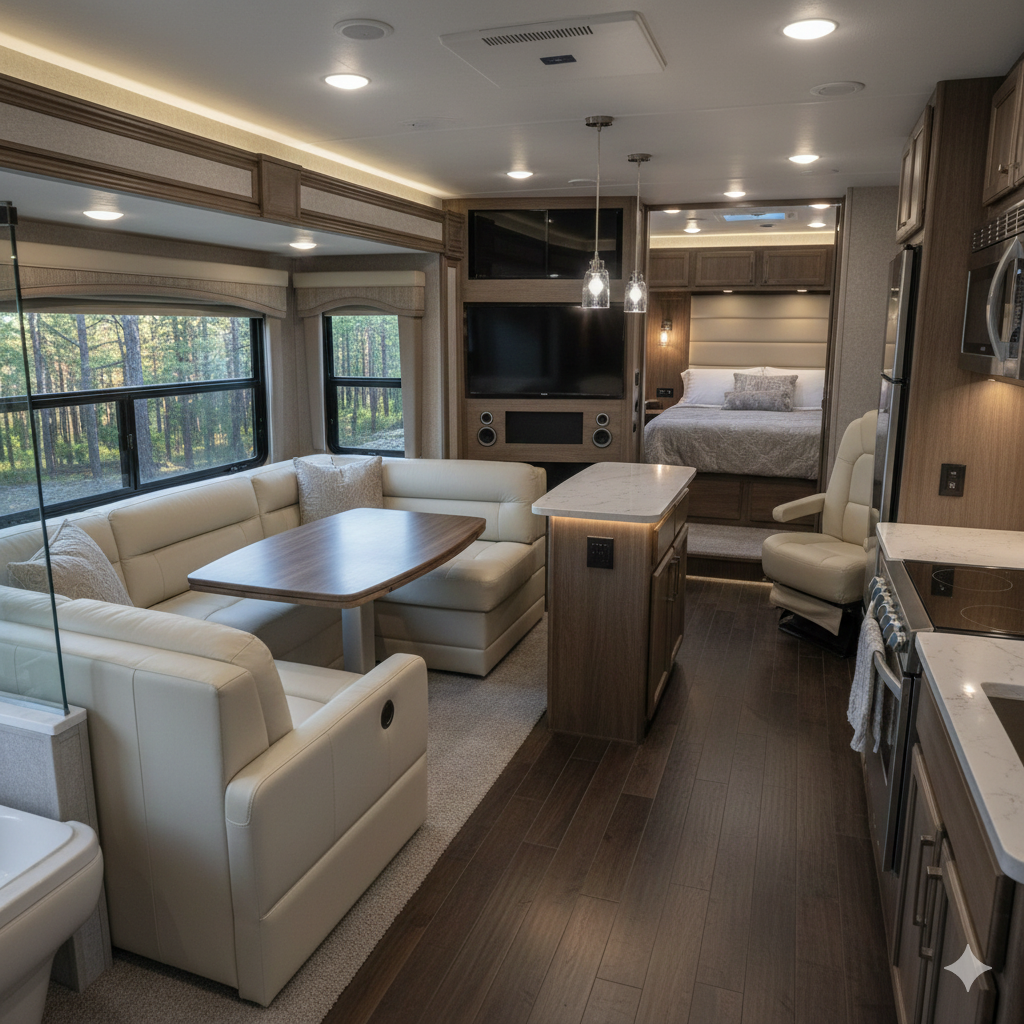
RVs often carry clothing, electronics, tools, outdoor gear, and household items. Standard RV policies include personal property coverage, but limits can be surprisingly low.
Ohio RV owners should inventory their belongings and increase limits if necessary.
Attached Accessories and Custom Equipment
Items such as awnings, solar panels, satellite systems, upgraded interiors, and custom storage may not be fully covered unless specifically scheduled or endorsed.
Medical Payments Coverage
Medical payments coverage helps pay for medical expenses for you and your passengers after an accident, regardless of fault.
Uninsured and Underinsured Motorist Coverage
This coverage protects you if you’re hit by a driver who has no insurance or insufficient limits. Despite legal requirements, uninsured motorists remain a concern in Ohio.
Optional Ohio RV Insurance Coverages Worth Considering
While basic RV insurance covers the essentials, many Ohio RV owners rely on optional coverages to protect their lifestyle, finances, and travel plans. These coverages are especially important for full-time RVers, frequent travelers, and anyone with a higher-value RV.
Full-Timer RV Insurance
If your RV serves as your primary residence, a standard RV policy is usually not sufficient. Full-timer RV insurance is designed for individuals and families who live in their RV year-round or for extended periods.
This type of coverage functions more like a homeowners insurance policy, offering broader protections such as:
Personal liability coverage for injuries occurring in or around your RV
Medical payments for guests injured on your “property”
Loss-of-use coverage if your RV becomes uninhabitable due to a covered loss
Expanded personal property protection
For Ohio residents who sell their home and transition to full-time RV living—or spend most of the year traveling south—full-timer coverage is essential to avoid uninsured liability exposures.

Vacation Liability Coverage
Vacation liability coverage protects you while your RV is parked and being used as temporary living space, such as at a campground, RV park, or state park.
This coverage applies when you are not driving and helps protect against claims for bodily injury or property damage, such as a guest slipping near your campsite or damage caused by awnings, grills, or outdoor equipment.
Ohio RV owners who frequently camp during spring, summer, and fall should strongly consider vacation liability coverage, especially when staying at crowded campgrounds or family-friendly parks.
Roadside Assistance
RV roadside assistance is significantly different from standard auto roadside coverage. Because RVs are larger and heavier, specialized services are required.
RV roadside assistance may include:
Towing designed for large motorhomes and trailers
Flat tire service for oversized tires
Fuel delivery for diesel or gasoline motorhomes
Lockout assistance
Battery jump-starts or replacement
Without RV-specific roadside coverage, Ohio RV owners can face substantial out-of-pocket costs if they break down on highways, rural roads, or during long-distance travel.
Total Loss Replacement Coverage
For newer RVs, total loss replacement coverage can provide significant financial protection. Instead of paying the depreciated actual cash value after a total loss, this coverage pays to replace your RV with a brand-new model of similar kind and quality.
This option is especially valuable during the first several years of ownership, when RV depreciation is steep. Many Ohio RV owners add this coverage when purchasing a new or lightly used motorhome or trailer.
Emergency Expense Coverage
Emergency expense coverage helps cover unexpected living costs if your RV becomes unusable due to a covered loss while traveling.
This may include reimbursement for:
Hotel or lodging expenses
Meals and food costs
Transportation expenses such as rental cars
For Ohio RV owners traveling long distances or spending extended time away from home, emergency expense coverage can prevent a temporary breakdown or accident from becoming a major financial hardship.
How Much Does Ohio RV Insurance Cost?
Ohio RV insurance premiums vary widely based on several factors:
Type, age, and value of the RV
Usage (seasonal vs. full-time)
Driving record
Claims history
Storage location
Coverage limits and deductibles
Annual premiums may range from a few hundred dollars for small trailers to several thousand dollars for high-value motorhomes with full coverage.

How Storage and Seasonal Use Affect Ohio RV Insurance
Many Ohio RV owners store their RVs during winter months. Insurance companies may offer storage or lay-up endorsements that reduce premiums while maintaining comprehensive coverage.
However, canceling coverage entirely during storage can leave you exposed to theft, fire, or storm damage.
Common Ohio RV Insurance Mistakes
Choosing minimum liability limits
Assuming auto insurance fully covers trailers
Failing to insure upgrades and accessories
Not adjusting coverage for full-time living
Letting coverage lapse during storage
Buying based on price instead of coverage
Why Work With an Independent Ohio RV Insurance Agent?
Independent agents represent multiple insurance carriers, allowing them to compare coverage options, pricing, and policy language. This is especially important for RV insurance, where exclusions and endorsements vary widely.
An Ohio-based agent understands local weather risks, seasonal travel patterns, and common claims issues faced by RV owners across the state.
Get a Personalized Ohio RV Insurance Quote
Your RV is a major investment—and often a lifestyle choice. The right Ohio RV insurance policy protects your finances, your belongings, and your peace of mind.
Ingram Insurance
733 Salem Ave, Dayton, Ohio
Phone: (937) 741-5100
Email: contact@insuredbyingram.com
Website: www.insuredbyingram.com
Want to read more? Check out these other pages and articles:
Ohio Renters Insurance
Does Renters Insurance Cover Firearms?
Insurance for Remote Workers
Vacant Land Insurance
Does Insurance Cover Lithium-Ion Battery Explosions?
Employment Practices Liability Insurance
Ohio RV Insurance FAQs
1. Is RV insurance required in Ohio?
Yes, RV insurance is required in Ohio for motorized RVs such as Class A, Class B, and Class C motorhomes. Non-motorized RVs like travel trailers are not legally required to be insured, but coverage is strongly recommended.
2. Do travel trailers need insurance in Ohio?
Ohio law does not require insurance for travel trailers, but most auto policies do not cover physical damage to the trailer itself. A separate Ohio RV insurance policy helps protect against theft, accidents, and storm damage.
3. Does Ohio RV insurance cover full-time living?
Standard RV insurance usually does not. If you live in your RV full time, you need full-timer RV insurance, which provides coverage similar to a homeowners policy.
4. What are Ohio’s minimum insurance requirements for motorhomes?
Ohio requires motorhomes to carry at least $25,000 per person, $50,000 per accident for bodily injury, and $25,000 for property damage. Higher limits are strongly recommended.
5. Is my RV covered while parked at a campground?
Only if you carry vacation liability coverage or full-timer coverage. This protects you against injuries or property damage that occur while your RV is parked and being used as living space.
6. Does auto insurance cover RVs in Ohio?
Auto insurance may cover liability while towing a trailer but typically does not cover physical damage to the RV or personal belongings inside it.
7. Are personal belongings covered under Ohio RV insurance?
Yes, but limits are often low. Clothing, electronics, tools, and recreational gear may require higher personal property limits to be fully protected.
8. Does Ohio RV insurance cover storm damage?
Comprehensive coverage generally covers hail, wind, falling trees, and other storm-related losses, which are common risks in Ohio.
9. Is roadside assistance different for RVs?
Yes. RV roadside assistance is designed for large vehicles and may include specialized towing, tire service, and fuel delivery that standard auto roadside plans do not cover.
10. Can I suspend RV insurance during the winter?
Some insurers offer storage or lay-up coverage that reduces premiums while keeping comprehensive protection. Canceling coverage entirely can expose you to theft or storm losses.
11. What is total loss replacement coverage for RVs?
Total loss replacement pays to replace your RV with a new one of similar kind and quality instead of paying depreciated value, typically available for newer RVs.
12. Does Ohio RV insurance cover rental RVs?
Rental RVs are usually covered through the rental company’s insurance or a separate short-term policy. Personal RV insurance typically does not extend to rentals.
13. Is umbrella insurance recommended for RV owners?
Yes. Because RV accidents can cause significant damage, many Ohio RV owners add an umbrella policy for extra liability protection.
14. Does RV insurance cover out-of-state travel?
Yes. Ohio RV insurance policies typically provide coverage nationwide, making them ideal for long trips or seasonal travel.
15. How much does Ohio RV insurance cost?
Costs vary based on the RV type, usage, value, coverage limits, and driving history. Premiums may range from a few hundred dollars to several thousand annually.