
Small Business Insurance Checklist for Shops Near Downtown Dayton
Downtown Dayton is one of the most unique business environments in Ohio—an energetic mix of historic brick buildings, converted industrial lofts, modern mixed-use developments, and walkable urban corridors. For small business owners operating in this area, understanding how local conditions affect insurance risk is essential. From aging infrastructure to high pedestrian traffic to multi-tenant buildings with shared exposures, the insurance needs in Downtown Dayton differ significantly from those in surrounding suburbs. The following guide provides an in-depth, locally focused look at small business insurance considerations for shops near Downtown Dayton—helping you make informed decisions and avoid coverage gaps.
Disclaimer: The examples, scenarios, and descriptions in this article are for informational and illustrative purposes only. They are not descriptions of real claims, clients, properties, or insured entities. Ingram Insurance is not claiming to represent any business, building, or organization mentioned in this article. All scenario details are hypothetical and used solely to explain insurance concepts in a way that is locally relevant to Downtown Dayton. Coverage needs vary widely; always review your specific policy or consult a licensed professional.
Small Business Insurance Checklist for Shops Near Downtown Dayton
Downtown Dayton, Ohio, is a vibrant and evolving urban core with a blend of historic industrial lofts, renovated warehouses, and contemporary mixed-use buildings. For small business owners, this creates a complex insurance landscape that requires careful attention. In this guide, we cover essential insurance considerations tailored specifically to Downtown Dayton’s unique risks, from building structure and pedestrian activity to climate exposures and property age.
Meet Downtown Dayton, Dayton Ohio
Downtown Dayton serves as the historic and cultural center of the region. Early 20th-century commercial buildings, converted factories, and modern mid-rise apartments create a highly walkable and architecturally diverse area full of restaurants, retail shops, breweries, creative studios, and professional offices. The community attracts entrepreneurs, remote workers, students, and professionals who enjoy the activity surrounding Riverscape MetroPark, the Oregon District, and the Water Street District.
However, the same architectural charm and urban density that make Downtown Dayton appealing also shape the insurance risks local businesses face. Older brick buildings, aging plumbing systems, and mixed-use structures introduce unique challenges—from higher replacement costs to shared liability exposure. Business owners must consider these local nuances when selecting and customizing insurance coverage.
If you’re also a local homeowner or landlord, you may find our related guide helpful: Downtown Dayton Homeowners Insurance Overview.
How the Built Environment in Downtown Dayton Shapes Insurance Risk
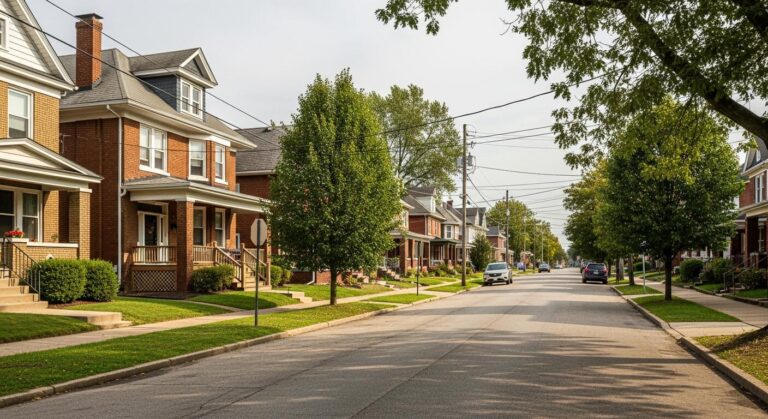
Older brick facades, heavy timber framing, and century-old construction techniques create structural vulnerabilities and elevate replacement costs. Many buildings also contain multiple renovated units above street-level retail spaces, a common mixed-use configuration that complicates property and liability claims. A plumbing failure in an upper residential loft can damage multiple commercial tenants below, triggering overlapping claims and prorated responsibilities.
Similarly, the area’s narrow sidewalks, winter freeze cycles, and lively pedestrian corridors near entertainment districts increase slip-and-fall exposures. Older storefronts may have uneven surfaces, aging handrails, or tight interior layouts that heighten the risk of customer injuries.
For more about how Dayton’s historic housing stock influences risk, review our article on Dayton Homeowners Insurance.
Key Insurance Risks for Business Insurance in Downtown Dayton
Property Damage and Replacement Cost Risks
Historic and mixed-use buildings often cost more to rebuild than their market value might suggest. Reproducing brick masonry, matching architectural elements, or bringing an older structure up to modern code can significantly increase reconstruction costs. Without accurate replacement cost estimates, business owners may unknowingly be underinsured.
Learn more about replacement cost vs. market value in our Ohio Homeowners Insurance Guide.
Fire and Water Damage
Aging electrical systems, older heating setups, and multi-tenant plumbing systems make fire and water damage more common in older Downtown Dayton buildings. Water backup coverage, service line coverage, and building ordinance coverage are often essential additions.
General Liability and Customer Injury
High foot traffic near restaurants, bars, and events increases liability exposure. Slip-and-fall incidents on icy sidewalks, uneven steps, and narrow interiors are frequent sources of claims in dense urban districts.
Business Interruption
Business interruption coverage is vital in dense environments where a single event—fire, burst pipe, or structural issue—may shut down a building for months. Restoration of historic properties often requires special contractors and city permitting, extending rebuilding timelines.
Cyber Liability
Digital POS systems, loyalty programs, and customer databases introduce cybersecurity vulnerabilities. Cyber liability coverage protects against ransomware, data breaches, and system shutdowns. Explore broader cyber risks in our statewide article on Ohio Cyber Insurance.
Workers’ Compensation
Ohio mandates workers’ compensation coverage for most employers. Downtown Dayton’s diverse mix of businesses—restaurants, retail, creative studios—means injury risks vary widely. Proper employee classification is critical to avoiding audits and penalties.
How Business Insurance Works in Ohio (And What’s Different in Downtown Dayton)
Insurance in Ohio follows state-specific rules for liability, workers’ compensation, and building code requirements. Downtown Dayton adds several factors that influence policy design:
- Historic building codes that trigger ordinance & law requirements
- Mixed-use liability overlap between commercial and residential tenants
- Higher theft and vandalism rates in some urban blocks
- Extended construction timelines due to contractor availability
Coverage Decisions Downtown Dayton Residents Can’t Afford to Get Wrong
Coverage Decisions Downtown Dayton Businesses Can’t Afford to Get Wrong
Choosing Adequate Property Coverage Limits
For small businesses near Downtown Dayton, one of the most consequential decisions you make is how high to set your property coverage limits. Many owners default to a number that feels “about right” or tied loosely to purchase price, but older brick buildings, loft conversions, and mixed-use structures downtown often cost far more to rebuild than they’re worth on paper. Market value reflects what a buyer might pay; replacement cost reflects what a contractor would charge to rebuild after a fire, major water loss, or structural failure.
In older buildings with historic facades, original masonry, custom windows, or specialty interiors, reconstruction can require skilled trades, selective demolition, and compliance with updated building codes. All of this drives costs higher. If your property limits are based on outdated appraisals, or if you’ve renovated your space (new build-outs, signage, fixtures, or equipment) without updating your insurance, you could face a substantial shortfall after a major loss.
Business owners should work with an independent agent to review updated construction cost estimators, review lease terms (who insures what—tenant vs. landlord), and consider adding endorsements such as replacement cost, ordinance & law coverage, or equipment breakdown where appropriate. The goal is to insure the actual cost to restore your business space in Downtown Dayton—not just a convenient round number.
Selecting the Right Liability Coverage
Downtown Dayton’s sidewalks, street parking, and shared entrances create a liability environment that looks very different from a standalone building in a suburban strip center. High foot traffic around restaurants, bars, coffee shops, and event venues increases the chance of customer injuries—from slip-and-fall incidents on icy pavement to trips on uneven steps or tight interior layouts.
This makes general liability insurance a core coverage for local businesses. However, the minimum limits often suggested in generic policies may not be sufficient for an urban environment. Businesses serving alcohol may need liquor liability coverage; retailers and service providers may require higher limits due to crowded interiors; and professional offices should review coverage for visitor injuries in lobbies or shared spaces.
It’s also important to look at the details: Does your policy respond to accidents in shared hallways or at the building’s main entrance? Are there any exclusions for outdoor events, patios, or sidewalk seating? Reviewing these questions with a local agent who understands Downtown Dayton’s layout can help prevent unpleasant surprises when a claim arises.
Business Interruption & Contingent Business Interruption
For many small businesses, the biggest financial impact of a loss is not just the cost of repairs—it’s the lost income during downtime. This is where business interruption coverage becomes critical. It can help cover ongoing expenses like rent, payroll, and utilities while your business is unable to operate due to a covered claim, such as fire or significant water damage.
In Downtown Dayton, restoration projects often take longer than expected. Historic buildings may require city approvals, specialized contractors, and custom materials. Mixed-use structures may be delayed by coordination between multiple tenants and owners. For that reason, many downtown businesses should consider coverage periods longer than the basic 12 months, and carefully review any waiting periods before coverage begins.
Contingent business interruption takes this a step further by covering income losses caused by problems at key suppliers, major customers, or nearby properties. For example, a neighboring building’s fire that closes your street or a major vendor’s disruption can directly affect your revenue even if your own space isn’t damaged. In tight urban districts like Downtown Dayton, where businesses depend on each other and shared infrastructure, contingent coverage can be an important part of a resilient risk management plan.
Cyber Liability Coverage
Even the most “old-school” shops in Downtown Dayton now rely on technology: point-of-sale systems, cloud-based accounting, online ordering, Wi-Fi networks, and customer databases. These tools improve efficiency and service—but they also create new vulnerabilities. A single ransomware attack, compromised payment terminal, or email phishing incident can lock up your systems, expose customer information, and generate expensive legal and notification obligations.
Cyber liability insurance is designed to help with these challenges. It can assist with forensic IT work to identify the breach, legal defense and regulatory fines (where covered), customer notification and credit monitoring, public relations support, and even reimbursement for certain business income losses during system downtime.
For small businesses near Downtown Dayton—especially boutiques, restaurants, professional offices, and service providers that store customer data or process card payments daily—cyber coverage has shifted from a “nice-to-have” to an essential part of a modern insurance portfolio. The cost of a cyber incident can easily outpace the premium for a well-structured cyber policy.
Workers’ Compensation and Employer Liability
In Ohio, workers’ compensation is mandatory for most employers, including small businesses operating in Downtown Dayton. This coverage pays for medical expenses and lost wages for employees who are injured or become ill due to their work. But beyond compliance, it plays a critical role in protecting both your staff and your business finances.
Downtown businesses often employ workers in roles that involve physical risk: restaurant staff working around hot surfaces and sharp equipment, retail employees lifting stock or moving displays, maintenance personnel servicing older properties, or delivery staff navigating tight downtown streets. Proper classification of employees, accurate payroll estimation, and a clear understanding of job duties help ensure that your workers’ compensation policy is correctly rated and ready to respond when needed.
In addition to workers’ compensation, many businesses opt for employer liability coverage (often included or available through a broader package) to address certain types of employee claims that fall outside standard workers’ comp benefits. While every situation is unique, having both protections in place helps create a more complete safety net for your team and reduces the risk that a single incident will disrupt your operations or long-term plans.
Informational Case Studies (Hypothetical Examples)
The following scenarios are illustrative only and do not depict real businesses, claims, or customers.
Case Study 1: The Historic Bookstore Fire (Hypothetical)
A fictional bookstore in the Oregon District experiences an electrical fire. Rebuilding the brick façade and restoring vintage interiors requires specialized labor—illustrating why accurate replacement cost coverage matters.
Case Study 2: Water Damage in a Mixed-Use Loft + Café (Hypothetical)
A burst pipe in a hypothetical Salem Avenue loft affects multiple tenants below, demonstrating the need for water backup coverage and proper liability structuring.
Case Study 3: Cyberattack on a Boutique Retailer (Hypothetical)
A fictional retailer near Riverscape falls victim to a ransomware attack, highlighting cyber liability coverage as an essential modern safeguard.
Cost, Discounts, and Smart Ways to Control Premiums
Insurance premiums for Downtown Dayton businesses can vary widely depending on the age of the building, the type of business you operate, your claims history, and the level of coverage you select. Fortunately, local business owners have several strategies available to control costs without cutting essential protection. Because Downtown Dayton’s commercial district includes older masonry buildings, mixed-use properties, and businesses with higher liability exposure, the key is balancing affordability with coverage that truly fits the local risk profile. Below are several smart, practical ways to keep premiums manageable while safeguarding your shop, office, or restaurant.
Increase Deductibles—Where Financially Comfortable
One of the simplest ways to reduce your monthly premium is to increase your deductible. Higher deductibles shift a small portion of the risk back onto the business owner, which insurers reward with lower premiums. In Downtown Dayton—where claims involving water damage, vandalism, or theft can be costly—it’s important to strike a careful balance. If your business maintains adequate cash reserves, a higher deductible can be a cost-efficient choice. But if covering an unexpected deductible would strain your operations, it’s better to keep it moderate and prioritize broad coverage.
Bundle Multiple Policies for Package Discounts
Most insurers offer significant discounts when you bundle property, general liability, business interruption, cyber liability, and workers’ compensation policies together under a single package. Coverage bundling not only reduces overall costs but also simplifies billing, claim handling, and future policy updates. For example, restaurants, retail stores, boutique studios, and small offices in Downtown Dayton frequently benefit from Business Owners Policies (BOPs), which package core coverages at a discounted rate. A local independent agent can help you compare bundled options across multiple carriers to find the best fit for both price and coverage.
Install Safety Equipment, Security Devices, and Loss Prevention Measures
Downtown environments often see elevated foot traffic and, in some areas, higher vandalism and theft rates. Installing safety and security systems can meaningfully reduce your premiums while lowering the likelihood of a claim. Insurers may offer discounts for:
- Monitored security alarm systems
- Surveillance cameras covering entrances and cash-handling areas
- Fire suppression systems and up-to-date extinguishers
- Enhanced door and window locks
- Slip-resistant flooring treatments near entryways
- Exterior lighting or motion-sensor lighting
Not only do these upgrades reduce premiums—they also help prevent costly interruptions by deterring crime and reducing accident exposure. Given the walkability of Downtown Dayton and the number of shared entrances and sidewalks, these improvements pay off in more ways than one.
Invest in Employee Training and Workplace Safety Programs
Workers’ compensation premiums are directly influenced by workplace safety practices. Restaurants, retail stores, and service businesses near Downtown Dayton can all benefit from training staff on safe lifting practices, equipment handling, hazard recognition, and customer service procedures that reduce the likelihood of accidents. Insurers often provide credits or premium reductions to businesses that implement formal safety programs, OSHA-compliant training, or claims history improvement plans. A well-trained staff not only reduces claims—it stabilizes premiums over the long term.
Maintain Accurate Inventory and Property Valuations
In dense commercial districts where buildings contain multiple tenants, it’s easy for business owners to overlook updates that should be reflected in their insurance policy. If you add new equipment, renovate your space, upgrade technology, or expand inventory without updating your insurer, you may pay more than necessary—or worse, discover underinsurance after a loss. Conducting periodic valuations helps ensure you’re not insuring outdated figures or carrying coverage you no longer need.
Conduct Annual Policy Reviews with a Local Agent
Downtown Dayton is changing quickly, with new developments, renovations, and rising property values influencing both risks and premiums. Annual policy reviews are essential for keeping coverage aligned with the realities of your operation. A local independent agent who understands Downtown Dayton’s architecture, traffic flows, and mixed-use property challenges can identify coverage gaps, outdated limits, or unnecessary endorsements—and help you adjust accordingly. Regular reviews also allow you to compare carriers, negotiate better rates, or adjust deductibles as your business grows.
By combining these strategies, Downtown Dayton business owners can manage premium costs effectively while maintaining robust protection. The key is staying proactive: reviewing coverage annually, investing in safety measures, and working with an agent who understands the nuances of Dayton’s urban core.
Nearby Neighborhoods and How They Compare
When and How to Review Your Policy
Review policies annually or after major changes, such as renovations, staffing adjustments, operational shifts, digital system upgrades, or code updates. A local agent familiar with Downtown Dayton’s built environment can help you avoid gaps.
Working With a Local Independent Agent Who Knows Downtown Dayton
Ingram Insurance understands the architectural, cultural, and operational nuances of Downtown Dayton. Whether your business operates in a historic warehouse conversion or a modern storefront, we help tailor coverage to your needs.
For questions or a second opinion on your business insurance, call (937) 741-5100, email contact@insuredbyingram.com, or visit Ingram Insurance.