Snow Removal Insurance: Protecting Your Ohio Plowing Business
Snow Removal Insurance: In Ohio, a single winter storm can make your entire year—or break your entire business. Plowing is a high-liability game, and many standard carriers won’t even touch a vehicle with a blade attached. Whether you’re running a single truck in Columbus or a fleet in Cleveland, you need more than just a “standard” policy; you need coverage that understands the Completed Operations hazard.
The Personal Auto Myth for Snow Removal Insurance
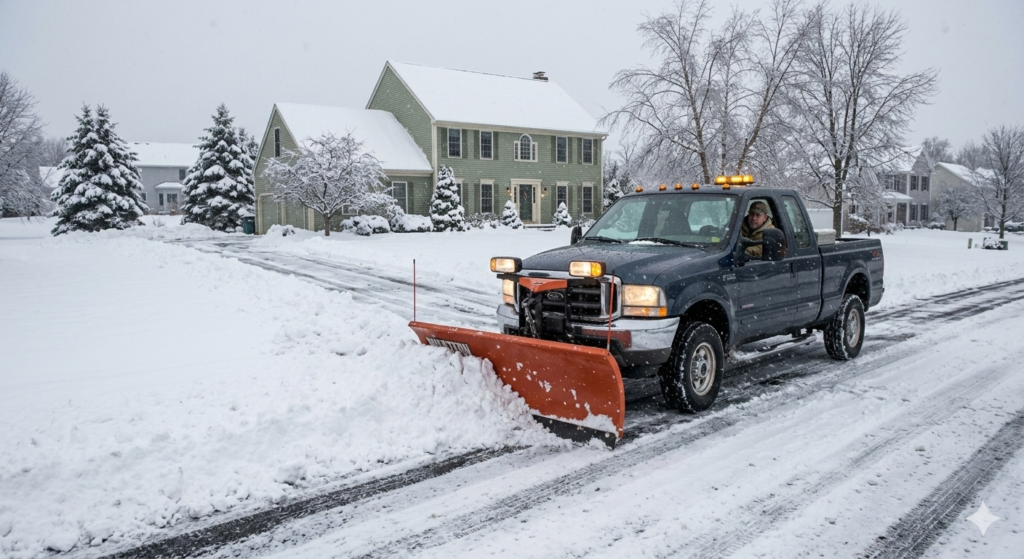
Warning: Your personal auto insurance policy likely has an exclusion for commercial snow removal. If you get into a fender bender while plowing a parking lot—or even while driving to a job site with the plow attached—your claim could be denied instantly. In Ohio, you need a Commercial Auto Policy specifically rated for snow removal to ensure your equipment and your livelihood are protected.
Essential Coverages for the Buckeye State
- General Liability (with Completed Operations): Most claims don’t happen while the plow is down. They happen two days later when someone slips on a “re-freeze.” Completed Operations coverage protects you after you’ve left the job site.
- Inland Marine (Equipment Floater): Your salt spreader and high-end blades aren’t usually covered by your auto policy. This covers your gear if it’s stolen from your truck or damaged in transit.
- Blanket Additional Insured: Ohio property managers will often refuse to cut your check until you provide a COI listing them as “Additional Insured.” We can set up your policy so these certificates are easy to issue.
| The Risk | The Financial Hit | The Policy You Need |
|---|---|---|
| Property Damage | Hitting a hidden curb, bollard, or garage door. | Commercial Auto / GL |
| Slip & Fall | Client claims you didn’t salt “to bare pavement.” | Professional Liability / GL |
| Employee Injury | Back injuries from shoveling or accidents. | Ohio Workers’ Comp (BWC) |
The “Salt” Clause
Did you know some policies exclude damage caused by salt or chemical de-icers to concrete and landscaping? If you’re under contract to keep a luxury HOA clear, you need to ensure your Pollution Liability or Property Damage limits don’t have a “salt exception.” We review the fine print so you don’t have to pay for a new driveway out of pocket.
Don’t Get Left in the Cold
At Ingram Insurance Group, we understand the Ohio market. We know that when the lake-effect snow hits, you don’t have time to worry about your COIs or policy limits. We help Ohio contractors secure “Plow-Friendly” insurance that satisfies your clients and protects your assets.
Frequently Asked Questions: Snow Removal Insurance in Ohio
1. Is snow removal insurance required by law in Ohio?
While not mandated by state law for every individual, many Ohio municipalities—including Columbus, Dayton, and Cleveland—require a commercial license and proof of liability insurance to operate a plow for profit on city streets or for commercial contracts.
2. What is the “Natural Accumulation” rule in Ohio?
Ohio law generally states owners aren’t liable for natural snow or ice. However, as soon as a contractor plows, they are responsible for not creating an “unnatural” hazard—like a refrozen melt-pile across a walkway or a blocked drainage area. This is where most lawsuits begin.
3. Does my personal auto insurance cover my plow?
Almost certainly not. If you are charging for services, most personal Ohio auto policies will deny claims involving a plow attachment or business activity. You need a commercial-rated policy to ensure your vehicle and equipment are actually covered during a storm.
4. What is “Completed Operations” coverage?
This is vital for Ohio contractors. It protects you if someone slips on a patch of ice hours or days after you’ve already finished the job and left the site. Without this, your liability might end the second you pull out of the driveway.
5. Does general liability cover damage to a client’s property?
Yes. If your blade hits a garage door, a bollard, or a hidden curb, your General Liability or Commercial Auto policy (depending on the specific policy structure) covers the property damage costs.
6. Is my salt spreader covered if it’s stolen?
Only if you have Inland Marine (Equipment Floater) coverage. Standard auto policies rarely cover detached equipment, and liability policies don’t cover your own theft losses—they only cover damage you cause to others.
7. What is a “Blanket Additional Insured” endorsement?
It allows you to automatically grant coverage to your clients (like HOAs or retail centers) as required by your contracts. This saves you from having to call your agent for a specific rider every time you sign a new customer.
8. Do I need Workers’ Comp if I only hire independent contractors?
In Ohio, the BWC has strict rules. If your “subcontractors” don’t have their own BWC coverage, you may be held responsible for their injuries and liable for their premiums during a state audit. It’s often safer to carry coverage for them.
9. What is an Ohio BWC “Certificate of Premium Payment”?
It’s your official proof from the state that your Workers’ Comp is active. Most commercial property managers in Ohio will refuse to pay your invoice until they have a current copy of this on file.
10. What happens if I salt a client’s pavers and ruin the finish?
You need “Care, Custody, and Control” coverage or a specific endorsement for damage caused by de-icing chemicals. Standard liability policies often exclude damage caused by “over-application” of salt.
11. Why is snow plowing insurance so expensive in Ohio?
Low visibility, high frequency of “slip and fall” lawsuits, and the potential for significant property damage make it a high-risk category. Many carriers refuse to write it at all, which keeps the price higher than standard landscaping insurance.
12. Can I pause my insurance during the summer months?
We don’t recommend it. A lapse in coverage can lead to significantly higher premiums the following winter because you are viewed as a higher risk. It’s better to maintain a year-round policy to keep your rates stable.
13. What should I do if a client claims they slipped on my site?
Take photos of the conditions immediately, preserve your salt logs or GPS records, and notify Ingram Insurance Group right away. Your documentation is your best defense against a lawsuit.
14. Does insurance cover “loss of income” for my clients?
If a store sues you because you didn’t clear the lot by opening time and they lost a day of sales, that typically falls under Professional Liability (Errors & Omissions), not standard General Liability.
15. What is a “Waiver of Subrogation”?
This prevents your insurance company from trying to sue your client to recover costs after paying out a claim on your behalf. It is a standard requirement in almost all Ohio commercial plowing contracts.
16. Does my policy cover sidewalk crews and hand-shoveling?
Usually, yes, but it must be explicitly listed on your policy. Manual labor has different risk profiles than truck plowing, so ensure your agent knows if you have “ground crews” on the payroll.
17. How do I get a Certificate of Insurance (COI) fast?
At Ingram Insurance Group, we prioritize COI requests for our contractors. You can typically request one via our portal or a quick call so you don’t lose a day of work waiting on paperwork.
18. What is the “Sole Proprietor” exclusion?
In Ohio, business owners can sometimes exclude themselves from Workers’ Comp to save on premiums, but we rarely recommend this for plow drivers due to the high risk of physical injury on the job.
19. Does my insurance cover me if I cross state lines?
Most commercial policies are nationwide, but you must inform your agent if you regularly work in Indiana, Kentucky, or Michigan, as state-specific Workers’ Comp laws vary significantly.
20. Can I add a new truck to my policy mid-season?
Absolutely. Just send us the VIN and the value of the plow attachment. We can usually have the new vehicle covered the same day so you can get it out into the storm.