Why Wright-Dunbar Is Becoming Dayton’s Hottest New Housing Market (And What the New Simms Townhomes Mean for the Area)
This is my take on why Wright-Dunbar is becoming Dayton’s Hottest New Housing Market. Wright-Dunbar is entering one of the most exciting chapters in its long, historic life—and for homeowners, investors, and anyone watching Dayton’s west side closely, the momentum is unmistakable. With new businesses opening, ongoing revitalization along West Third Street, and major reinvestment in historic properties, the neighborhood has been quietly building toward a breakthrough moment. And now, with the debut of The Townes at Wright-Dunbar, a brand-new 26-unit townhome development by Charles Simms Development, that moment has arrived.
This article takes a deep look at why Wright-Dunbar is becoming Dayton’s fastest-appreciating housing market, how the new Simms townhomes fit into the neighborhood’s revival, and what buyers, landlords, and homeowners need to know—from insurance considerations to long-term property value. We’ll also highlight nearby high-value neighborhoods like Grafton Hill, College Hill, University Row, and Dayton View Triangle—all of which contribute to Wright-Dunbar’s rising desirability.
Whether you’re a first-time homebuyer, an investor seeking appreciation potential, or a longtime Dayton resident curious about the neighborhood’s resurgence, this guide breaks down everything you need to know.
The Townes at Wright-Dunbar: A Modern Development in a Historic Neighborhood
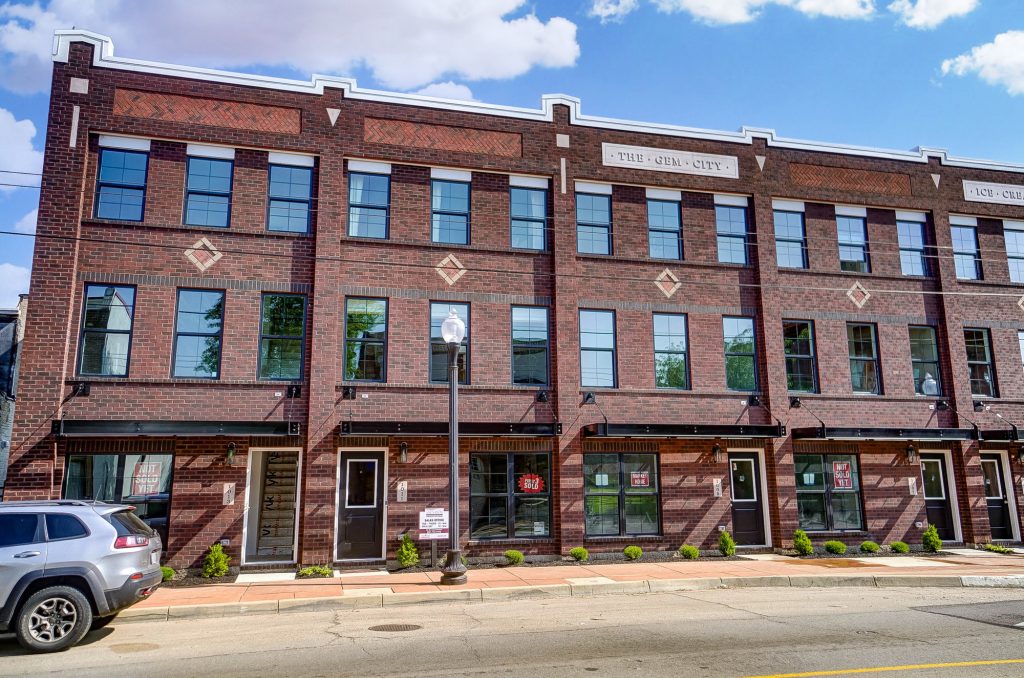
For the first time in more than five years, Charles Simms Development has launched a new Dayton townhome project—and they chose Wright-Dunbar. Known simply as The Townes at Wright-Dunbar, the development includes 26 full-brick, three-story townhomes with attached two-car garages, modern interiors, and energy-efficient construction.
The townhomes are located at 1011 West Third Street, on the former Gem City Ice Cream site—an address that’s deeply rooted in Dayton history. This placement is symbolic: new construction rising directly from the foundations of Dayton’s legacy industries.
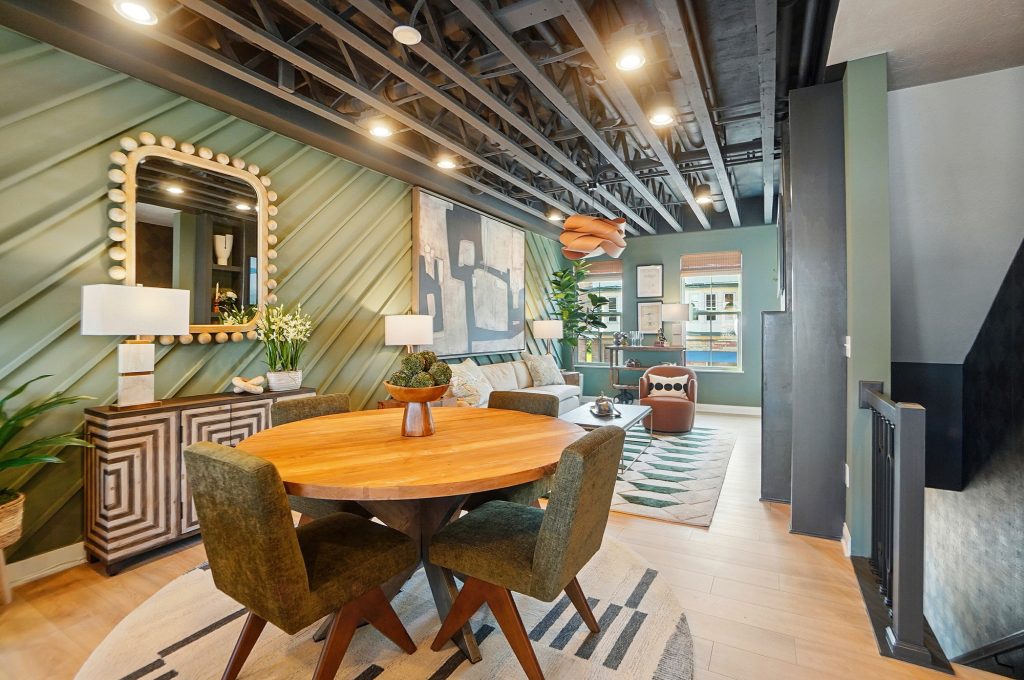
Key features include:
- Full-brick exterior (rare for modern townhome builds)
- Three stories with 1,300+ square feet
- Attached, insulated two-car garages
- High-efficiency construction
- Exterior maintenance included
- Ability to customize certain interior features
Most importantly, the homes come with an incredible incentive:
✔ 15 years of 100% property tax exemption on improvements (owners pay tax on land only)
That single detail significantly reduces carrying costs, boosts affordability, and increases investor return. Combined with the low-maintenance lifestyle of townhome living, The Townes offer a rare value proposition within minutes of downtown Dayton.
Best of all, the units are already selling—several under contract even before the model officially opened.
Why Wright-Dunbar Is Becoming One of Dayton’s Fastest-Rising Housing Markets
Wright-Dunbar is not new—but its modern reinvention is. Over the last decade, the neighborhood has quietly shifted from an overlooked historic district to one of the most strategically located, architecturally interesting, and culturally rich pockets of the entire Miami Valley.
Here are the biggest reasons buyers and investors are rallying around the Wright-Dunbar story:
1. A Central Location With Direct Access to Downtown
If you drop a pin on the center of the Dayton region, Wright-Dunbar sits almost perfectly in the middle of it. One bridge connects the neighborhood to downtown, placing residents just minutes from the city’s largest employers, cultural institutions, and the growing commercial corridors along Brown Street and the Oregon District. It’s the kind of location that urban planners describe as a “10-minute neighborhood,” where daily life is lived within a short walk, bike ride, or drive from home.
For residents of The Townes at Wright-Dunbar—and for anyone buying or renovating in the area—this location is a massive advantage. Professionals working at the Miami Valley Hospital campus, UD, Premier Health, or downtown offices can commute with ease. WPAFB commuters have direct access to U.S. 35, I-75, and Route 4. And remote workers get the best of all worlds: a quiet, historic neighborhood with quick access to cafés, parks, coworking spaces, and the amenities of a large city.
Wright-Dunbar’s position also helps tie together several of Dayton’s most architecturally rich neighborhoods. A short drive—or even a long walk—takes you through:
- Grafton Hill, with its stunning early-20th-century mansions and the Dayton Art Institute
- College Hill, a historic district with Victorian and Craftsman homes rising steadily up Broadway
- University Row, a stable, long-loved residential pocket with deep roots and strong ownership
- Dayton View Triangle, home to some of the city’s largest and most impressive homes
All of these neighborhoods form a connected ecosystem. Where one rises, the others follow. And right now, Wright-Dunbar is the linchpin in that equation—an anchor of revitalization that benefits from, and contributes to, the momentum happening all around it.
2. Historic Homes Meeting Modern Development
What truly sets Wright-Dunbar apart from other Dayton neighborhoods is its extraordinary architectural diversity. In just a few city blocks, you’ll find century-old brick duplexes, grand Victorian homes, post-war infill properties, and now—modern, full-brick townhomes rising as part of The Townes. This variety isn’t an accident. It reflects the neighborhood’s long history as a community of entrepreneurs, craftsmen, aviation pioneers, and working families.
Just west of downtown, you enter one of Dayton’s most visually compelling transitions. Along Broadway, the iconic connection between Wright-Dunbar and Dayton View, large Victorian and Craftsman homes line the corridor—many of them undergoing thoughtful renovations by homeowners and investors who see their long-term potential. These aren’t generic structures. They’re homes with architectural integrity: broad porches, ornate woodwork, high ceilings, detailed brickwork, and the kind of historic charm you simply cannot recreate in new construction.
As Broadway climbs northward, the homes expand—literally. They become bigger, more ornate, and more intricate as you approach the Dayton View Triangle. From there, the streets branch toward Grafton Hill and College Hill, forming one of the most architecturally impressive clusters in the entire city. This is where some of Dayton’s largest, most storied homes sit—massive early-20th-century estates with artistry in every beam, brick, and tile.
If you zoom out on a map, you see something extraordinary: Wright-Dunbar isn’t isolated; it is surrounded by high-value historic districts on all sides. New development here doesn’t stand alone—it is supported by, and adds value to, this broader ecosystem of heritage architecture and long-term reinvestment.
The presence of The Townes at Wright-Dunbar—a modern, full-brick development—actually strengthens the entire historic district. Modern construction brings new residents, new tax revenue, and new confidence in the neighborhood’s trajectory. Meanwhile, the historic homes provide the soul, context, and character that make Wright-Dunbar feel authentically Dayton.
It is this balanced blend of preservation and progress that makes Wright-Dunbar so special. You get:
- Historic charm that remains intact because the neighborhood values restoration
- New construction that elevates surrounding property values by setting a higher baseline for quality
- Revitalization that feels organic and community-led—not forced or one-sided
The result? Wright-Dunbar becomes one of the rare neighborhoods where first-time buyers, young professionals, long-term Dayton residents, and investors all see the same thing: potential.development tend to appreciate faster and maintain demand over time.
3. A Growing Commercial and Cultural Scene
Wright-Dunbar is increasingly known for its cultural energy. Recent additions include:
- New food and retail establishments
- Local coffee shops and cafés
- West Social Tap & Table food hall
- Arts, music, and community events
- Entrepreneurial investment fueled by local incentives
These amenities help anchor the neighborhood’s identity and attract long-term residents.
4. Surrounded by Dayton’s Most Architecturally Significant Neighborhoods
Wright-Dunbar sits in the middle of some of the most beautiful and historically valuable neighborhoods in the city:
- Grafton Hill – Grand historic homes and Dayton Art Institute
- Dayton View Triangle – Massive historic estates, mature trees
- College Hill – Walkable to UD and Brown Street dining
- University Row – Long-term residents + strong rental demand
Being surrounded by high-value submarkets accelerates Wright-Dunbar’s climb—and reinforces the long-term appeal of new construction in its core.
5. Major Public and Private Investment
Between city incentives, business expansion, historic preservation efforts, and now private development by Simms, Wright-Dunbar is experiencing an alignment that few neighborhoods ever achieve:
Historic + walkable + affordable + reinvested + architecturally significant + employer-adjacent
This is the formula for strong appreciation, and Wright-Dunbar has all of it.
Insurance Considerations for Townhome Buyers in Wright-Dunbar
New construction in a historic Dayton neighborhood presents a unique mix of opportunity and complexity—especially when it comes to insurance. Townhomes in developments like The Townes at Wright-Dunbar don’t fit neatly into traditional “single-family” or “condo” insurance categories. Instead, they operate under a specific hybrid model that depends entirely on how the HOA and the master insurance policy are structured. Buyers who assume all townhomes are insured the same way often discover costly surprises later.
This section breaks down what Wright-Dunbar buyers need to know, how townhome coverage differs from standard home insurance, and which coverages are essential to protect your investment—whether you plan to live in your unit or rent it out. For a deeper overview of condo and townhome coverage, see our Condo Insurance Guide.
HOA vs. Owner Responsibilities: What Townhome Buyers MUST Understand
The most important step in insuring a Wright-Dunbar townhome is determining where the HOA’s responsibility ends and yours begins. This varies dramatically between communities, even within the same developer.
Some townhome developments operate like condominiums, where the HOA’s “master policy” covers:
- The exterior structure
- Shared walls
- Roof
- Common areas
- Liability for shared spaces
In this case, buyers may only need an HO-6 condo-style policy, which covers:
- Interior finishes
- Drywall and paint
- Flooring
- Kitchens, appliances, bathrooms
- Personal belongings
- Interior liability
Other townhome communities require owners to insure the entire structure with an HO-3 townhome policy because the HOA carries only minimal insurance.
This distinction can mean a difference of thousands of dollars in repair liability. If the building burns, floods, or suffers wind damage, the wrong policy type could leave gaps wide enough to bankrupt a homeowner.
Before closing, every buyer should review:
- The HOA’s master insurance policy (what it covers AND what it excludes)
- The HOA bylaws defining owner vs. association responsibilities
- Any pending or future assessments that may impact premiums
We walk buyers through these documents all the time—because small wording differences can dramatically change your insurance requirements. Don’t guess. Ask.
Insurance Advantages of New Construction
New build homes in Wright-Dunbar typically qualify for:
- New home discounts (often significant in the first 5 years)
- Lower initial premiums because all mechanicals are new
- Reduced risk of electrical, plumbing, foundation, and roof claims
- Modern building codes which reduce the chance of costly catastrophic losses
New construction is more predictable, more resilient, and statistically safer—leading to lower claims and better pricing.
But Historic Neighborhood Context Still Matters
Even with a brand-new unit, the fact that Wright-Dunbar is a historic, walkable neighborhood with dense foot traffic creates unique risks:
- Ordinance or Law Coverage: If part of your unit is damaged, repairs must meet current Dayton building codes—something older neighborhoods often complicate. Without this endorsement, owners pay the code upgrade difference out of pocket.
- Water Backup Coverage: Even new homes are vulnerable to sewer backups, especially in neighborhoods with century-old underground infrastructure. Dayton’s west side is no exception.
- Higher Liability Limits: Urban townhomes have porches, steps, sidewalks, shared driveways, and visitor foot traffic—meaning higher liability exposure than a suburban cul-de-sac.
- Loss Assessment Coverage: If the HOA suffers a major loss not fully covered by the master policy, unit owners may be assessed for the difference. This coverage protects you from surprise bills.
If You Plan to Rent the Unit (Long-Term or Short-Term)
Townhomes in walkable historic districts near downtown attract renters—professionals, medical staff, UD affiliates, and even short-term visitors. But renting changes everything about your insurance needs.
If you plan to rent your Wright-Dunbar townhome, you may need:
- Landlord insurance (covers tenant-caused damage and lost rent)
- Short-term rental endorsements (if you plan to Airbnb/VRBO the unit)
- Higher liability protection (tenants create inherently more exposure)
- Loss of Rents coverage (critical if the property becomes uninhabitable)
Too many new townhome buyers assume their standard policy covers rentals—it doesn’t. Insuring a rental incorrectly is one of the most common insurance mistakes we see in Dayton.
And Don’t Forget: HOAs Don’t Cover Your Stuff
Regardless of master policy structure, the HOA never covers:
- Your furniture
- Your electronics
- Your clothing and personal items
- Your interior upgrades (cabinets, floors, counters)
- Your liability inside the unit
This is why a properly written interior policy matters. A basic or cut-rate policy won’t restore upgraded finishes, and a claim can quickly exceed minimal coverage limits.
Where to Learn More
For a full breakdown of condo and townhome insurance—including coverage types, master policy structures, and common pitfalls—see our Condo Insurance Guide.
If you want someone to review your HOA documents, master policy, or builder contract before closing, we’re happy to sit down with you. As a Dayton-based independent agency, we work with buyers and investors across Wright-Dunbar and the surrounding historic districts every day.
What This Means for the Future of Wright-Dunbar
The Townes at Wright-Dunbar represent far more than a new residential project—they mark a turning point in the trajectory of Dayton’s west side. When a developer with the reputation of Charles Simms chooses to bring new construction into a historic neighborhood, it is a powerful signal of long-term confidence. But the implications go well beyond new homes. This development hints at a future where Wright-Dunbar could become an extension of downtown Dayton, both culturally and economically.
For decades, downtown development has stayed largely contained east of the Great Miami River. Growth clustered in the Oregon District, the Water Street District, Brown Street, and along Main and Patterson. But Wright-Dunbar is positioned perfectly to become the first westward expansion node—a place where downtown’s energy, population growth, and housing demand finally cross the river in a meaningful way.
With projects like The Townes, new restaurants, revitalized commercial spaces, and continuing reinvestment along West Third Street, that crossover has already begun. And if development continues at its current pace, the west side will no longer feel “separate” from downtown—it will feel connected. Integrated. Part of the same walkable urban fabric.
And here’s the part that matters for buyers, homeowners, and investors: as that connection strengthens, Wright-Dunbar prices will almost certainly begin to mirror downtown Dayton pricing.
You can already see the early signs:
- New construction townhomes listing in the mid-$200,000s
- Historic home renovations selling at previously unimaginable price points
- Increased interest from downtown residents seeking more space without losing proximity
- Investors competing for properties they overlooked 10 years ago
In real estate, development rarely moves backwards—it moves outward. It radiates from job centers, entertainment districts, and walkable corridors. With the Third Street Bridge creating a direct, beautiful connection between downtown and the west side, Wright-Dunbar has become the natural landing place for Dayton’s next wave of urban growth.
As more residents choose the neighborhood, commercial energy grows. As commercial energy grows, more developers take notice. As developers take notice, property values rise. And as values rise, the entire west side cluster—from Grafton Hill to Dayton View to College Hill—benefits from the halo effect.
If this momentum continues—and the early indicators say that it will—Wright-Dunbar is on track to evolve into one of the most desirable neighborhoods in the Miami Valley. A place where historic homes and modern townhouses sit side by side. A place where walkability, culture, new business growth, and accessible pricing come together. And yes—a place where the pricing gap between Wright-Dunbar and downtown Dayton could narrow dramatically.
For today’s buyers, this creates a rare opportunity: the ability to purchase property on the crest of a wave that hasn’t fully broken yet. For current homeowners, it means appreciation potential that didn’t exist a decade ago. And for the city, it represents a long-awaited, hard-earned westward expansion of downtown’s vibrancy.
In short, Wright-Dunbar isn’t just rising—it’s rejoining the heart of Dayton’s urban core.
Nearby Neighborhoods Worth Watching
Nearby Neighborhoods Worth Watching
One of the most compelling reasons Wright-Dunbar is experiencing such strong momentum is its proximity to several of Dayton’s most architecturally impressive and historically significant neighborhoods. These nearby districts form a connected network of housing markets that amplify one another. When one sees revitalization, the others tend to rise with it. Together, they create a “west side renaissance corridor” that is attracting new homeowners, discerning buyers, and long-term investors.
Buyers exploring Wright-Dunbar should not view the neighborhood in isolation. Instead, it should be seen as part of a broader fabric of communities—each with its own identity, strengths, and long-term appreciation potential. Here’s a closer look at the neighborhoods shaping the area’s future:
Grafton Hill
Grafton Hill is one of Dayton’s most storied neighborhoods, known for its grand early-20th-century homes, sweeping porches, and elegant architecture. Home to the Dayton Art Institute and some of the city’s finest cultural institutions, this neighborhood has long been a favorite among academics, artists, and professionals. Its quiet, tree-lined streets and meticulously restored historic homes offer a level of craftsmanship that is increasingly rare in American cities.
The connection between Wright-Dunbar and Grafton Hill is more than geographical — it’s philosophical. Both neighborhoods value preservation, architectural integrity, and walkability. Buyers often consider them side-by-side, and many who begin their home search in Grafton Hill eventually discover Wright-Dunbar’s charm, affordability, and rising potential.
Dayton View Triangle
Dayton View Triangle is a showcase of monumental architecture. Some of Dayton’s largest and most impressive historic homes rise from its wide boulevards, forming a neighborhood known for architectural distinction and cultural diversity. Brick mansions, Tudor estates, sprawling early-1900s residences — these are not just houses, they are landmarks.
For buyers seeking character, space, and architectural beauty, Dayton View Triangle is unmatched. And its adjacency to Wright-Dunbar creates a mutually reinforcing cycle: as Wright-Dunbar attracts new development and investment, Dayton View Triangle benefits through increased attention, visibility, and long-term market strength. The reverse is also true—proximity to such an elite historic district elevates Wright-Dunbar’s profile and perception among buyers.
College Hill
College Hill is a neighborhood with unmistakable charm. Located just north of Wright-Dunbar and extending along the Broadway corridor, it offers a graceful blend of Victorian homes, American Foursquares, Craftsman residences, and beautifully restored single-family houses. Broadway itself acts as a spine connecting multiple neighborhoods — a corridor where historic homes rise in scale, detail, and architectural beauty as you approach the hill.
Because College Hill is walkable to local schools, parks, and the University of Dayton area, it attracts both long-term homeowners and academic professionals. Renovations here tend to be thoughtful and rooted in preservation, which stabilizes the surrounding market and increases desirability. Its upward momentum directly increases interest in Wright-Dunbar, especially among buyers seeking character homes at more accessible price points.
University Row
University Row is one of Dayton’s most stable and community-oriented neighborhoods. Characterized by its tidy streets, modest yet solid early-1900s homes, and long-term homeowners, it serves as an anchor of consistency within the west side cluster. The neighborhood is a favorite for families and professionals who want a quiet residential environment with easy access to Dayton’s urban amenities.
While University Row doesn’t always attract the same headlines as Grafton Hill or Dayton View Triangle, it plays a vital role in the area’s long-term health. Its stability supports property values across the broader west side corridor, and its close-knit community pairs naturally with the lifestyle offered in Wright-Dunbar’s historic district.
The West Side Renaissance: Why This Cluster Matters
What makes this entire area so compelling — and so ripe for smart investment — is the way these neighborhoods complement each other. Wright-Dunbar brings walkability, culture, and new development. Grafton Hill contributes historic prestige. Dayton View Triangle offers grand architecture. College Hill adds charm and beautiful residential corridors. University Row provides stability and community cohesion.
Together, they form one of Dayton’s most dynamic residential zones. And because they share borders, streets, and historical ties, investment in one inevitably benefits the others. This makes Wright-Dunbar’s rise particularly powerful: it lifts the profile of the entire west side cluster and increases its long-term appreciation potential.ondos.
Ready to Explore Insurance Options in Wright-Dunbar?
Whether you’re buying one of the new Simms townhomes or investing in a historic duplex nearby, securing the right insurance is essential. As a Dayton-based independent agency, Ingram Insurance specializes in helping local homeowners and investors navigate the unique landscape of Wright-Dunbar’s historic and modern housing.
We can help you:
- Understand HOA vs. owner insurance requirements
- Determine accurate dwelling coverage
- Review liability needs for urban neighborhoods
- Protect rental income if you plan to lease your unit
- Compare multiple carriers to get the best value
Call us at (937) 741-5100, email contact@insuredbyingram.com, or visit our website at www.insuredbyingram.com.
As Wright-Dunbar continues its rise, we’re here to help you protect your investment and become part of one of Dayton’s most exciting neighborhoods.