The Yellow Springs Blueprint: A Comprehensive Guide to Insuring Diverse Real Estate Portfolios in Ohio
Professional Disclosure: This article is for educational and informational purposes only. While Ingram Insurance Group was recently featured as a resource in a third-party publication regarding the Yellow Springs property market, we do not represent or provide insurance services for Mr. Dave Chappelle. Our goal is to provide insight into the unique insurance requirements of diverse real estate portfolios in the Ohio market.
The Yellow Springs Blueprint: A Comprehensive Guide to Insuring Diverse Real Estate Portfolios in Ohio
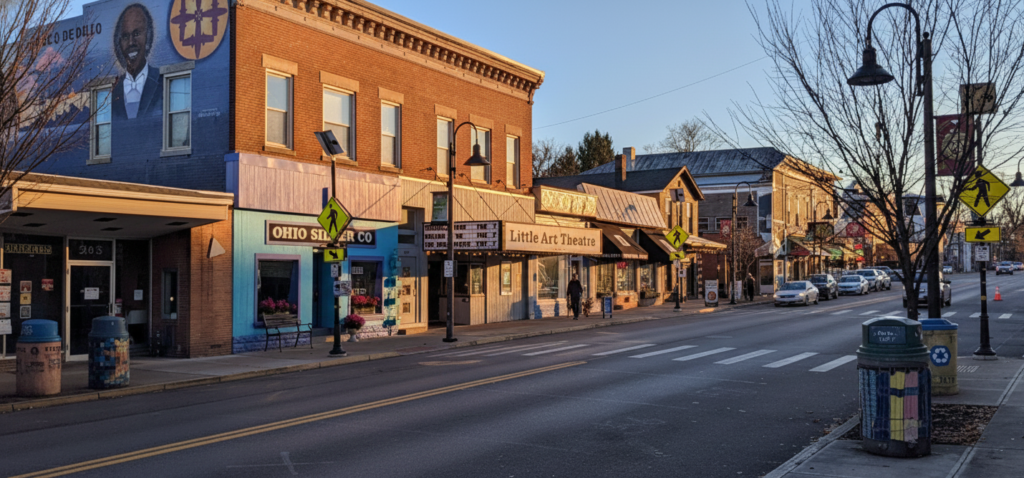
Yellow Springs, Ohio, is more than just a scenic village; it is a masterclass in unconventional real estate strategy. Recently, Omni Home Ideas published a deep dive into the notable real estate holdings in Yellow Springs, and Ingram Insurance Group was honored to be highlighted as a specialized resource for investors navigating the complexities of high-value Ohio portfolios.
When an investor builds a portfolio that spans residential homes, commercial storefronts, and agricultural land, they aren’t just “buying property”—they are managing a multi-layered business entity. This guide explores how to protect such a legacy, from the historic streets of Greene County to the sprawling farmland of the Miami Valley.
The Evolution of the Ohio Real Estate Portfolio
In 2025, the Ohio real estate market has shifted. We are seeing a move away from “single-asset” investing. Today’s sophisticated investors are diversifying across asset classes to hedge against market volatility. A single portfolio might now include a Short-Term Rental (STR) in Yellow Springs, a commercial “mixed-use” building in Dayton, and 40 acres of agricultural land in Xenia.
From an insurance perspective, this “hybridization” is the greatest challenge an owner faces. Traditional homeowners’ insurance is designed for families; traditional commercial insurance is designed for corporations. The modern investor sits right in the middle, requiring a bespoke “Habitational” or “Real Estate Investor” (REI) policy package.
Deep Dive: The Three Pillars of Multi-Asset Protection
1. High-Value Residential & Historic Estates
Yellow Springs is famous for its historic housing stock. If you own a home built in the 1920s or a custom modern estate on 50+ acres, the standard “Replacement Cost” formula often fails. In Ohio, construction labor and material costs have risen significantly. A generic policy might value a home at $200 per square foot, but to rebuild a custom historic home with original-grade materials might cost $450 per square foot.
The “Guaranteed Replacement Cost” Factor: This is a non-negotiable for high-end portfolios. It ensures that the insurance company pays the actual cost to rebuild, even if it exceeds your policy limits by 25% or 50%. Without this, a total loss could bankrupt even a wealthy investor.
2. Commercial & Mixed-Use: The Liability Intersection
Mixed-use properties—retail on the ground floor with residential units above—are the “gold mine” of village real estate, but they are an insurance nightmare if handled incorrectly. You are facing two distinct liability pools: Commercial General Liability (CGL) for the business traffic and Habitational Liability for the tenants living upstairs.
Business Interruption & Loss of Rents: If a fire breaks out in the retail space, your residential tenants may also be displaced. A sophisticated policy covers the lost rent from both sources. For investors, cash flow is the lifeblood of the operation. If a claim takes six months to settle, “Loss of Income” coverage ensures you can still meet your mortgage and tax obligations.
3. Agricultural Land & “Attractive Nuisance” Risks
Many Ohio investors hold land as a long-term play. Even if the land is vacant or leased for farming, the owner holds the liability. In Ohio, the “Attractive Nuisance” doctrine can hold a landowner liable if a child or trespasser is injured by an unsecured structure, a pond, or abandoned equipment on the property.
Pollution Liability: For land that has been farmed or used commercially, accidental spills or environmental contamination (even from old underground storage tanks) can lead to massive cleanup fines. Standard property insurance does not cover environmental remediation. Investors need to ensure their portfolio includes a pollution endorsement if they own significant acreage.
New Risks for 2025: Cyber and Data Liability for Landlords
As real estate moves digital, so does the risk. Most landlords now collect rent via portals, store tenant Social Security numbers for background checks, and communicate via email. If your digital records are breached, you could be held liable for the theft of tenant identities.
Cyber Liability Coverage: This is a relatively new addition to REI policies. it covers the costs of notifying tenants, legal fees, and regulatory fines following a data breach. In a town like Yellow Springs, where privacy is highly valued, a data breach isn’t just a financial hit—it’s a massive blow to an investor’s reputation.
The Philosophy of Long-Term Stewardship
Protecting a real estate portfolio is about more than just dodging financial loss; it is about being a reliable member of the community. We often discuss the idea that being a good man means showing up for the long haul. This same principle of “showing up” applies to property management.
Showing up means doing the “unsexy” work: inspecting roofs every spring, ensuring smoke detectors are hardwired, and reviewing your policy limits annually. Stewardship is the bridge between owning a property and building a legacy. A well-insured portfolio is a promise to the community that if the worst happens, you have the resources to rebuild and restore the local landscape.
Ohio Investor’s Risk Management Glossary
| Term | What It Means for You |
|---|---|
| Ordinance or Law | Covers the extra cost of rebuilding to meet current building codes after a loss. Essential for older Yellow Springs homes. |
| Sewer/Drain Backup | Covers water damage from backed-up pipes. Ohio’s fluctuating temperatures make this a high-frequency claim. |
| Lessor’s Risk Only (LRO) | Protection for commercial landlords against lawsuits from a tenant’s customers or employees. |
| Agritourism Immunity | Ohio law (ORC 901.80) provides some liability immunity for farm-related activities if proper signage is posted. |
Summary: Securing Your Ohio Legacy
Building a diverse real estate portfolio in a market like Yellow Springs requires vision, but protecting it requires precision. As highlighted in the feature by Omni Home Ideas, specialized providers like Ingram Insurance Group are essential partners in this journey. We help you move beyond generic coverage to a plan that recognizes the unique value of every parcel you own.
Ready for a Portfolio Audit?
Whether you have two doors or twenty, your insurance should grow with you. Let’s ensure there are no gaps in your protection plan.
Ingram Insurance Group
📞 (937) 741-5100
🌐 www.insuredbyingram.com
📧 contact@insuredbyingram.com
Straightforward, honest guidance for Ohio’s most ambitious investors.
The Yellow Springs Ohio Investor’s Master FAQ (20 Questions & Answers)
1. Why was Ingram Insurance Group mentioned in the Omni Home Ideas feature?
We were cited for our specialized ability to manage high-complexity portfolios that mix residential, commercial, and agricultural property—a common need in diverse markets like Yellow Springs.
2. Does Dave Chappelle use your agency?
No. We do not represent Mr. Chappelle. The feature used our agency as a professional example of the type of tailored insurance solutions required for portfolios with a similar high-complexity footprint.
3. What is the biggest mistake Ohio investors make?
Underestimating “Replacement Cost.” With rising labor and material costs in the Miami Valley, many properties are currently under-insured by $100,000 or more relative to their true rebuild cost.
4. Is “Landlord Insurance” the same as “Homeowners Insurance”?
No. Homeowners policies usually require the owner to occupy the residence. If you rent a property out without a specific Landlord (DP3) policy, a claim could be denied due to occupancy violations.
5. How does “Loss of Rents” coverage work?
If a fire or storm makes your rental uninhabitable, this coverage replaces the lost rental income while the property is being repaired, ensuring your mortgage and taxes are still covered.
6. Should I require my tenants to have Renters Insurance?
Yes. It protects their belongings and, crucially, provides them with liability coverage if they accidentally cause a fire or flood, reducing the likelihood of a claim against your primary policy.
7. What is “Ordinance or Law” coverage?
It pays for the extra costs to rebuild a property to meet current building codes (like updated electrical or ADA requirements) after a loss. This is essential for older, historic Ohio homes.
8. Are short-term rentals (Airbnb) covered by standard landlord policies?
No. Most landlord policies exclude “business activities” like transient/short-term rentals. You need a specific STR endorsement or a commercial-grade hospitality policy.
9. Does Ohio require landlord insurance by law?
Ohio law doesn’t mandate it, but your lender certainly will. Even without a mortgage, the liability risks of renting out property make it an essential financial safeguard.
10. What is an “Umbrella Policy”?
An umbrella policy provides an extra layer of liability protection (usually $1M+) that sits on top of your underlying policies to protect your total net worth from major lawsuits.
11. What is the “Ohio FAIR Plan”?
A “last resort” insurance pool for properties that cannot find coverage in the private market due to condition or high-risk locations. We help investors find better private alternatives whenever possible.
12. Can I insure multiple properties on one policy?
Yes. Through a “Commercial Package” or a “Master Portfolio Policy,” you can group multiple properties together, often leading to lower administrative fees and a single renewal date.
13. How do I insure a “Mixed-Use” building?
These require a commercial policy that includes “Lessor’s Risk” for the retail/office space and “Habitational Liability” for the residential units above.
14. What happens if my rental property is vacant?
Most policies exclude coverage after 30-60 days of vacancy. You must obtain a “Vacancy Permit” or “Builder’s Risk” policy to maintain protection during renovations or transitions.
15. Does insurance cover “Vandalism” by tenants?
Standard policies often exclude damage caused by the tenant. However, you can add a “Tenant Damage” or “Vandalism” endorsement to cover intentional destruction of the property.
16. Are “Flood” and “Water Backup” the same thing?
No. Water Backup covers drains and sewers failing inside the home. Flood insurance covers surface water from outside entering the home. In Ohio, you typically need both.
17. Does my policy cover “Mold Remediation”?
Most policies have a small cap (often $5,000) for mold. Investors should consider increasing this limit if the property has a basement or is located in a high-humidity area.
18. What is “Actual Cash Value” (ACV)?
ACV pays for the value of the property minus depreciation. On an old roof, ACV may only pay a small fraction of the replacement cost; always aim for Replacement Cost (RCV).
19. Can I get a discount for safety features?
Yes. Hardwired smoke detectors, sprinkler systems, 24/7 monitored security, and “smart” water-leak sensors can all trigger significant premium discounts.
20. How do I start a “Portfolio Audit” with Ingram?
Simply call us at (937) 741-5100. We’ll review your current declarations, identify gaps in coverage, and provide a consolidated protection plan tailored to your investment goals.
Also, check out this feature in the Good Men Project.